
ALECPEA T-7000 Black Adhesive Glue
4.6Editor score
Two 15 ml precision tubes
Flexible waterproof black bond
Anti-clog dispensing cap
Compare the best adhesives for electronic components, including sealing, precision repairs, thermal bonding, electrical conductivity, curing, and dispensing
Adhesives for electronic components must do more than create a strong joint. They may need to seal moisture, prevent electrical interference, transfer heat, secure tiny parts, or remain flexible as devices expand and contract. A successful adhesive balances adhesion, curing behavior, electrical properties, chemical resistance, and application control for the specific electronic assembly.
This guide compares ten options suited to different needs, including conformal protection, phone repairs, heatsink bonding, electronic-grade sealing, precision dispensing, and electrically conductive assembly. We evaluated the products using their stated formulations, intended applications, curing guidance, electrical characteristics, packaging, and available ratings, with particular attention to the job each adhesive is designed to perform.
Each pick highlights the role the product is best positioned to fill rather than presenting every adhesive as a universal solution. Thermal glues, non-corrosive sealants, flexible repair glues, and conductive epoxies are not interchangeable, and each has important limitations. Ratings and product availability can change, so check the current listing and technical details before purchasing.
4.6Editor score

4.8Editor score

4.6Editor score
The table below compares all ten adhesives by their primary function, cure or setting behavior, electrical properties, and most suitable electronic applications, making it easier to distinguish repair glue from thermal, sealing, or electrically conductive materials.


This electronic silicone adhesive sealant is designed primarily as an insulating and protective coating, with a stated rating of 4.6. Its high-viscosity formula is intended to form a permanent seal over circuits, components, cables, transformers, circuit boards, control boards, photovoltaic power supplies, and coils. That makes it a broad option when the objective is environmental protection rather than joining two rigid parts.
We may earn a commission when you buy through this link, at no additional cost to you.
The standout feature is the combination of insulation, waterproofing, and temperature resistance. The manufacturer states that the cured material remains transparent, flexible, and resistant to impact, while remaining usable from -50°C to 200°C. Its flow properties can distribute it evenly over parts, making the product more relevant to conformal coating and broad protective coverage than to pin-point assembly work.
There are important limits to this positioning. Although the title uses the broad term adhesive sealant, the supplied information emphasizes a protective layer rather than a high-strength mechanical bond between load-bearing components. It is also described as insulating, so it should not be chosen when an electrical connection requires conductivity. Users should confirm compatibility with the specific substrate and intended service environment before applying it broadly.
This is a strong recommendation for builders, repair technicians, and electronics hobbyists who want a silicone barrier over exposed circuitry or components. It is less appropriate when the task requires precise structural attachment, electrically conductive pathways, or a fast bond between heat-sensitive parts. For those applications, the thermal and conductive options in this guide offer more relevant specifications.
The stated -50°C to 200°C range makes this sealant useful where ordinary craft adhesives may be less dependable. It is especially relevant for protected assemblies exposed to temperature variation, provided the surrounding enclosure, substrate, and intended service conditions are compatible with the silicone formulation.
The flowable, high-viscosity coating is designed to spread over surfaces and create an even protective layer. For applications that depend on a strong joint between separate rigid components, select an adhesive explicitly documented for structural bonding instead.
We may earn a commission when you buy through this link, at no additional cost to you.
The ALECPEA T-7000 Black Adhesive Glue is a two-tube precision repair option rated 4.6. It targets phones, tablets, laptops, cameras, electronic components, jewelry, and crafts, giving it more application variety than a product dedicated solely to thermal management. The adhesive is black, which can also make excess difficult to notice against dark housings and internal frames.
We may earn a commission when you buy through this link, at no additional cost to you.
Its most notable advertised properties are flexibility, waterproofing, and controlled dispensing. The manufacturer states that the cured adhesive can stretch to 900% of its original length, making it useful where movement or vibration matters. A needle dispenser and anti-clog cap allow small quantities to be placed accurately, and a stated solid content of 30% to 35% supports strong adhesion across multiple surfaces.
The trade-off is that the 15 ml tubes and general repair positioning make it less attractive for industrial-scale dispensing. The instructions call for at least 24 hours of curing, so parts must remain positioned during that period. There are no thermal conductivity or electrical conductivity figures, meaning this should not be treated as a substitute for a dedicated thermal compound or conductive epoxy.
This is the best budget pick for a common electronics repair kit because it combines two tubes, narrow application, and flexible waterproof bonding in a practical package. It suits display frames, small housings, connectors, and general device repairs when the mating materials are compatible. Test on an inconspicuous area and follow the manufacturer’s safety guidance before applying it to a component.
The stated ability to stretch up to 900% of its original length makes the glue more accommodating of stress and movement than a rigid adhesive. That flexibility is useful for phone housings, screens, and small assemblies that can experience vibration or slight dimensional changes.
The needle dispenser helps limit the amount of adhesive reaching the bond line. This is valuable around speakers, connectors, and small internal parts, although users should still allow the product to flow as directed and keep the nozzle protected from dried residue.
We may earn a commission when you buy through this link, at no additional cost to you.
Easycargo Thermal Glue is a silicone-based thermal adhesive intended to replace loose thermal paste with a durable structural and heat-transferring bond. It carries a 4.4 rating and targets GPU VRM and VRAM areas, IC chips, MOSFETs, voltage regulators, high-power LED arrays, 3D printer components, and TEC1-12706 Peltier modules.
We may earn a commission when you buy through this link, at no additional cost to you.
The defining benefit is permanent attachment while still addressing thermal transfer. Its formulation is described as having high thermal conductivity and low thermal impedance, although no exact numerical conductivity value is supplied. It is also described as non-electrically conductive and non-corrosive, which makes it suitable for placement between heat-generating parts and their heatsinks without creating the electrical behavior associated with conductive adhesives.
Because the bond is permanent, alignment and surface preparation are critical. A small misplacement can make heatsink removal difficult, and the product does not offer the repositioning tolerance of ordinary thermal paste. The lack of a stated numerical conductivity figure also means users should not assume parity with a specific premium thermal compound. Its advantage is the combination of conduction and mechanical retention rather than paste-like ease of removal.
This adhesive is a good fit for builders who want a fixed heatsink, a structural thermal interface, or a secure bond in a 3D printer or Peltier assembly. It is not a general-purpose glue for cosmetic housing repairs, and it should not be selected for CPU-to-heatsink mounting without checking the product instructions and thermal requirements. For those demanding thermal separation, it is also not appropriate.
Unlike ordinary paste, this silicone adhesive is intended to remain in place and hold the heatsink. That makes it useful when movement could disturb a traditional interface, while still transferring heat from the component into the heatsink.
The listed applications include MOSFETs, voltage regulators, LED arrays, printers, and Peltier modules. This range makes it versatile for computing and maker projects, provided the adhesive is kept within its intended electrical and thermal operating assumptions.
We may earn a commission when you buy through this link, at no additional cost to you.
This 50gram thermal adhesive is a viscous silicone compound for bonding LEDs, GPUs, MOSFETs, printers, chipsets, ICs, and other components to heat sinks. Its 4.6 rating and stated thermal conductivity of 0.975 W/m-K give users a more concrete performance reference than products that describe themselves only as highly thermally conductive.
We may earn a commission when you buy through this link, at no additional cost to you.
The product is presented as electrically non-conductive, safe, non-toxic, odorless, moisture-proof, and non-expanding. It is said to adhere strongly to most metals and non-metals, with a listed adhesive and tensile strength of 2.1 MPa. That makes it more than a temporary interface material: it is intended to create a stable mechanical and thermal connection.
A significant limitation appears directly in the supplied description: this adhesive cannot be used between a CPU and heatsink. Its approximately 30-minute drying time at 25°C also means parts must be held accurately during curing. While this can be convenient, it is less forgiving than a long-working thermal paste and demands careful preparation before the adhesive is applied.
This is a strong choice for LED assemblies, auxiliary chipsets, MOSFETs, and similar applications where the manufacturer expressly permits a bonded thermal interface. It is less suitable for CPU installation, situations requiring later removal, or projects where a quantified, very high conductivity compound is necessary. Review the product documentation and test a small area when substrate compatibility is uncertain.
A stated conductivity of 0.975 W/m-K provides a useful reference when comparing thermal compounds. It should still be evaluated alongside bond strength, cure time, application method, and the amount of heat the assembly is expected to dissipate.
The non-expanding and moisture-proof characteristics are valuable for long-term interfaces around sensitive assemblies. These traits help distinguish the product from adhesives that may remain soft, leak, or create stress after curing.
We may earn a commission when you buy through this link, at no additional cost to you.
ASI 388 Clear Electronic Grade Silicone is a 2.8 oz squeeze tube rated 4.6 and formulated specifically for electrical and electronic production and assembly. It is designed to protect, seal, and insulate corrosion-sensitive materials such as copper, brass, and silver. That specific focus makes it especially relevant for professional assembly work involving sensitive conductive metals.
We may earn a commission when you buy through this link, at no additional cost to you.
The non-corrosive neutral-cure system is the product’s primary distinction. Neutral-cure silicone is described as emitting no objectionable odor during curing, making it useful in confined areas where a strong curing odor would be disruptive. Even so, the manufacturer states that adequate ventilation should be provided during large-scale production, so the product is not presented as requiring no ventilation whatsoever.
The supplied specifications are more focused than those of many repair glues. They confirm the silicone, adhesive, and sealant categories, electronics-grade formulation, neutral curing, and non-corrosive behavior, but do not provide a numerical cure time, thermal conductivity, or elasticity. Buyers who need quantified performance should verify the full technical documentation or manufacturer data sheet before committing to a production process.
This is the best premium option in the list for sealing and insulating sensitive electronic assemblies. It is a sensible choice for production, maintenance, and repair work where preserving copper, brass, or silver surfaces is important. It is less compelling for smartphone housing repair or CPU heatsink mounting, tasks better served by the precision glues and thermal adhesives reviewed here.
The non-corrosive curing system directly addresses a common concern in electronic assembly. It is particularly relevant around copper, brass, and silver components that could be affected by an incompatible curing byproduct or prolonged chemical interaction.
The lack of an objectionable curing odor makes ASI 388 easier to work with in enclosed repair benches or occupied assembly spaces. Sensible ventilation remains important when using larger quantities.
We may earn a commission when you buy through this link, at no additional cost to you.
Chip Quik EGS10C-20G is a clear, electronics-grade silicone adhesive sealant supplied in a 20 gram, or 0.7 ounce, squeeze tube. It has a 4.4 rating and is positioned for precision dispensing. The narrow, straightforward product scope makes it most relevant to technicians and assemblers who want a clearly identified electronics sealant rather than a multipurpose craft adhesive.
We may earn a commission when you buy through this link, at no additional cost to you.
Its primary attraction is the combination of electronics-grade silicone, adhesive functionality, and sealing. A squeeze tube is practical for controlled manual dispensing at a workbench, and the smaller 20 gram format can be more convenient for one-off maintenance than a larger production cartridge. The clear formulation can also help users visually monitor the amount placed on a surface.
The supplied information is intentionally limited, so important technical questions remain unanswered. It does not specify a cure time, electrical characteristics, temperature range, adhesion strength, or compatibility with particular substrates. Those omissions make it especially important to consult the current manufacturer documentation before using the sealant in a safety-critical or high-temperature environment.
This product is a sensible option for general electronics sealing when a compact tube and clear silicone are priorities. It may be useful around selected housings, board edges, or protected components, but users should not infer thermal-interface or electrically conductive performance from its name. Those functions require products with documentation explicitly addressing them.
The 20 gram squeeze tube offers a manageable quantity for individual repairs and assembly tasks. Its shape supports manual placement, although very high-volume production may call for more specialized dispensing equipment.
The transparent sealant can make the treated area easier to see during application and inspection. Users should still follow the product’s own preparation and curing instructions because appearance alone does not confirm complete coverage or long-term adhesion.
We may earn a commission when you buy through this link, at no additional cost to you.
This T-7000 Black Adhesive Glue twin pack is designed for mobile device, speaker, tablet, computer, screen, and craft repairs. It includes two 25 ml tubes and a pair of tweezers, creating a more complete repair setup than a simple bottle. The product has a 4.6 rating and is especially relevant to technicians working with small components and enclosed housings.
We may earn a commission when you buy through this link, at no additional cost to you.
Precision dispensing is central to the package. A needle-style nozzle supports pinpoint application around displays, rear covers, speakers, and small connectors, while the included tweezers help position tiny parts. The adhesive is also described as highly elastic, waterproof, and capable of stretching to 900% of its original length, giving it a useful degree of flexibility for assemblies subject to minor movement.
The bond develops progressively. A brief setting period allows initial positioning, but maximum strength is reached after 48 hours. During that time, parts must remain properly constrained; a rubber band or similar fixture may be needed. Excess cured adhesive can reportedly be trimmed away, but preventing squeeze-out is still preferable, especially around visible exterior seams and precision-fit components.
This package is a strong choice for mobile-device repair kits and hobbyists who want a larger quantity of flexible black glue along with a useful tool. It is not designed as a thermal interface compound or electrically conductive adhesive, and its opaque finish may be undesirable in visible light-colored assemblies. Confirm material compatibility and practice positioning before working on an expensive device.
Including tweezers makes the package more practical for phone disassembly, where controlling tiny parts is often as important as controlling the glue itself. The two tubes also provide useful redundancy for staged or multiple repairs.
The high stated elasticity is valuable when bonding parts that may experience vibration or slight movement. Holding the components in position for the full 48-hour strength period is still necessary to obtain the intended result.
We may earn a commission when you buy through this link, at no additional cost to you.
The T8000 Clear Precision Glue Kit is the broadest dedicated repair package in the list and carries a 4.8 rating. It contains four clear adhesive tubes in 15 ml, 50 ml, and 110 ml sizes, along with a repair screwdriver, tweezers, a rubber band, and other tools. That combination gives users both material choice and basic handling support for phone, tablet, watch, speaker, LCD, computer, and earbud repairs.
We may earn a commission when you buy through this link, at no additional cost to you.
The adhesive is transparent, medium viscosity, and applied through a needle precision tip. Its low-odor, flexible characteristics and lack of advertised whitening make it attractive for visible assemblies. The product description lists compatibility with plastics, ceramics, acrylic, rubber, metals, glass, fabrics, paper, stone, bamboo, and numerous other substrates, though no bonding should begin until compatibility is checked.
The adhesive provides a short repositioning period of about three minutes, followed by 24 to 48 hours to achieve the best adhesion. Clamping with the included rubber band or another suitable support is suggested for parts that do not remain aligned by themselves. As a result, the kit rewards careful preparation; applying too much or joining parts too late can undermine the clean result.
This is the editor’s choice and best overall option for general electronics repair because it combines clear bonding, controlled dispensing, several quantities, and useful tools in one package. It is not the right choice for thermal transfer, and it is not documented as electrically conductive. Within those boundaries, it is especially useful for delicate consumer-device and general electronics work.
The mix of small and large tubes lets users select a quantity suited to a single component or a larger repair. Including basic tools reduces the need to source separate implements before beginning delicate work.
The transparent formula and advertised resistance to whitening suit screens, housings, and other externally visible parts. Appearance is only one aspect of repair quality, so surface cleaning, accurate dispensing, and undisturbed curing remain essential.
We may earn a commission when you buy through this link, at no additional cost to you.
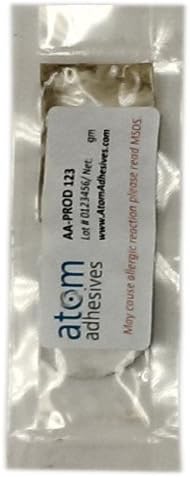
AA-Duct 906 is an electrically conductive silver epoxy supplied in a 2.5 gram single-use kit. Its 3.7 rating is the lowest among the products in this guide, but the chemistry has a distinct purpose: creating an electrically conductive bond for electronics applications. The product information identifies glass, metals, fabrics, wood, and many other substrates as bondable materials.
We may earn a commission when you buy through this link, at no additional cost to you.
The kit format reduces setup complexity. Users tear open and mix the packet, then apply the compound to the required connection. The stated working time is one hour, while full hardening takes 24 hours at room temperature. This provides a reasonable amount of positioning time without requiring the long production cycle associated with some more demanding epoxies.
The product is described as made in the United States and compliant with RoHS and conflict-mineral requirements, which may matter in controlled assembly operations. Nevertheless, its 3.7 rating signals that user satisfaction is less consistent than the leading repair glues in this roundup. The description also notes that AA-DUCT 902 offers greater conductivity, which is important for anyone needing maximum electrical performance.
This adhesive is best reserved for situations where the joint must conduct electricity and the user understands the mixing and cure process. It is less attractive for general repair kits, large production runs, or jobs where stronger customer ratings are a priority. Confirm the required conductivity, substrate compatibility, and cure conditions before using it on a critical connection.
Unlike ordinary epoxy, the silver-filled formulation is intended to carry an electrical path while bonding the parts. This makes it relevant to small conductive connections, provided the application does not demand a conductivity level higher than the product provides.
The single-use pouch avoids weighing and mixing larger quantities. It is convenient for prototyping and low-volume repair, while the one-hour working time provides enough opportunity to position the parts accurately.
We may earn a commission when you buy through this link, at no additional cost to you.
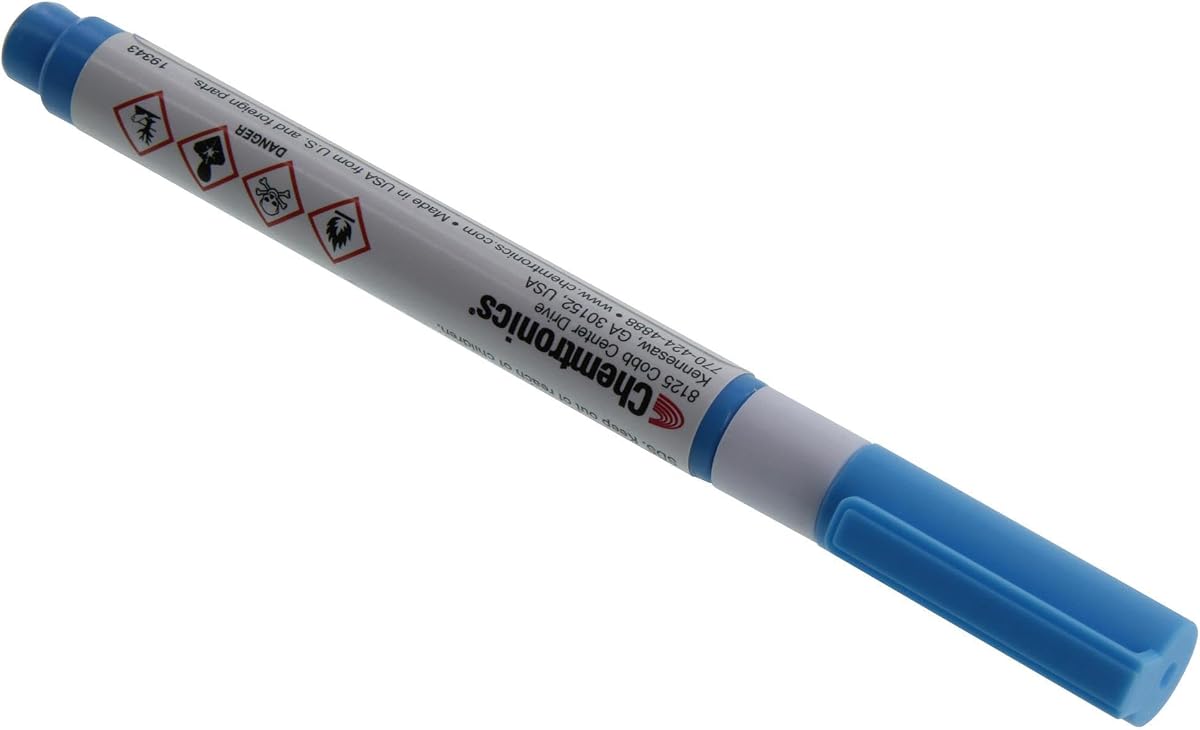
CHEMTRONICS CW2000 is a gray, conductive acrylic adhesive containing nickel in a nine-gram, or 0.32 ounce, dispensing kit. It has a 4.5 rating and is built for applications where electrical conduction in the adhesive layer is needed. The product data specifically lists the adhesive as acrylic, conductive, and nickel, while also noting that a dispenser and tools are included.
We may earn a commission when you buy through this link, at no additional cost to you.
The included hardware makes this more than a basic container of adhesive. A purpose-built dispensing setup can support controlled application, which is important because a conductive adhesive is generally used only where it is required. Excess material outside the intended electrical path does not automatically improve the connection and can make future inspection or rework more difficult.
The supplied information does not state a cure time, electrical resistance, adhesion strength, temperature range, or exact mixing requirements. Those omissions limit how confidently the product can be compared with the more fully specified silver epoxy and thermal adhesives. Users should consult the manufacturer’s technical documentation before treating it as a high-reliability production solution.
CW2000 is a useful option for small conductive bonding tasks involving applications suited to nickel-filled acrylic chemistry. It is less suitable when a product with more published cure data is required, or when an adhesive must simultaneously provide high thermal transfer. Its included dispenser and tools improve convenience, but technical verification should take priority over general-purpose convenience.
The nickel-filled acrylic formulation is aimed at applications where the bond itself must conduct. It should be selected according to the manufacturer’s guidance rather than treated as a general electronics sealant.
Including a dedicated dispenser and tools can help users control where conductive material is placed. Consistent application is especially valuable when excess adhesive could interfere with adjacent components or unintended electrical paths.
We may earn a commission when you buy through this link, at no additional cost to you.
The right adhesive depends on whether the joint needs structural retention, environmental sealing, heat transfer, electrical conductivity, or precise cosmetic repair. Review the substrate, operating environment, electrical requirements, and application method before choosing.
Start by identifying the result the joint must deliver. A conformal coating protects a board from moisture and contamination, while a repair glue secures a display frame, speaker, connector, or housing. A thermal adhesive maintains a permanent path between a heat-producing component and its heatsink. Electrically conductive epoxy creates a connection through the bond itself. These functions may overlap, but the primary purpose should determine which product category and specification matter most.
Choose one adhesive for the job it was formulated to perform rather than assuming a stronger general glue will conduct heat or electricity. A versatile repair kit can be convenient for maintenance, but a dedicated sealant or thermal compound is usually more appropriate for a specialized interface.
Electrical behavior can be decisive in electronic assemblies. Insulating adhesives are appropriate for covering circuitry, protecting components, and keeping accidental conductive paths open. Conductive adhesives are intended to bridge a connection and should only be placed where that current path is wanted. Never infer conductivity from words such as thermal, silicone, or acrylic; the supplied technical description must explicitly identify the electrical property.
For a conductive connection, verify the intended conductivity, substrate compatibility, cure process, and operating temperature. For an insulating application, confirm that the product is suitable for the voltage, spacing, and environmental conditions involved.
Thermal bonding requires more than placing glue between a chip and a heatsink. Compare stated conductivity, whether the compound is electrically conductive, how it cures, whether it remains removable, and whether the manufacturer approves the specific components. Some thermal products can secure small heat sinks, LEDs, GPUs, MOSFETs, or printers, while others explicitly exclude CPU-to-heatsink use.
Do not use a generic structural adhesive as a substitute for thermal paste unless its documentation says it is designed for that interface. Confirm the heat-generating component, the heatsink material, mounting method, and expected service temperature before applying a permanent thermal bond.
Electronics contain plastics, metals, glass, ceramics, elastomers, coatings, and printed surfaces, and an adhesive that bonds one material may perform poorly on another. Look for the substrate list, test on a hidden area, and clean the bonding surfaces according to the instructions. Non-corrosive curing is particularly important around copper, brass, silver, and other corrosion-sensitive materials.
Also consider surface finish and contamination. Grease, flux residue, oxidation, release agents, and moisture can all reduce adhesion. A compatible adhesive cannot compensate for a dirty or chemically unsuitable bonding surface.
Cure time determines how long parts must remain aligned. Fast-curing products reduce downtime but leave less time to correct positioning. Products that take 24 to 48 hours may be more forgiving during assembly, yet require stable fixtures. A stated setting time is not the same as full strength, so allow the complete recommended cure before stressing or powering the assembly.
Choose a working time that fits the repair workflow. A one-hour epoxy may suit a small benchtop connection, while a long-cure flexible adhesive may be better for a display assembly that can be held in a fixture overnight.
Dispensing control matters most around small components, connectors, speakers, and visible housings. Needle tips, squeeze tubes, and single-use pouches can make placement more repeatable than a wide bottle opening. Kits that include tweezers, clamps, screwdrivers, or dispensers may also improve the complete repair workflow, although accessories do not replace correct adhesive selection.
For high-volume assembly, consider whether a squeeze bottle is practical. For one-off repairs, a compact tube may be preferable and reduces waste. Always close or recap the container after use because some precision tips can clog if exposed or contaminated.
An adhesive that works on a bench may not survive the final environment. Review temperature range, moisture resistance, flexibility, impact behavior, and chemical exposure. Flexible products can better accommodate vibration, thermal expansion, and small dimensional changes, while rigid products may be preferable where stable alignment is essential.
Look for the application conditions rather than a single impressive claim. A waterproof, flexible repair glue may be ideal for a phone housing, but an electronics-grade silicone may be better for a protected assembly. A broad operating-temperature range is only valuable if the entire adhesive system, including the bond line and substrate, can tolerate it.
Begin by identifying every material in the joint and confirming that the adhesive is approved for those surfaces. Work in a clean, dry area, disconnect power where appropriate, remove dust, oils, corrosion, and old adhesive, and dry the surfaces according to the product instructions. Plan the assembly before opening the container so parts can be aligned and held correctly from the start.
Dispense the smallest practical amount through the recommended nozzle or applicator. For needle-tip repair glues, hold the container steadily and place material only where it is needed. For thermal adhesive, apply the specified amount across the intended interface and bring the heatsink down without sliding it. For packet-mixed epoxy, mix thoroughly and use the product within its stated working time.
After joining the parts, secure them so they do not shift and leave them undisturbed for the complete cure specified by the manufacturer. Do not interpret a brief set as full adhesion. Remove excess only according to the product guidance, store adhesives with their tips protected, and keep conductive compounds away from unintended electrical paths. Always follow the safety instructions, ventilation requirements, and disposal directions on the listing.
The best adhesive depends on the component and the required result. Use electronics-grade silicone for sealing and insulation, a flexible precision glue for phone and housing repairs, thermal adhesive for approved heatsink interfaces, and conductive epoxy when the bond must carry electrical current. Matching the adhesive to the primary task is more reliable than choosing on bond strength alone.
Thermal glue serves a different purpose from conventional paste. It combines heat transfer with permanent mechanical retention, which is useful for small components and applications where movement could disturb a paste interface. It may be less convenient for removal or repositioning, and its performance depends on the stated conductivity and application method.
A silicone formulated for electronics may be suitable for protecting or coating selected areas, but compatibility should be confirmed before covering a board. The adhesive must not interfere with connectors, buttons, sensors, ventilation paths, or components that need removal. Non-corrosive and neutral-cure properties are favorable indicators, but the manufacturer’s guidance still takes priority.
Insulating adhesive is designed not to provide an intentional electrical path, making it suitable for protective and sealing applications. Conductive adhesive contains a conductive material and can carry current through the bond. Applying conductive adhesive outside the intended circuit can create unwanted connections, while using insulating adhesive where conductivity is required will prevent the intended connection.
Allow the full period stated by the manufacturer. Some products develop an initial bond after a short setting period but need 24 to 48 hours to reach their advertised maximum strength. Keep the assembly aligned and undisturbed throughout that period, and avoid stressing or powering it prematurely.
Many precision adhesives are formulated for plastics and can bond common device housings, but not every plastic behaves the same way. Check the product’s material list, test in a hidden area, and confirm whether the glue may be trimmed or removed without damaging the housing. Polycarbonate, ABS, acrylic, and other surfaces can respond differently to solvents and stress.
Not always. A conventional LED may use wire leads, solder, or another approved connection method, and its thermal adhesive only needs to transfer heat if that product is documented for the task. Check the LED manufacturer’s mounting instructions and do not replace solder with glue unless the adhesive has been explicitly designed and approved for that electrical connection.
Replace or tighten the cap, clean residue from the tip according to the instructions, and store the container in a cool, dry location within the product’s stated storage range. Avoid leaving a precision nozzle exposed, since dried adhesive can block it. Single-use conductive epoxy pouches should be mixed only when the required quantity is ready to use.
The T8000 Clear Precision Glue Kit stands out as the most complete general electronics repair option, combining multiple tube sizes, clear bonding, a precision applicator, repair tools, and the highest listed rating. ALECPEA T-7000 is a cost-conscious alternative for flexible black repairs, while ASI 388 serves users who need an electronics-grade, non-corrosive silicone for sealing and insulation.
Specialized requirements call for specialized choices. Easycargo and the 50gram silicone thermal adhesive suit approved permanent heatsink applications, although their bonding behavior and specifications differ. AA-Duct 906 offers conductive silver epoxy, while CHEMTRONICS CW2000 provides a nickel-filled conductive acrylic kit. Choose these products only when electrical conduction is part of the intended design.
Before buying, verify the exact substrates, electrical behavior, cure time, temperature requirements, and dispensing method in the current listing and manufacturer documentation. Ratings, product availability, and prices can change, so check the latest details before ordering. The right adhesive is the one whose documented purpose matches the repair rather than simply the one with the strongest general-purpose claim.