
HP Chromebook 14a-na0226nr
4.3Editor score
Up to 14-hour battery life
Lightweight 14-inch design
Chrome OS and Android apps
A good college laptop should handle coursework, research, video lectures, group projects, and everyday communication without becoming a burden to carry. The right affordable machine balances a usable display, dependable battery life, enough memory for multitasking, and practical connectivity for a busy academic schedule.
We compared these ten laptops using the specifications and feature details supplied for each product, focusing on processor capability, memory, storage, screen size, battery claims, ports, weight, operating system, and software support. The list includes traditional Windows laptops, Chromebooks, compact models, and larger screens for students with different course and budget needs.
Each review explains who a model is best suited for and where it falls short. The top three selections cover distinct priorities: a low-cost Chromebook, a well-equipped Windows laptop, and a higher-memory HP option. Product availability and pricing can change, so compare the current listing details before making a final purchase.
4.3Editor score

4.5Editor score

4.5Editor score
As an Amazon Associate we earn from qualifying purchases.
The comparison below highlights the major differences among these ten college laptops, including processor, memory, storage, display, battery, portability, operating system, and connectivity. It helps identify which model best matches a student's coursework and mobility needs.


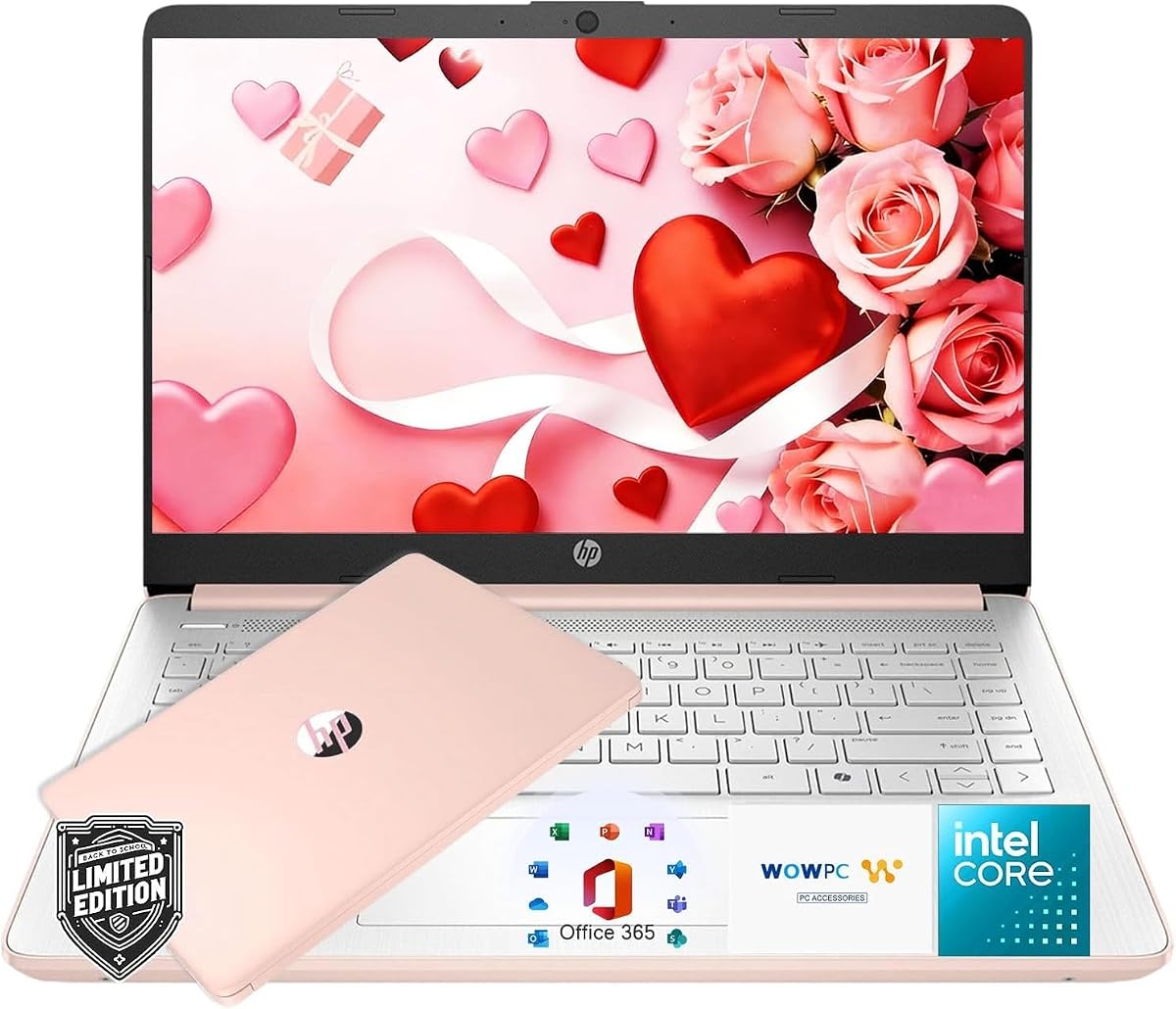


The HP 14 N4500 Student Laptop is an entry-level Windows machine built for browsing, writing, office work, remote learning, and streaming. Its supplied rating is 4 out of 5. The main appeal is the combination of a conventional Windows 11 installation, a compact 14-inch chassis, useful connectivity, and a claimed battery life of up to 12 hours.
We may earn a commission when you buy through this link, at no additional cost to you.
Its Intel Celeron N4500 processor and 4GB of DDR4 memory are intended for light rather than demanding workloads. Storage is divided between 64GB of eMMC and an included 64GB SD card, producing 128GB of combined storage according to the product information. USB-C, two USB-A ports, HDMI, a card reader, and a headphone-and-microphone jack make it easier to connect peripherals without requiring an elaborate adapter setup.
The compromises are significant for students who routinely keep many browser tabs, large spreadsheets, and several communication applications open at once. Four gigabytes of RAM is the main limitation, while the processor is not intended for demanding engineering software, intensive video editing, or advanced data analysis. The HD-class 14-inch screen is appropriate for routine schoolwork but offers less workspace than a larger panel.
This model makes the most sense for a student who wants Windows, needs basic office software, and wants to avoid the limitations of a Chromebook. It is also appealing for users who work primarily with web-based applications or documents stored locally. Students who regularly multitask should aim for a machine with more memory, while those working in software requiring more processing power should consider an i3 or a more capable configuration.
The stated battery life of up to 12 hours gives this model a useful advantage for full days of classes and study sessions. HP Fast Charge is also included, making it easier to replenish the battery between classes or before carrying the computer to campus.
USB-C, two USB-A ports, HDMI 1.4b, Wi-Fi 6E, Bluetooth 5.4, and an SD card reader cover many common student needs. The ability to connect two external monitors at up to Full HD resolution without a docking station is especially useful for a dorm or home setup.
We may earn a commission when you buy through this link, at no additional cost to you.
The HP Chromebook 14a-na0226nr is a straightforward, portable Chromebook for students whose academic work revolves around web applications, Google Workspace, online research, and communication tools. It carries a supplied rating of 4.3 out of 5. Its strongest feature is the claimed battery life of up to 14 hours, which should appeal to students moving between buildings or working away from an outlet.
We may earn a commission when you buy through this link, at no additional cost to you.
The Intel Celeron N4120 is a quad-core processor designed to balance performance and power efficiency. With 4GB of RAM and 64GB of eMMC storage, the Chromebook is suited to browsing, documents, streaming, and ordinary Android applications. The 14-inch anti-glare display has a 1366-by-768 resolution, while custom-tuned stereo speakers add value for lectures and media.
Chromebooks are less appropriate for students who depend on specialized Windows applications or extensive local file storage. Although Google Play applications broaden its capabilities, the operating system's strengths come from cloud-centered workflows. The limited storage and relatively modest processor also mean that the device works best with sensible file management and an understanding that it is an entry-level system.
Choose this Chromebook for general education, research, writing, video calls, and browser-based coursework. It is a particularly strong match when endurance matters more than maximum screen resolution or access to desktop-class software. Students whose classes depend on engineering tools, advanced statistical packages, or other specialized programs should verify compatibility before choosing it.
A claimed 14-hour battery provides a meaningful advantage for students with long class schedules. HP Fast Charge can raise the charge from zero to approximately 50 percent in around 45 minutes, according to the supplied details, making short breaks useful for recovery.
Chrome OS provides a familiar browser-based environment with access to Google Play applications. The anti-glare 14-inch panel and full-size keyboard make it a sensible device for lectures, notes, research, and communication with classmates.
We may earn a commission when you buy through this link, at no additional cost to you.
The HP Stream 14 N150 combines an entry-level Intel N150 processor with a generous storage bundle that includes a docking station. Its supplied rating is 4.3 out of 5. The configuration targets students who want a traditional Windows environment, a year of Microsoft 365, and more file capacity than a typical low-cost laptop provides.
We may earn a commission when you buy through this link, at no additional cost to you.
Storage consists of 128GB of UFS inside the laptop and 1TB in the included docking station, creating a stated combined total of 1.12TB. The dock also adds a more permanent workstation option, while the bundled microSD card, charging cables, and cleaning cloth round out the package. USB-C, two USB-A ports, HDMI 1.4b, a media card reader, and a combined audio jack support typical accessories.
The central limitation is again 4GB of RAM. Although the product information describes the memory as suitable for multiple programs, students should recognize that memory is more restrictive than storage when managing many browser tabs, video meetings, and large applications. The 14-inch HD anti-glare display is suitable for schoolwork but offers a smaller work area than the 15.6-inch alternatives in this guide.
This is a compelling choice for students who create and save large collections of documents, videos, and course materials and who value a complete accessory bundle. It suits dorm-room setups where a dedicated dock could improve connectivity. For users who want a simple portable computer without peripherals, the docking station may be unnecessary, but the storage benefit remains notable.
The included one-terabyte docking station creates useful room for course files, media libraries, and backups. Students can keep important documents on the laptop and move larger files to the dock when working at a desk.
A one-year Microsoft 365 subscription provides access to Word, Excel, and PowerPoint. The 720p webcam, Wi-Fi 6, Bluetooth 5.4, and familiar port selection cover common academic and communication needs.
We may earn a commission when you buy through this link, at no additional cost to you.
The HP 14 N150 8GB is one of the strongest balanced configurations in this roundup, earning a supplied rating of 4.5 out of 5. Its 8GB of memory gives it a meaningful advantage over the many 4GB models here, while the Intel Processor N150 remains appropriate for everyday academic work.
We may earn a commission when you buy through this link, at no additional cost to you.
The laptop includes a one-year Microsoft 365 subscription, Windows 11, Wi-Fi 6, Bluetooth, a 720p webcam, and a battery claim of up to 11 hours. USB-C and HDMI 1.4 allow connections to external displays and accessories. Its 3.24-pound weight and 14-inch format make it practical for carrying between classes, although the product listing also uses creator and gaming language that should be interpreted in the context of an entry-level processor.
Its 128GB UFS drive is the most notable limitation. Students who store large video files, image libraries, or multiple large software packages may need external storage or cloud storage. The N150 also cannot be mistaken for a high-performance Core i3 or Ryzen processor, despite marketing wording in the title. Nevertheless, for documents, browsing, research, office applications, and ordinary media use, the combination is sensible.
This model is best for students who want more memory without moving into a larger or more expensive computer. It is also a good choice for commuters because of the low weight and claimed all-day endurance. Pick the Windows 11 i3 model instead if a larger Full HD display, 12GB of RAM, and 256GB SSD are priorities; otherwise, this HP offers a particularly balanced specification sheet.
Eight gigabytes of RAM gives students more room to move between documents, browser tabs, messaging apps, and recorded lectures. It does not make the system suitable for demanding professional workloads, but it feels more appropriate for sustained school use than a 4GB configuration.
At 3.24 pounds, the laptop is easy to include in a backpack all day. The claimed 11-hour battery figure further reduces the need to hunt for an outlet between classes, while the 720p camera supports online lectures and study groups.
We may earn a commission when you buy through this link, at no additional cost to you.
The HP N150 Student Business Laptop offers a modern Windows configuration with a 14-inch anti-glare screen, LPDDR5 memory, and a light 3.24-pound frame. Its supplied rating is 4.3 out of 5. The Intel N150 has four cores and four threads, reaches up to 3.6GHz with Turbo Boost, and includes 6MB of L3 cache according to the product details.
We may earn a commission when you buy through this link, at no additional cost to you.
Its 4GB LPDDR5-4800 memory provides fast internal operation, but capacity is the more important consideration for long-term use. The 128GB UFS drive should accommodate the operating system, applications, and active coursework, though it may require cloud storage for larger media. A multi-format card reader helps transfer files, while USB-C with DisplayPort 1.2, two USB-A ports, HDMI 1.4b, and an audio jack provide solid connectivity.
The 1366-by-768 display has 250 nits of brightness, a 79% screen-to-body ratio, and an anti-glare finish. These qualities should make it comfortable for reading and writing in bright indoor environments. The webcam, dual-array microphones, and dual speakers support remote classes and meetings. Claimed battery results include up to 11 hours of video playback and 7.5 hours of mixed use.
Choose this model for students who value a contemporary exterior, efficient memory, modern wireless connectivity, and a low carrying weight. It is less compelling for heavy multitab use because of the 4GB memory limit. A higher-memory configuration or the i3 laptop would better serve students with demanding schedules, but this model remains a well-rounded option for writing, browsing, research, and streaming.
USB-C DisplayPort support makes external-monitor use straightforward, while HDMI 1.4b provides another display option. Two USB-A ports allow a mouse, flash drive, or other everyday accessory to remain connected without requiring a hub.
The anti-glare HD panel is designed to reduce reflections during extended reading. A 720p HD camera, dual-array digital microphones, and stereo speakers make the laptop suitable for virtual classrooms and collaborative calls.
We may earn a commission when you buy through this link, at no additional cost to you.
The HP Everyday Slim Laptop is a polished general-purpose choice for browsing, online classes, office work, and streaming. Its supplied rating is 5 out of 5, the highest listed among these products. The Intel N150 processor and Windows 11 provide a modern foundation, while a one-year Microsoft 365 subscription adds immediate productivity value.
We may earn a commission when you buy through this link, at no additional cost to you.
The supplied information identifies 128GB of SSD storage plus 1TB of cloud storage, although the cloud offering's exact terms are not described. This approach can suit students who already understand online storage and backup practices, but it may not satisfy everyone. The laptop has Wi-Fi 6, Bluetooth 5.4, USB-C, two USB-A ports, HDMI 1.4b, an SD media card reader, and a headphone-and-microphone combination jack.
Its 14-inch HD display uses an anti-glare panel with 250 nits of brightness and 62.5% sRGB coverage. The 720p camera includes temporal noise reduction, while dual-array microphones support clearer calls. A full-size keyboard and multi-touch HP Imagepad make navigation and typing comfortable. At 3.24 pounds, the chassis is designed to move easily between classes.
This laptop fits students who want a straightforward Windows device with useful accessories and cloud-oriented storage rather than maximum local capacity. The 5.0 supplied rating is encouraging, but it does not replace checking the current listing for memory details and warranty terms. It is a strong daily-driver choice for writing, research, communication, and media consumption.
The included cloud capacity can help students keep documents and media synchronized across devices. Students should verify service details and retention policies, then maintain local backups of irreplaceable assignments.
The 720p camera with temporal noise reduction and dual-array microphones improves the practical experience of online lectures and group meetings. The dedicated Microsoft Copilot key also provides quick access to the included AI assistant.
We may earn a commission when you buy through this link, at no additional cost to you.
The Windows 11 i3 College Laptop is the most performance-oriented conventional notebook in the group, with a supplied rating of 4.5 out of 5. Its Intel Core i3 processor, 12GB of RAM, and 256GB SSD create a more substantial specification set than the Celeron and N150 alternatives.
We may earn a commission when you buy through this link, at no additional cost to you.
The 15.6-inch Full HD anti-glare display has a 1920-by-1080 resolution and a 16:9 aspect ratio. That extra screen area is useful when editing documents, comparing research sources, or watching recorded lectures. A backlit keyboard helps during late-night study, while the webcam, stereo speakers, charger, and user manual provide the core accessories a student needs.
Connectivity is another strength. Three USB 3.0 ports, HDMI 2.1, USB-C with PD3.0 fast charging, Wi-Fi 6, Bluetooth 5.2, and a TF card slot support common peripherals and external storage. The card slot is described as expandable up to 2TB. At 3.6 pounds and 19.5 millimeters thick, the laptop remains portable, though it is heavier than the 3.24-pound HP models.
This is the best choice for students who expect demanding browser use, multiple applications, or more demanding academic software. Its approximate seven-hour mixed-use battery is shorter than the advertised figures on several HP alternatives, but the stronger specification set may deliver a more comfortable experience over time. Check seller, warranty, and included-software details carefully because the listing identifies it primarily as a Windows 11 laptop rather than a fully specified mainstream brand model.
Twelve gigabytes of RAM is the highest memory capacity listed in this guide. It provides valuable headroom for many browser tabs, research databases, spreadsheets, and communication applications running at the same time.
The 15.6-inch Full HD panel offers more usable workspace than the 14-inch HD screens elsewhere. Anti-glare treatment helps with reflections, while the backlit keyboard improves comfort during evening or low-light study.
We may earn a commission when you buy through this link, at no additional cost to you.
The HP 14 N4120 Chromebook is designed around web-based learning, with Chrome OS, a 14-inch HD display, and a claimed battery life of up to 14 hours. Its supplied rating is 4.4 out of 5. The Intel Celeron N4120 provides four cores and threads, a 1.1GHz base clock, and a boost clock up to 2.6GHz.
We may earn a commission when you buy through this link, at no additional cost to you.
Memory consists of 4GB of LPDDR4x and 64GB of eMMC storage. Connectivity includes two USB 3.0 Type-A ports, one USB 3.0 Type-C port, HDMI, and a headphone jack. The webcam, Wi-Fi, and stated Zoom compatibility cover common remote-learning needs, while the included CUE accessories provide extra utility at the desk or on the move.
As with other Chromebooks, the operating system is the central trade-off. Chrome OS supports a large application library and works smoothly for browsing, Google Workspace, research, and communication. It is a poorer fit if coursework requires traditional desktop applications, specialized engineering tools, or large locally stored media files.
This Chromebook is a good fit for students who favor browser-based learning and value long claimed battery life. It may appeal particularly to younger college students or anyone starting with a straightforward, lower-complexity device. Buyers should treat the 64GB drive as modest and plan to use cloud storage carefully. For a larger display or stronger general specifications, the Windows 11 i3 laptop is the better alternative.
The quad-core N4120 is suited to ordinary browser, document, and streaming tasks while keeping power use in mind. It is a practical processor for a Chromebook whose functions are primarily online and lightweight.
The webcam, HDMI output, and mix of USB-A and USB-C ports allow students to join online classes and connect to displays or accessories. The listed CUE accessories add convenience without changing the core Chromebook experience.
We may earn a commission when you buy through this link, at no additional cost to you.
The Laptop S7HI combines a 15.6-inch Full HD IPS display with a portable 3.6-pound design and preinstalled Windows 11. Its supplied rating is 4 out of 5. For students who prefer a larger workspace and a traditional Windows interface without moving to the highest specification in the guide, it is a straightforward alternative.
We may earn a commission when you buy through this link, at no additional cost to you.
The supplied processor information identifies a 1.9GHz 5205U, with the description stating that it can handle study, work, streaming, and multiple tasks. Memory is 4GB, while 128GB of internal storage is supplemented by an expansion slot for an additional 1TB SSD. This makes the laptop more flexible for file storage than models limited to a small fixed drive, assuming the expansion slot is available and compatible.
Type-C, HDMI, an SD card reader, dual-band Wi-Fi, and Bluetooth 4.2 cover common connectivity needs. The Full HD IPS panel is a major advantage over the HD-resolution models for reading, document work, and media. However, 4GB of RAM can become restrictive during long sessions with many applications open, and the older Bluetooth version may offer fewer features than Bluetooth 5.x alternatives.
This laptop is best for students whose priority is a large, sharp screen and expandable storage at an entry-level specification. It is less suitable for intensive applications or highly demanding software. Review the seller's warranty and component details carefully before buying, as the listing provides less processor detail than most established-brand products in this comparison.
A 15.6-inch Full HD IPS display gives students a generous area for research, writing, and viewing lectures. Its 3.6-pound weight keeps it relatively manageable for campus use, although it is heavier than the smallest Chromebook here.
The additional SSD slot allows students to increase local capacity beyond the included 128GB drive. That can be useful for large project files, offline course materials, and media that would otherwise consume cloud storage.
We may earn a commission when you buy through this link, at no additional cost to you.
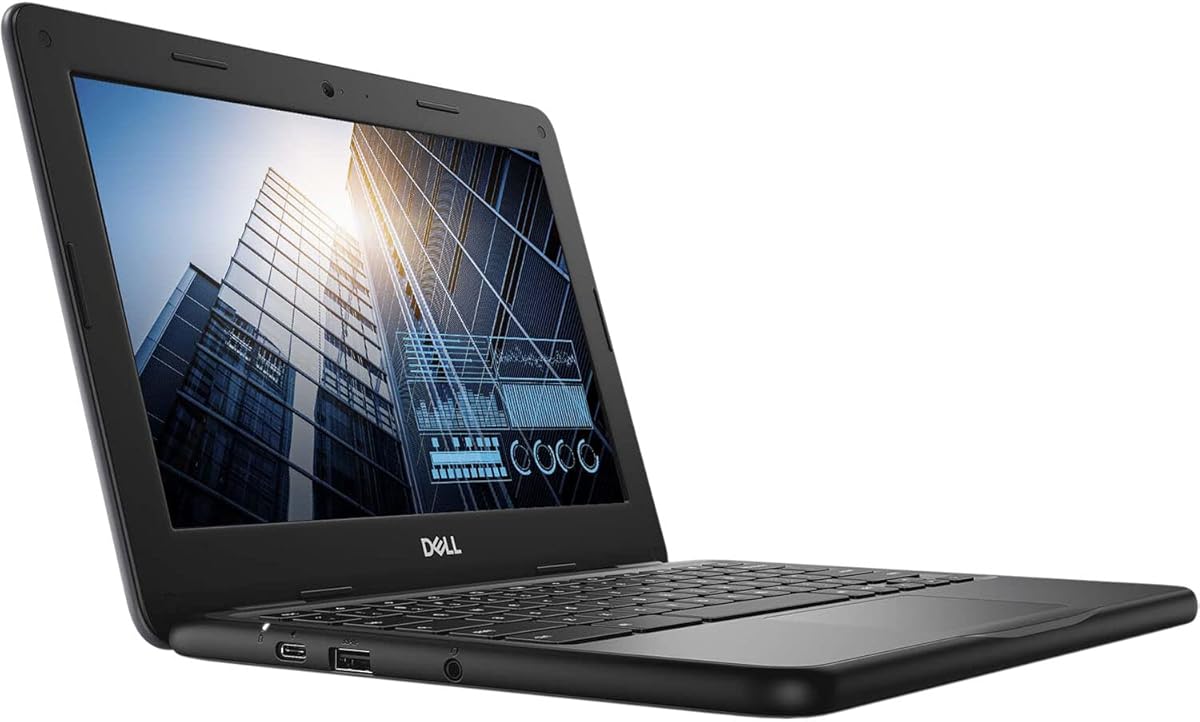
The Dell Chromebook 11 3100 is a compact, renewed Chromebook for students seeking a basic online computing solution. Its supplied rating is 4.1 out of 5. The 11.6-inch form factor makes it highly portable and easy to use in lecture halls, libraries, or shared study spaces.
We may earn a commission when you buy through this link, at no additional cost to you.
Its specifications include an Intel Celeron N4020, 4GB of RAM, 16GB of flash memory, Chrome OS, Intel HD Graphics, a 1366-by-768 display, an English US keyboard, and Bluetooth. These components are best suited to browsing, Google Workspace, web-based courses, email, and communication applications rather than demanding desktop software.
The 16GB storage capacity is the biggest limitation. It leaves little room for downloaded media or locally installed files, so students need an appropriate cloud-storage strategy. The small display also provides less room for comparing notes, reading long documents, and working with multiple windows. As a renewed product, its physical and cosmetic condition may differ from a new unit.
Choose this Chromebook if the primary goals are very low cost, compact size, and web-based coursework. It is best for light use rather than students carrying a demanding course load. Those wanting more endurance, storage, screen size, and a new-unit option should review one of the 14-inch HP Chromebooks or the larger Windows laptops instead.
The 11.6-inch screen and small overall footprint are useful in lecture halls and on shared tables. This model prioritizes mobility over the larger workspace needed for detailed document work.
Chrome OS gives the laptop a straightforward interface centered on the browser and Android applications. With only 16GB of local storage, students should keep files synchronized online and avoid downloading unnecessary large media.
We may earn a commission when you buy through this link, at no additional cost to you.
Choosing a college laptop involves balancing performance, software compatibility, portability, display comfort, and battery life against a limited student budget. The most useful specification is the one that matches the demands of your courses and daily routine.
The processor determines how smoothly a laptop handles web browsing, documents, video calls, and academic software. Intel Core i3 configurations offer a stronger foundation than the Celeron and N150 processors found among the lower-cost choices. The N150 models are well suited to everyday productivity, while Celeron chips are most appropriate for web-based or lightly demanding tasks.
Check the clock speed, core count, and type of software your classes require. A faster processor cannot compensate for inadequate memory or storage, but it can make demanding multitasking and supported applications feel more responsive.
RAM controls how many applications and browser tabs can remain open without slowing down. The 4GB configurations in this guide are acceptable for light use, but 8GB is a more comfortable minimum for general college work, and 12GB provides additional headroom for demanding schedules.
Think about your real workflow. Students who keep research tabs, video calls, word processors, and messaging apps open simultaneously will benefit from more memory than students who work with one or two lightweight applications at a time.
Storage should hold the operating system, required applications, active coursework, and any media you want available offline. Flash-based drives such as eMMC, UFS, and SSD models respond quickly, but small capacities can fill quickly. Models with card readers, expansion slots, or bundled external drives offer more flexibility.
Avoid choosing storage by total capacity alone. If the advertised capacity is divided between an internal drive and an external accessory, consider whether students can comfortably carry and use that accessory every day.
A 14-inch display balances screen area with portability, while a 15.6-inch model provides more room for documents, research, and video lectures. HD resolution is common in the least expensive models, whereas Full HD panels offer sharper text and images. Anti-glare is especially helpful under bright classroom or library lighting.
Consider where you will use the computer. A compact 11.6-inch screen is convenient for commuting and shared spaces, while students who spend long hours reading may prefer a larger Full HD display.
Battery claims vary by testing method, but longer advertised runtime generally offers more freedom between outlets. The Chromebooks and N150 models here claim approximately 11 to 14 hours in certain scenarios. The larger i3 laptop states approximately seven hours of mixed use. Fast charging can be valuable when a short break falls between classes.
Treat maximum battery figures as best-case conditions rather than guaranteed all-day results. Screen brightness, wireless use, video playback, browser tabs, and plugged-in peripherals can all affect real-world endurance.
Windows laptops support the broadest range of educational and professional software, making them the safer choice when course requirements are uncertain. Chromebooks excel in browser-based research, Google Workspace, and Android applications but may not support specialized Windows tools. Linux-oriented courses may require compatibility checks with both operating systems.
Ask instructors or review the syllabus before choosing. A lower-cost Chromebook is a strong option when classes use web portals, documents, and cloud applications, while a Windows machine is preferable for engineering, data, design, or office-software courses.
USB-A, USB-C, HDMI, an audio jack, and a memory-card reader determine which accessories can be used without an adapter. USB-C is especially useful for modern docks and charging, but its capabilities vary by model. Wi-Fi 6 and Bluetooth 5.x provide current wireless standards, while older Bluetooth versions can limit accessory compatibility.
Think about your dorm, classroom, and library setup. A student carrying a mouse, headphones, external drive, and video-meeting camera may need more ports than someone who works exclusively with a wireless headset and cloud storage.
Weight and dimensions influence whether a laptop is comfortable to carry throughout a full day. The models here range from compact 11.6- and 14-inch Chromebooks to a 15.6-inch notebook. Listed weights range from about 3.24 to 3.6 pounds, a difference that may become noticeable when carrying textbooks and other campus supplies.
Portable does not always mean fragile, so compare warranty information and construction as well. A backlit keyboard, webcam, microphone quality, and comfortable touchpad can materially improve late-night and daily use even when a model has modest core specifications.
Begin by setting up automatic system updates, activating Windows or completing the initial Chrome sign-in, and connecting the laptop to your college account. Install only the applications required for your courses, then enable cloud synchronization or a reliable backup method for assignments. Use the included Microsoft 365 subscription where applicable, but verify its renewal terms and save important files outside the subscription's associated storage.
To protect the machine, use a padded backpack sleeve, avoid placing food or drinks near the keyboard, and clean the screen with a soft microfiber cloth. Do not leave the laptop in a hot car or direct sunlight for extended periods. When traveling, carry it separately from liquids and make sure the charger and cable are stored where they cannot be bent sharply.
For better performance, keep free storage space available, restart periodically, and avoid running unnecessary background applications. On a 4GB model, reducing the number of open tabs and heavy tabs can make a noticeable difference. Check battery health, save work frequently, and use the sleep or shutdown function when the computer will be unattended for extended periods.
Four gigabytes can support basic web browsing, document editing, and online classes, but it becomes restrictive with many tabs or applications. Eight gigabytes is a more practical minimum for general college use, while 12GB provides additional comfort for heavier multitasking. Choose storage capacity and software needs carefully as well, because extra storage does not replace adequate memory.
A Chromebook is well suited to research, writing, Google Workspace, video calls, and browser-based coursework. Its compatibility with Chrome OS applications and cloud workflows makes it convenient and often long-lasting on a charge. However, students should confirm that specialized course software or desktop applications will run before purchasing one.
Choose Windows when your courses require desktop applications, specific engineering tools, advanced data programs, or extensive local file management. Chrome OS is often simpler for students whose classes use web applications and cloud-based documents. When course requirements are uncertain, Windows offers the broader software compatibility.
A 14-inch display offers a practical compromise between portability and usable workspace. A 15.6-inch Full HD screen is better for lengthy reading, document editing, and split-screen work, while an 11.6-inch model is easier to carry. Consider your bag size, study location, and whether you regularly work from a desk.
A 128GB drive can be enough for students who rely on cloud storage and keep large media files online. It may become crowded after installing required applications, downloading lectures, and storing project files. Look for card-reader support, an expansion slot, or an external drive if you expect to retain sizable files locally.
Most general coursework, browsing, document editing, and standard video calls do not require dedicated graphics. Students in architecture, 3D design, advanced engineering, data science, or video production should check exact software requirements and consider a more capable processor or graphics solution. Verify compatibility rather than relying on broad gaming or creator wording in a listing.
Long battery life gives you more freedom between classes, libraries, and study sessions. Advertised figures often represent specific testing conditions, so real-world use may differ. Fast charging can help during breaks, but a comfortable keyboard, reliable wireless connection, and adequate performance are equally important for daily academic use.
A renewed model can be useful when the budget is very limited and the device is primarily for web-based coursework. Check the seller's condition description, warranty coverage, battery expectations, and return policy carefully. For demanding courses or users who cannot tolerate uncertainty, a new model with clearer support may be preferable.
The HP Chromebook 14a-na0226nr stands out for long claimed battery life and a simple browser-centered workflow, making it a strong low-cost choice for web-based learning. The Windows 11 i3 laptop leads the conventional performance group with 12GB of RAM, a 256GB SSD, and a Full HD display, while the HP 14 N150 8GB offers the most balanced package for general college use.
Prioritize the features your courses actually require. Confirm operating-system compatibility first, then choose at least 8GB of memory if your schedule involves many open applications. Screen quality, weight, ports, and battery life should be balanced against processor and storage needs rather than considered in isolation.
Finally, review the current product listing, warranty, included accessories, and software subscription terms before ordering. Hardware configurations and pricing can change over time, so the information in this guide should be used to identify the right type of laptop and then compared against the latest available offering.