
Kids Smart Watch with Fitness Tracker
4.3Editor score
Standalone operation without apps
Health and safety monitoring
IP68 water resistance
Choosing a smartwatch for 13 year old requires balancing independence, communication, privacy, and fun without overwhelming a young teen with complicated controls. A suitable model should feel comfortable enough for all-day wear while offering useful tools for school, exercise, emergencies, and staying in touch with family.
This guide compares ten watches using the supplied product information, focusing on age relevance, fitness tracking, calling or messaging options, safety features, water resistance, battery claims, entertainment, and ease of setup. It covers standalone kids watches, phone-style 4G models, and general smartwatches with broader notification features.
Each review highlights who the watch is likely to suit and where its compromises lie, helping readers distinguish between a budget activity tracker, a connected teen watch, and a dedicated kids phone. Product availability and pricing can change, so confirm the current listing and feature set before purchasing.
4.3Editor score

4.4Editor score

4.2Editor score
As an Amazon Associate we earn from qualifying purchases.
The table below compares every watch by its most important teen-relevant attributes: age positioning, connectivity, activity features, safety tools, and everyday practicality. It is designed to make the differences clear before you read the full reviews.


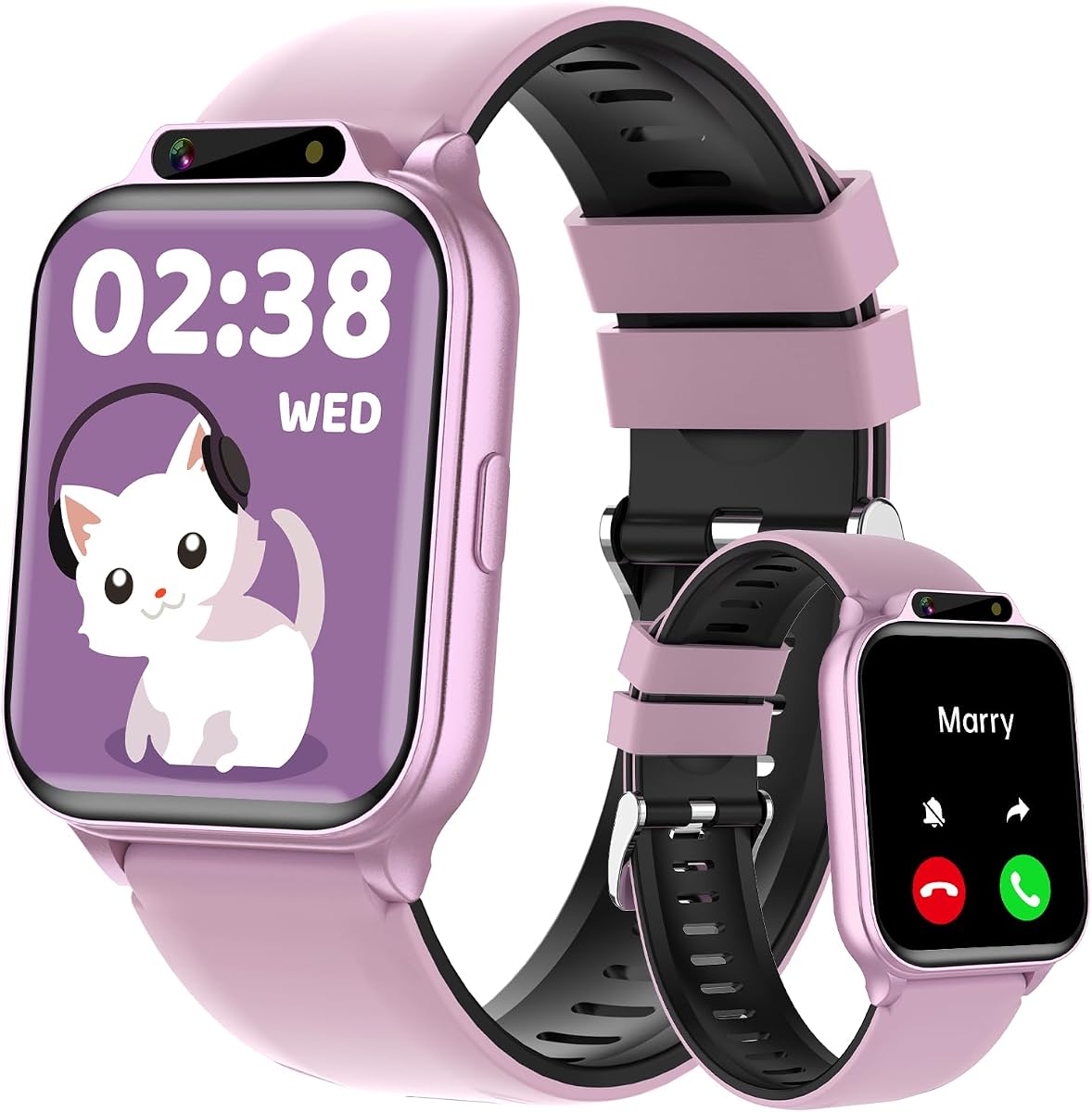


This kids fitness watch combines an approachable touchscreen design with enough functionality for an active 13-year-old. It carries a 4.3 rating and stands out for combining health monitoring, step tracking, 100+ sports modes, a camera, games, learning cards, and Bluetooth calls. Its no-app standalone operation is particularly useful for a teen who wants a watch without constantly relying on a smartphone.
We may earn a commission when you buy through this link, at no additional cost to you.
The feature balance is unusually broad for a kids-oriented model. Heart rate, blood oxygen, stress, and sleep monitoring are supported through a pediatric database, while vibration alerts and sedentary or hydration reminders encourage healthier routines. A three-second press activates the SOS alarm, offering a basic emergency tool. The watch also includes class mode, alarms, a timer, calculator, flashlight, music, a voice assistant, and more than 100 watch faces.
Some features are naturally limited. The watch does not make cellular calls without a SIM card, and its Bluetooth calling and expanded learning content work best when paired with a compatible Android or iOS device. It is marketed as IP68 waterproof and drop resistant, but the listing also describes pool use, while the product should still be treated according to the manufacturer's detailed care instructions.
This is a strong recommendation for a family seeking a versatile first smartwatch at a modest cost. A 13-year-old can use it for exercise, school reminders, photography, and entertainment without needing a separate data plan. It is particularly suitable when independence and broad built-in features matter more than polished third-party messaging.
Continuous step tracking, heart-rate monitoring, sleep-stage analysis, and vibration alerts provide a useful view of everyday habits. The three-second SOS activation also gives a teen a simple way to attract attention in an emergency.
Core tools such as alarms, step tracking, and the flashlight work independently, which reduces setup friction. Connecting to a compatible phone unlocks additional games, learning cards, and Bluetooth communication features.
We may earn a commission when you buy through this link, at no additional cost to you.
This girls-focused waterproof smartwatch offers a broad collection of activity, entertainment, and wellness tools in a child-friendly format. Its 4.3 rating reflects a generally capable feature set, while the 100+ sports modes, 1.85-inch IPS touchscreen, camera, and learning cards make it easy to tailor the watch to different interests.
We may earn a commission when you buy through this link, at no additional cost to you.
The fitness and health functions cover steps, heart rate, blood oxygen, stress, and sleep stages. This makes the watch useful for a 13-year-old who is beginning a more structured fitness routine or simply wants feedback on movement and rest. SOS activation, class mode, hydration reminders, and sedentary alerts add useful routines for school and family life.
The main limitation is that it is not a cellular watch. Bluetooth calls require a compatible phone, and while basic functions operate independently, some games and learning features need a connection. Families should also review the detailed waterproofing guidance before exposing the watch to pools, rain, or other wet conditions.
Overall, this is a versatile option for a teen who wants fitness, school, and entertainment functions in one device. It may appeal particularly to a teen who enjoys customization, games, music, and collecting watch faces, although it is not the right choice for a child who needs independent cellular contact.
More than 100 sports modes give the wearer several ways to record movement, while automatic tracking covers steps, distance, calories, and activity duration. That variety can make regular exercise feel more engaging.
Class mode, eight puzzle games, storybooks, and learn cards make the watch useful beyond the fitness tracker category. Parental controls can limit distractions while preserving features selected for learning or emergencies.
We may earn a commission when you buy through this link, at no additional cost to you.
The Alexa smartwatch is a more conventional smartwatch option for a 13-year-old who is ready for notifications, voice assistance, and direct wrist calls. It has a 4.2 rating and a 1.83-inch HD display protected by 3D tempered glass. Its strongest distinguishing feature is built-in Alexa, which can deliver news, weather, calendar updates, reminders, smart-home control, and music playback without touching the screen.
We may earn a commission when you buy through this link, at no additional cost to you.
Bluetooth 5.3 enables call making and answering, while the VeryFit app can deliver notifications from popular social and messaging platforms. The watch also supports over 130 watch faces, custom designs, and four brightness levels. For activity, there are 120+ sports modes plus automatic tracking for steps, distance, calories, and workout duration.
This is not marketed specifically as a kids model, so parents may need to configure accounts, permissions, and notifications more carefully. The IP68 rating is intended for sweat, rain, and handwashing rather than swimming or hot showers. It is also a larger watch than some dedicated kids alternatives, and the 300mAh battery's claimed five-to-seven-day active life can vary with use.
It is a strong choice for a teen who wants a conventional smartwatch rather than a toy-like fitness watch. Alexa adds useful independence, while the screen, calling, sports support, and notification forwarding make it suitable for school, travel, and everyday life when paired with a compatible phone.
Alexa can answer questions, set reminders, check information, and manage compatible smart-home functions by voice. That convenience is particularly helpful when the teen's hands are busy or the phone is out of reach.
Bluetooth calling and forwarded notifications provide a more familiar smartwatch experience than the basic Bluetooth tools on many kids watches. Compatibility with older Android and iOS versions also broadens the range of family phones that can pair with it.
We may earn a commission when you buy through this link, at no additional cost to you.
This watch prioritizes entertainment and easy operation, making it a practical option for a 13-year-old who wants games, music, photography, and basic organization in a child-friendly device. It has a 4.3 rating and includes 39 puzzle games, a selfie camera, video support, an MP3 player, a voice recorder, and several traditional watch tools.
We may earn a commission when you buy through this link, at no additional cost to you.
No SIM card or app is required, so the wearer can start using the watch without creating a cellular account or completing a complex parent setup. An included SD memory card supports loading children's songs, pictures, and videos. Favorites can also serve as wallpapers, and the watch has a claimed storage capacity of more than 10,000 HD photos or over six hours of video.
The key compromise is the absence of calling. For a 13-year-old, that means the watch is better suited to entertainment and personal organization than emergency communication with family. Its working time is listed as three to seven days depending on use, and a full charge takes about two hours, so regular charging will be important if video or games are used heavily.
This is a strong recommendation when simple setup and abundant built-in entertainment matter most. It may be especially attractive for a child moving from a younger kids' watch, while families needing dependable calling and location tracking should consider a connected alternative.
Thirty-nine puzzle games, audiobooks, learn cards, a calculator, a habit tracker, and multiple language options provide plenty of offline activity. This makes the watch useful on trips or outings where reliable phone service is unavailable.
The front-facing camera can take selfies and record video, while the included SD card makes it easy to add personal media. The large claimed storage capacity supports creative use, although actual results depend on the files selected.
We may earn a commission when you buy through this link, at no additional cost to you.
This general-purpose fitness smartwatch offers one of the broadest activity selections in the roundup, with 130+ sports modes and a 4.9 rating. The 1.83-inch HD touchscreen provides a familiar interface for notifications, fitness data, and daily menus, making it suitable for a 13-year-old who wants a device that does not look exclusively like a children's toy.
We may earn a commission when you buy through this link, at no additional cost to you.
It supports Bluetooth calling, heart-rate monitoring, sleep tracking, and detailed activity tracking. Running, cycling, yoga, hiking, gym training, and ball games are among the listed options. Practical additions include timers, alarms, message alerts, and sedentary reminders, while iOS and Android compatibility allows the watch to sync with a family's existing phone.
The main caveat is that it is labeled for men and women rather than children or teens, so its interface, sizing, and setup are not specifically tailored to younger users. IP68 protection resists splashes, sweat, and rain but should not be treated as permission for swimming. Parents should also establish sensible notification and calling boundaries because this is a general smartwatch.
For an active teen who prioritizes exercise variety and conventional smartwatches, it is an appealing option. Its high listed rating and extensive feature set make it a convincing alternative to the more toy-like watches in this guide, provided the parent confirms sizing and configuration are comfortable.
With 130+ sports modes, the watch can accommodate everything from everyday walking to organized sports, indoor exercise, and hiking. This variety helps a teen keep an activity record that matches different interests and routines.
Continuous heart-rate monitoring and nightly sleep duration and pattern tracking complement the step and workout records. Sedentary reminders and message alerts help round out the watch's everyday usefulness.
We may earn a commission when you buy through this link, at no additional cost to you.
This pink kids smartwatch combines health tracking, school controls, educational content, and a reward-based motivation system. Its 4.3 rating and 1.85-inch HD touchscreen make it visually approachable, while the Reward Coins feature gives the teen a reason to complete learning cards, fitness goals, and assigned tasks.
We may earn a commission when you buy through this link, at no additional cost to you.
The watch tracks heart rate, blood oxygen, stress, sleep stages, steps, distance, calories, and active minutes across 100+ sports modes. It also includes a camera, music, storybooks, eight puzzle games, a voice assistant, class mode, and more than 100 watch faces. Custom photo dials let the wearer personalize the display with meaningful images.
Its standalone tools include basic tracking, alarms, and a flashlight, but expanded features and precise class-mode scheduling depend on connection to a compatible phone and app. It is not a cellular watch, so it does not independently provide voice calls, SMS, or GPS location. The listed IP68 rating and 1.5-meter drop testing suggest a durable design, though care instructions still apply.
This is an excellent match for a 13-year-old who responds well to structured goals and rewards. Parents who want to combine fitness encouragement with educational routines will appreciate the mix of stories, learning cards, games, and class controls, while those needing standalone communication should choose a cellular model instead.
The Reward Coins system lets children earn virtual currency through completed fitness goals, learning activities, or specific tasks. Coins can then be exchanged for games, audio stories, or other rewards, turning habit-building into a visible progression.
Minute-level class-mode scheduling can block distractions during lessons, while weekly storybooks and language cards provide alternatives to games. The balance is useful for a teen who needs entertainment but also benefits from structured downtime.
We may earn a commission when you buy through this link, at no additional cost to you.
The Tixpc watch is a durable all-rounder for an active 13-year-old who wants fitness tracking, communication, entertainment, and safety tools in one device. It has a 4.3 rating and a 1.85-inch IPS touchscreen, with support for 100+ sports modes, Bluetooth calls, and numerous daily functions.
We may earn a commission when you buy through this link, at no additional cost to you.
Heart rate, blood oxygen, stress, sleep, and step information are monitored through a pediatric database. Hydration and sedentary reminders encourage healthier routines, while the three-second SOS alarm gives the wearer a straightforward emergency action. Eight puzzle games, learning cards, storybooks, music, a camera, a voice assistant, class mode, and numerous watch faces add everyday appeal.
Core functions such as alarms, continuous step counting, and the flashlight work without a phone, which is useful for school and outings. Expanded functionality, including additional games, language cards, and Bluetooth calling, requires a compatible Android or iOS device. It is also not a GPS or cellular watch, so it cannot independently report its location or conduct standard mobile calls.
This is a well-rounded recommendation for a teen who wants many features but does not need a separate data plan. Its claimed week-long battery life and IP68 construction are attractive for active use, although families should confirm the current specifications and care requirements before buying.
A wide sports-mode selection, step tracking, and a claimed week of use suit school days, sleepovers, and trips. The IP68 rating also gives greater confidence during rain, sweat, and ordinary wet encounters.
The SOS alarm provides a simple emergency option, while hydration prompts, sedentary reminders, storybooks, and reward coins encourage healthier and more consistent behavior. These tools work together better than an isolated step counter.
We may earn a commission when you buy through this link, at no additional cost to you.
The Cubitt Teens Smartwatch is the most explicitly age-appropriate model in this roundup, with a stated design range of 11 to 14 years. Its 4.4 rating, forest-green design, and 1.85-inch AMOLED touchscreen give it a more teen-oriented appearance than many bright, toy-like alternatives.
We may earn a commission when you buy through this link, at no additional cost to you.
Bluetooth calling allows the wearer to make and receive calls without holding the phone, while call, text, WhatsApp, Instagram, and Facebook notifications can appear on the wrist. Automatic tracking covers steps, calories, distance, heart rate, and sleep. Twenty-plus dedicated sport modes support activities such as running and cycling, and more than 20 built-in games provide controlled entertainment.
Parental controls include a password lock, useful for preventing unsupervised changes to settings. The watch also has customizable alarms for school, bedtime, homework, and waking routines. Its IP68 water-resistant design and interchangeable straps suit active use. The display offers eight preloaded faces, with more than 100 available through the Cubitt app, so additional customization depends on setup.
For a 13-year-old specifically, this is the most natural fit because the age positioning matches the wearer almost exactly. It provides meaningful teen features without looking excessively juvenile, making it a strong recommendation for families seeking a balanced transition from a children's watch to a conventional smartwatch.
The 11–14 age range covers the transition into a more independent smartwatch user. A modern display, sports tracking, calling, notifications, and games offer enough maturity without removing the supervision tools parents may still want.
A parental password lock helps keep settings and contacts under family control. Customizable alarms also support practical routines around waking, homework, bedtime, and school preparation.
We may earn a commission when you buy through this link, at no additional cost to you.
The Phyulls watch is a straightforward, offline-first kids smartwatch with a 4.3 rating. Its listing positions it for ages 3–12, so a 13-year-old is slightly above the stated range. However, the large touchscreen, familiar fitness tools, and extensive entertainment features may still suit a younger teen who does not need advanced connectivity.
We may earn a commission when you buy through this link, at no additional cost to you.
Thirty-nine puzzle games, music playback, a voice recorder, camera, video recorder, calculator, calendar, flashlight, stopwatch, pedometer, and alarm form a broad collection of built-in functions. There is no need to download an app or insert a SIM card, making setup and daily operation simple. An included SD card allows the child to add children's songs, pictures, and videos.
The watch does not provide calling, and its listed three-to-seven-day working time varies with use. Full charging takes about two hours. Since the product is primarily designed for children up to age 12, parents should confirm that the sizing, interface, and social features will not feel too juvenile for a 13-year-old.
This is a sensible choice for an offline entertainment device, especially for a teen who wants games and music without managing notifications or a data plan. It is less suitable for independent family communication, and a teen-focused connected model would be the more mature alternative.
The watch operates without a smartphone app or SIM card, reducing both cost and complexity. A parent can hand it over with music and media already stored on the included SD card.
The large game library, media player, camera, and video tools provide offline entertainment for travel and downtime. The silicone strap is soft and designed for comfortable extended wear.
We may earn a commission when you buy through this link, at no additional cost to you.
This 4G kids smartwatch phone is the strongest option in the guide for independent communication and location tracking. It has a 4.2 rating and offers 4G calls, text chat, two-way HD video calling, and one-touch SOS access through a front-facing camera. These features make it the most phone-like choice for a teen who may not always have access to a smartphone.
We may earn a commission when you buy through this link, at no additional cost to you.
Location is handled through dual GPS and LBS positioning, allowing a parent to view the child's location, create electronic geofences around places such as home and school, receive exit alerts, and review route history. The Junicare app also supports approved contacts, unknown-call blocking, class-mode activation, and usable-time limits that disable games and other distractions during lessons.
The important practical trade-off is cellular service. A complimentary Speedtalk SIM is included, but it must be activated on the official Speedtalk website and is usable only within the United States. The family must select an appropriate data plan, and the watch should be powered off before inserting the SIM. Calling, video, location, and other connected features also depend on service coverage.
This is the best recommendation for a family prioritizing independence, location, and emergency contact. Although the stated age range is 4–12 rather than 13, the 1.7-inch curved IPS screen, comfortable silicone straps, and modern functions can suit a young teen. It requires more parental setup and ongoing service management than a standalone fitness watch.
Real-time position updates, route playback, and electronic boundary alerts give parents a more complete picture of the child's movements. Geofences around school and home can reduce the need for repeated manual location checks.
With an active SIM, voice calls, text chat, video chat, and SOS calling work without the child's phone nearby. Approved-contact controls and unknown-call blocking help preserve communication privacy.
We may earn a commission when you buy through this link, at no additional cost to you.
The right smartwatch depends on how much independence the teen needs, which family communication features are essential, and how the device will fit into school, sports, and daily routines. These factors help narrow the field before comparing specific models.
An age range provides the clearest indication of whether a watch is designed around a child's needs. The Cubitt Teens Smartwatch is explicitly positioned for ages 11–14, making it a particularly direct match for a 13-year-old. Several other products use broad kids-oriented language or list ages 4–12, so buyers should consider whether the screen, controls, styling, and entertainment level will still feel appropriate as the child gets older.
Choose a model explicitly designed for teens when possible. A teen-focused watch should look modern while retaining useful parental controls, games, fitness tools, and communication options.
Bluetooth calling, app-based notifications, and cellular calling are not interchangeable. Bluetooth watches depend on a nearby paired phone, while a cellular watch with an active SIM can make calls, send texts, and support video chat independently. The 4G Kids Smart Watch Phone offers the greatest independence, whereas several fitness-oriented alternatives can forward notifications but cannot function as standalone mobile devices.
Think about the teen's travel, school independence, and family contact needs before paying for cellular capability. If a nearby parent phone is always available, Bluetooth features may be sufficient.
Location tracking, geofencing, route playback, and easy SOS activation are especially valuable for a newly independent teen. The 4G model combines all of these with cellular calling. Several standalone kids watches include an SOS alarm, but an alarm that attracts nearby attention is different from a feature that directly contacts a parent. Buyers should distinguish between the two rather than assuming they provide the same protection.
Prioritize direct parental contact and location history if they are essential. Treat a local SOS alarm as an additional safety feature rather than a replacement for cellular emergency contact.
Automatic step tracking, heart-rate monitoring, sleep tracking, distance, calories, and workout duration cover the basic needs of an active 13-year-old. Larger sports-mode libraries can make recording more engaging, with the 1.83-inch Fitness Smartwatch offering 130+ modes and several kids models offering 100+. A teen who participates in a specific sport may value a relevant mode more than the total number available.
Check whether the watch records the activities the teen actually performs. Stable automatic tracking for everyday movement is often more useful than dozens of rarely used exercise options.
Battery claims vary substantially across the roundup. The featured kids watches claim up to a week of use, while the Alexa model lists five to seven days of active use and up to 30 days of standby. General claims are useful for comparison, but video, games, Bluetooth calls, bright screens, and continuous health tracking can increase consumption. The entertainment-focused watches specifically state that their three-to-seven-day range varies with use.
Match the battery claim to normal daily activity rather than maximum standby time. A teenager who uses games and video heavily may need a more frequent charging routine.
Most displays are between 1.7 and 1.85 inches, which provides a useful middle ground between visibility and compactness. The Cubitt model uses AMOLED for vivid output, while the Alexa watch provides adjustable brightness for sunlight. Water resistance also varies in practical guidance: several kids watches are rated IP68 and described as suitable for pool use, whereas the Alexa model explicitly excludes swimming and hot showers.
Read the complete manufacturer guidance rather than relying only on an IP68 label. Consider screen readability, wrist comfort, and whether the device will remain comfortable during school, exercise, and sleep.
A teen-friendly watch should still give parents a way to manage contacts, notifications, games, and school restrictions. The Cubitt watch includes a parental password lock, while the 4G model supports app-based contact approval, call blocking, location alerts, and class-mode scheduling. Other kids watches provide class mode or reward systems, although the depth of control varies by model and may require an app.
Choose controls that support family boundaries without making the watch difficult for the teen to use. A password-protected setup is preferable to settings that can be altered easily.
Games, music, cameras, storybooks, and watch faces can make a kids smartwatch more appealing, but too much entertainment can undermine its value as a fitness and productivity tool. The Cubitt Teens Smartwatch offers a more mature mix, with over 20 games and traditional daily organization. Dedicated kids watches may offer 39 puzzle games, eight learning games, free weekly storybooks, and a reward-coin system that encourages tasks.
Look for a balance between fun and purposeful tools. Learning cards, reminders, a class mode, and task rewards can be more worthwhile for a 13-year-old than an oversized collection of basic games.
Before handing the watch over, charge it fully, review the setup instructions, and configure the essential functions together. Add approved contacts, establish class and focus schedules, adjust alarms, and teach the teen how to use SOS, calling, class mode, and any activity features. For cellular models, activate the SIM through the provider's official process while the watch is powered off, and confirm service coverage before relying on it at school or outdoors.
Establish a charging routine that matches actual use. Give the watch a consistent overnight charging slot and remove it before water-heavy activities unless the manufacturer explicitly permits that exposure. Clean the strap and screen with a soft, dry or lightly damp cloth, avoid harsh chemicals, and dry the watch fully before wearing it again. Review water-resistance limits periodically because wear, drops, and seal condition can affect real-world protection.
Recheck permissions and usage after the first few weeks. Children may need less restrictive game access as they mature, while families may want more location history or stricter contact controls. For health-related measurements, treat readings as general wellness information rather than a diagnosis, and speak with a qualified healthcare professional about persistent concerns.
A teen-focused smartwatch with clear calling, parental controls, fitness tracking, and a modern design is usually the most suitable. The Cubitt Teens Smartwatch is explicitly designed for ages 11–14, while other options may appeal when standalone calling, games, or learning content matter more. The best choice depends on the family budget, communication needs, and how much supervision remains appropriate.
A cellular watch offers independent calls, text chat, video chat, and location services without a phone nearby. A Bluetooth watch is simpler and usually less demanding because it relies on a paired phone for calls and notifications. Consider school independence, travel, emergency contact, and whether the family is prepared to manage a SIM and data plan.
Several kids watches run their core functions independently, including alarms, step tracking, games, and a flashlight. Bluetooth calling, advanced parental scheduling, extra games, learning content, or expanded watch faces may require a compatible Android or iOS phone. Cellular watches also need an activated SIM and suitable cellular coverage for their communication and location features.
Yes, the watches in this guide offer step counts, heart-rate monitoring, sleep tracking, and multiple sports modes suitable for general wellness and habit-building purposes. These consumer sensors should not be treated as medical devices or used to diagnose a condition. Persistent or concerning readings should be discussed with a qualified healthcare professional.
It depends on the specific watch. Some kids models are described as suitable for pool play, while the Alexa smartwatch explicitly states that its IP68 rating is not for swimming or hot showers. Always follow the product-specific guidance, and avoid exposing any watch to hot water, harsh soap, or high-pressure water unless the manufacturer says it is safe.
Parents should begin by configuring class mode, quiet periods, and approved contacts before handing over the watch. Models with app-based controls provide the most precise scheduling, while password locks help prevent unauthorized changes. As the teen becomes more responsible, scheduled limits can be adjusted gradually rather than removed all at once.
An SOS alarm usually sounds on or around the watch to attract nearby attention, while a cellular SOS call can directly contact a parent or guardian. The two are complementary: the first may help in a crowded immediate situation, and the second is more useful when a teen has separated from the family.
Charging frequency depends on screen use, video, games, calls, and continuous health tracking. Some models claim up to a week of use, but entertainment-heavy use can shorten that considerably. A regular overnight charging routine is the simplest way to avoid an empty watch during school or an outing.
The strongest overall fit is the Cubitt Teens Smartwatch because its stated 11–14 age range closely matches the intended wearer and it combines modern styling, Bluetooth calls, notifications, parental controls, fitness features, and games. The Kids Smart Watch with Fitness Tracker is an excellent budget-oriented alternative for families prioritizing broad built-in functions, health tracking, and standalone operation without an app.
For a teen who wants a more conventional smartwatch, the Alexa model provides voice assistance, message notifications, Bluetooth calling, and extensive sports support. The 4G Kids Smart Watch Phone is the strongest choice for independent cellular communication and location tracking, although it requires SIM activation, data service, and more active parental management.
Before purchasing, verify the current listing, age guidance, phone compatibility, water-resistance limits, app permissions, and service requirements. Prices and availability can change over time, so check the current product page and confirm that the watch's size, features, and ongoing costs fit the teen's needs.