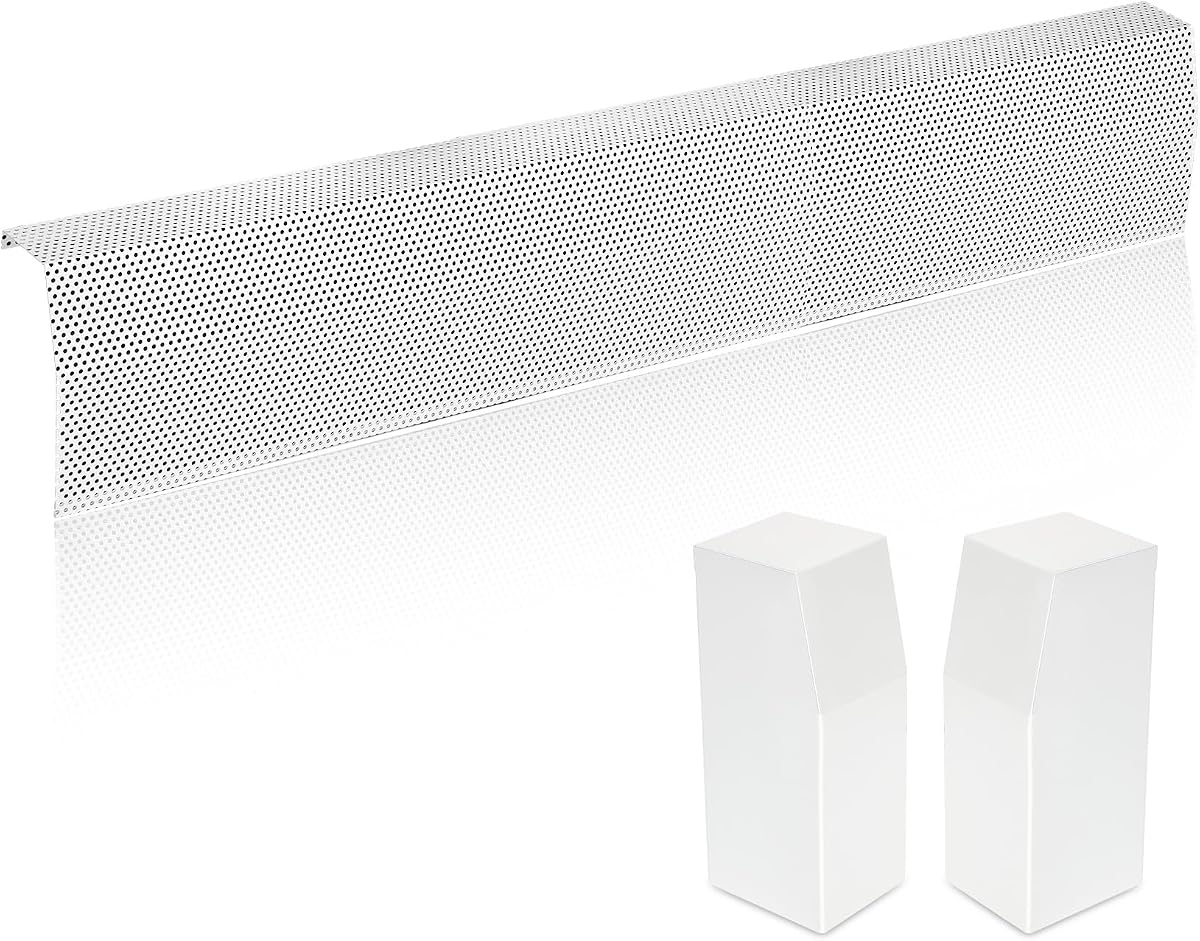
6 FT Baseboard Heater Cover
4.5Editor score
Two three-foot panels included
Galvanized steel construction
Clear dimensional compatibility guide
Tool-free snap-on installation
Our Baseboard Heater Covers guide compares 10 covers for fit, installation, ventilation, durability, safety, and hydronic or electric heater compatibility.
Baseboard heater covers can refresh a room, conceal aging metalwork, and create a safer barrier around hot heating elements. A worthwhile cover should fit without forcing, preserve necessary airflow, suit the heater type, and look deliberate once installed. The right model depends heavily on accurate measurements and whether the existing system is hydronic or electric.
This guide compares ten metal baseboard heater covers based on the supplied dimensions, materials, installation methods, ventilation designs, end-cap arrangements, and compatibility information. It includes adjustable covers, fixed-length multipanel systems, and models intended specifically for hot-water baseboard heaters, helping readers match coverage to their existing installation.
Each review highlights the product's strongest benefits, important limitations, and ideal homeowner. The first three picks represent the most compelling overall, budget, and premium options, while the complete ranking explains the differences among every cover. Product details, ratings, and availability can change, so confirm the latest listing and dimensions before purchasing.
4.5Editor score

5.0Editor score
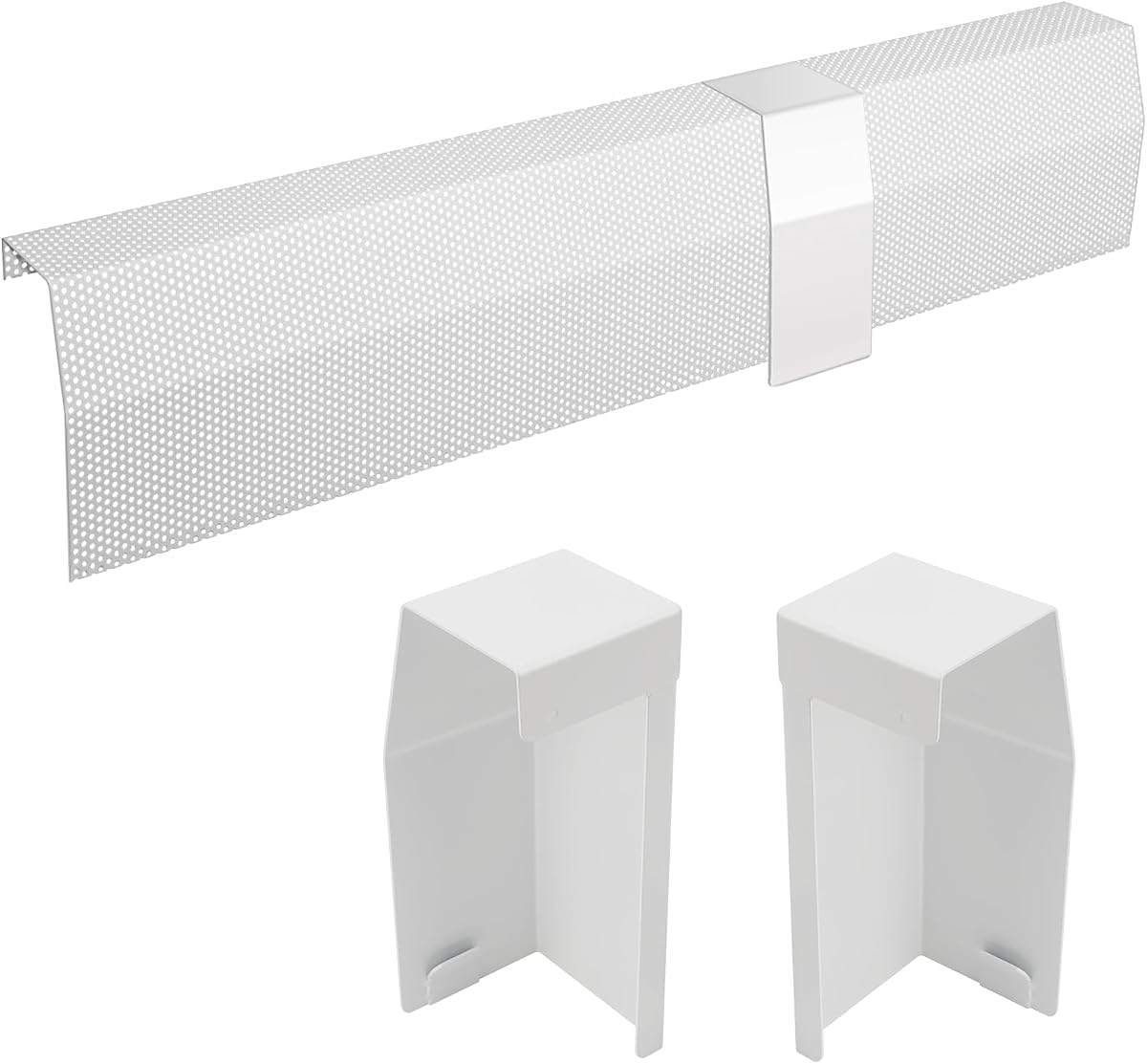
4.5Editor score
The comparison below organizes all ten covers by length, adjustability, construction, and heater compatibility, making it easier to identify the model that matches your measured installation.


The 6FT Baseboard Heater Cover is a long, adjustable solution for replacing tired covers or concealing a substantial radiator assembly. It carries a 4.4 rating and stands out for its one-to-six-foot sizing range, which gives homeowners more flexibility than a fixed three- or four-foot panel. The white finish is designed to blend with common interior trim while hiding corrosion, dents, and discoloration on the original heater front.
We may earn a commission when you buy through this link, at no additional cost to you.
Its powder-coated metal construction is a central advantage over inexpensive plastic alternatives. According to the supplied product information, the coating is designed to resist rust and corrosion, while the metal body is intended to withstand heating temperatures without the warping and brittleness associated with some plastics. Rounded edges make the exterior less hazardous in homes where children or pets spend time near the wall.
Installation is centered on a snap-on design with an end cap. The product information states that it can be fitted over existing baseboard covers without drilling, demolition, or professional installation. A perforated panel is intended to promote airflow and even heat distribution, but it is still important to keep the openings clear and never block the heater's required ventilation.
This is a practical choice for a longer run that is no more than six feet and falls within the manufacturer's stated dimensional limits. It is less suitable for an unusually tall, deep, or nonstandard heater because the cover must fit without bending or obstructing the original assembly. Measure first, then compare the product's dimensions with your backplate, element depth, and total run.
Because the cover adjusts from one to six feet, it can often replace more than one conventional panel without cutting pieces to fit. That flexibility is particularly useful in rooms with long exterior walls, provided the existing heater and backplate match the listed fit requirements.
The perforated face and open lower area are intended to support natural convection while shielding the heating element from direct contact. Keeping those passages unobstructed helps the heater distribute warmth efficiently and limits the collection of dust on concealed surfaces.
We may earn a commission when you buy through this link, at no additional cost to you.
The 4FT Baseboard Heater Cover offers a smaller adjustable alternative for common residential baseboard runs. Its 4.2 rating reflects a practical design centered on tool-free installation, a white powder-coated finish, and a one-to-four-foot adjustment range. It is aimed at homeowners who want to update an aging cover without cutting sheet metal or hiring an installer.
We may earn a commission when you buy through this link, at no additional cost to you.
The product information highlights rust and corrosion resistance, along with a metal construction intended to tolerate high temperatures without the warping or cracking associated with plastic covers. A perforated face supports airflow through the enclosure, while rounded edges reduce the severity of accidental contact. The exterior can be maintained by wiping it with a damp cloth.
The principal trade-off is its maximum span. A four-foot adjustment cannot cover a five- or six-foot heater, and the supplied information describes compatibility in broad terms rather than listing exact height and depth limits. Buyers should treat the adjustable range as a starting point, not permission to stretch the cover over mismatched components.
This cover is most appropriate for a compatible heater measuring no more than four feet, especially in a bedroom, bathroom, or smaller living area. It is a strong option when the goal is a clean, tool-free cosmetic replacement without the complexity of a multipanel system. Accurate measurement remains essential before ordering.
The one-to-four-foot range makes this model useful for many short or medium baseboard installations. It gives buyers some tolerance for imperfect length estimates while remaining easier to position and handle than a longer cover.
The white powder-coated surface is intended to resist rust, corrosion, and everyday marks. Routine care is straightforward: allow the heater to cool and wipe the cover with a damp cloth rather than using harsh chemicals.
We may earn a commission when you buy through this link, at no additional cost to you.
The Redants 3 FT Baseboard Heater Cover is designed for hydronic baseboard heaters and has a 4.4 rating. Its defining feature is a clear fit specification: the unit is intended for assemblies no taller than 7.5 inches from the floor to the top of the backplate and no deeper than 3.25 inches at the element. That specificity is helpful in a category where nominal lengths can be misleading.
We may earn a commission when you buy through this link, at no additional cost to you.
The cover uses 24-gauge powder-coated steel to conceal a rusty or dated front panel. Its oversized vent slots are designed to lower the exterior surface temperature and support continued heat distribution. The product information also describes the cover as creating a barrier against direct contact with the hot baseboard element, which can be helpful in family spaces.
Installation is presented as a three-minute slide-on process, and the package includes two wall brackets for added stability when needed. One important limitation is the control-access issue on electric models: the knob may be hidden, so the end cap can be popped off to adjust the unit or install a wall thermostat. Because the cover is specifically designed for hydronic heaters, electric compatibility should be considered an exception rather than the default.
Choose this model for a three-foot hot-water baseboard installation that falls within the stated limits and needs a more finished appearance. The included brackets, end caps, and oversized slots make it a well-rounded replacement for a hydronic system. Verify the depth and height before ordering, particularly if the current front plate has a different profile.
The stated height and depth limits give buyers more useful guidance than length alone. Measure the old backplate and element in several places, especially if the assembly has been modified, before assuming the cover will slide on cleanly.
Oversized slots are designed to release warm air while shielding much of the element from accidental contact. The cover should still be installed without pinching, bending, or blocking the slots, and surrounding furnishings should not be placed against it.
We may earn a commission when you buy through this link, at no additional cost to you.
The 5FT Baseboard Heater Cover occupies a useful middle position between shorter three- and four-foot products and the longer six-foot option. It has a 4.4 rating and an adjustable range from one to five feet. That makes it well suited to many residential baseboard runs where replacing several separate panels would otherwise be inconvenient.
We may earn a commission when you buy through this link, at no additional cost to you.
The white powder-coated metal exterior is designed to resist rust, corrosion, and dents while standing up to the temperatures associated with baseboard heating. Rounded edges improve the appearance and reduce sharp corners. Perforated ventilation is intended to maintain airflow so that the enclosure does not act like a solid wall over the heating element.
Its installation relies on a snap-on configuration and included end-cap approach, so no cutting, drilling, or demolition should be necessary. As with any cover, correct alignment matters. If the unit is forced, twisted, or compressed, the edges may not sit neatly and the ventilation could be distorted.
This product is best for a compatible heater no longer than five feet. Buyers seeking a broad adjustment range and straightforward installation will find it easier to work with than a rigid multi-piece system, while anyone with a six-foot run should select a longer option. Measure the full assembly and compare the geometry before purchase.
A one-to-five-foot span covers many single-room and partial-wall installations. The adjustment also allows some tolerance when the visible heater length is not perfectly consistent, as long as the cover's height and depth remain suitable.
The snap-on design and powder-coated white finish offer an efficient cosmetic upgrade. It is especially helpful for replacing rusted panels without cutting new sheet metal or disturbing the heating element.
We may earn a commission when you buy through this link, at no additional cost to you.
The SDSNTE 5 Ft Steel Baseboard Heater Cover is a substantial multipanel replacement with a 4.5 rating. Unlike an adjustable cover, it is built from a two-foot section, a three-foot section, a coupler, and end caps. The modular construction makes the package suitable for a five-foot run while allowing the installer to position the individual sections around the heater assembly.
We may earn a commission when you buy through this link, at no additional cost to you.
Its main premium feature is the gauge of the steel. The cover uses 21-gauge steel with a white stoving varnish coating, while the end caps use 16-gauge material. Those specifications suggest a construction-focused alternative to lighter 24-gauge covers, although actual handling will depend on the number of pieces and the dimensions of the installation.
Installation is described as a no-tool slip-on process: remove the old cover, slide the new panels over the heating element, and attach the end caps. The single-panel construction is intended to maintain airflow around the element while creating a physical barrier for children and pets. Because there is a coupler and multiple sections, careful alignment is more important than with a one-piece adjustable cover.
This is an attractive option for a homeowner who values heavier metal construction and wants a complete modular replacement set. It is best for a heater under five feet whose height is under the stated limit and whose width does not exceed 3.25 inches. Buyers should consider whether the additional parts make the assembly less convenient for their particular space.
The steel body and thicker end caps distinguish this set from lighter covers made with thinner steel. A sturdy enclosure can better resist knocks and deformation, although the relevant concern is that every panel, coupler, and cap fits together without warping.
The two-foot and three-foot sections can be combined to create a five-foot run, with the coupler joining the panels. This arrangement offers more placement flexibility than a single rigid piece while still providing a complete end-to-end appearance.
We may earn a commission when you buy through this link, at no additional cost to you.
The 4FT Baseboard Heater Cover with Endcap is built around a one-to-four-foot adjustable design and holds the highest listed rating in this roundup at 5.0. It is specifically made for hydronic hot-water heater systems, making heater-type confirmation an essential part of the buying process. The L-slot connection is designed to slide over compatible existing backplates and end caps.
We may earn a commission when you buy through this link, at no additional cost to you.
A white powder-coated finish gives the cover a clean appearance and is intended to resist deformation, peeling paint, and rust during prolonged use. The product information also states that the manufacturer will address warping, peeling paint, or rust if it occurs, which adds reassurance for buyers considering a longer-term replacement.
Its ventilation design uses three-millimeter perforations and leaves space at the bottom for natural convection. The intent is to circulate warm air more evenly without preventing the cover from enclosing and shielding the heating element. Rounded edges and corners further reduce the risk of injury from direct contact.
This is an excellent choice for a compatible four-foot hydronic assembly, especially one covered by an L-slot backplate. It is not the right choice for an electric baseboard or a heater outside the specified size range. Measure the old unit, confirm the connection method, and compare the new dimensions before ordering.
The explicit hydronic focus is an advantage for buyers who know their system uses hot-water baseboard heating. It prevents an unsuitable cover from being chosen based solely on length, and it makes the required backplate geometry more important before purchase.
The small perforations and open lower area are intended to release heated air into the room while maintaining a protective shell. Avoid placing rugs, furniture, or stored objects against the cover because obstructed airflow can reduce performance.
We may earn a commission when you buy through this link, at no additional cost to you.
The 3FT Baseboard Heater Cover combines a 5.0 rating with a compact one-to-three-foot adjustment range, making it the most balanced pick for many common residential installations. Its white powder-coated metal construction is designed to hide an old front panel while adding a more finished appearance around the radiator.
We may earn a commission when you buy through this link, at no additional cost to you.
A major convenience is the no-customization approach. Instead of cutting a cover to fit, the panel can be adjusted to the required span and snapped into position. The supplied information highlights a simple click-style installation that avoids drilling, demolition, and professional help, which makes the product accessible for DIY replacement projects.
The design also addresses safety and ventilation. Rounded edges reduce injury risks around the hot element, while perforated metal is designed to maximize airflow and support even heat distribution. The product information claims that the enclosure can create a barrier around the heating elements and reduce the need to brush against them, although actual heating results depend on the original system and installation.
This is the strongest general recommendation for a short baseboard run of up to three feet, especially when a one-piece tool-free solution is preferred. It is less suitable for longer heaters, unusually deep assemblies, or installers needing explicit hydronic dimensions. Confirm the physical fit and keep the ventilation openings unobstructed.
The adjustable snap-on format minimizes the number of separate components that must be aligned. For many homeowners replacing a short cover, that simplicity is more useful than the ability to assemble a long multipanel system.
The enclosure helps shield direct contact with the heating element, while the perforated panel and open lower edge allow warm air to circulate. A clean installation should have no gaps that expose sharp edges and no compressed sections that restrict airflow.
We may earn a commission when you buy through this link, at no additional cost to you.
The 6 FT Baseboard Heater Cover for Baseboard Heating is a budget-minded set of two three-foot panels that can be combined to form a six-foot enclosure. It has a 4.5 rating and includes end caps. The design is suitable for replacing old electric or radiator covers when the existing heater's measurements fall within the stated ranges.
We may earn a commission when you buy through this link, at no additional cost to you.
The product information provides unusually specific fit guidance. The ground-to-backplate-top measurement should be between 7.5 and 9.5 inches, the element-to-backplate-top dimension between 5 and 6.75 inches, and the depth from the backplate to the front of the element should be less than 3.25 inches. These figures allow a buyer to determine eligibility before attempting installation.
The panels use 24-gauge galvanized steel, while the end caps use 22-gauge galvanized steel with a white enamel coating. This construction is intended to resist moisture and corrosion and provide a neat white appearance. Installation involves removing the existing end cap and front plate, snapping the new end caps onto the panels, and pressing the assembly onto the original backplate.
This set is a good value-oriented choice for a compatible six-foot installation, particularly when replacing a long, rusty front. The main visual trade-off is that two separate panels create a joining point, even when the ends and panels are carefully aligned. Measure all three specified dimensions and confirm that the cover can press onto the existing backplate without forcing it.
The three dimensional ranges provide a practical checklist before purchase. Measure the old assembly rather than relying on the nominal room or wall length, because heater height and element depth can vary even when the overall run looks similar.
The included three-foot sections can be joined to span six feet, reducing the need to source several unrelated pieces. Their galvanized construction is designed for moisture resistance, while the white enamel end caps create a finished appearance at the exposed ends.
We may earn a commission when you buy through this link, at no additional cost to you.
The SDSNTE 6 Ft Steel Baseboard Heater Cover is a modular six-foot solution for homeowners replacing a longer hydronic-style baseboard assembly. It has a 4.5 rating and shares several construction traits with the five-foot model, including a 21-gauge steel body, 16-gauge end caps, a white stoving varnish finish, and a slip-on installation process.
We may earn a commission when you buy through this link, at no additional cost to you.
The package contains two three-foot steel panels, a coupler, and end caps. That arrangement creates a full six-foot run while allowing the panels to be positioned separately before joining them. The product information describes the construction as durable and rustproof, and the larger end-cap material adds support at the exposed ends of the assembly.
The single-panel construction is designed to preserve effective airflow around the heating element while preventing direct touching. Installation starts with removing the old cover and sliding the new cover over the element, followed by attaching the end caps. A coupler is then used to connect the sections, making alignment and panel order important.
This set is best for a compatible heater under six feet, with a height under the stated limit and a width no greater than 3.25 inches. It appeals to buyers who prefer heavier metal construction and a complete replacement set. The trade-off is additional handling and assembly compared with a single adjustable panel, so ensure there is enough working room to position both three-foot sections.
The 21-gauge body and 16-gauge end caps make this set more construction-focused than the thinner 24-gauge options. The heavier components may feel more robust, but their weight can also make positioning more difficult in a tight room.
Two three-foot panels, a coupler, and end caps cover the main visible elements of a six-foot installation. A matching full set can produce a more consistent result than mixing covers from different manufacturers, particularly when the original panels have different finishes or vent patterns.
We may earn a commission when you buy through this link, at no additional cost to you.
The Redants 3 FT Baseboard Heater Cover with Left and Right Endcaps earns a 4.6 rating, placing it among the strongest-rated products in this guide. It is designed primarily for hydronic baseboard heaters and is intended to conceal rusty front plates while creating a cleaner, more protective exterior.
We may earn a commission when you buy through this link, at no additional cost to you.
Its most useful distinguishing feature is the inclusion of two wall brackets, which can add stability after the cover slides over the old plate. The cover uses 24-gauge powder-coated steel, and the listed construction is designed to resist chipping, yellowing, and corrosion through seasons of hot-water baseboard use. The manufacturer also states that it will replace the cover if it fails under normal use.
Large vent slots are intended to drop the surface temperature, support continued heat output, and reduce direct contact with the heating element. As with any enclosure, airflow depends on correct placement. Furniture, curtains, and stored items should not be pressed against the cover, and the panels should remain flat.
This product is well suited to a three-foot hot-water installation with a backplate no higher than 7.5 inches from the floor and an element depth below 3.25 inches. The end cap can be removed on an electric model to reach a knob or install a wall thermostat, although the product is fundamentally designed for hydronic systems. Confirm the controls and fit before choosing it for an electric heater.
The included wall brackets can help stabilize the cover after it slides over the existing plate. Their usefulness depends on the wall surface, spacing, and the bracket positions specified by the manufacturer, so installation should follow the supplied guidance.
The oversized ventilation pattern is intended to let warm air rise while creating a cooler outer surface. Keeping the slots open is essential, and the cover should never be used as a shelf or support for stored items.
We may earn a commission when you buy through this link, at no additional cost to you.
Choosing a baseboard heater cover requires balancing length, profile, installation style, and ventilation. The right decision starts with the existing heater rather than the room dimensions, because a cover that looks suitable can still fit poorly or obstruct heat if its measurements do not align.
Measure the complete existing assembly, not just the wall opening or the advertised length. Relevant dimensions include the overall run, height from the floor to the backplate top, the distance from the bottom of the element to the top of the backplate, and the depth from the backplate to the front of the element. Record both ends of the run if it is uneven, and note any thermostat, valve, or control that must remain accessible. This is especially important for adjustable covers, whose length range does not guarantee that the height and depth will fit.
Baseboard heaters may use a hot-water or steam system, or they may use electric elements. Several products in this guide are designed specifically for hydronic baseboard heaters, while some multipanel covers are described as suitable for electric or radiator-style covers. An electric unit may have a built-in knob or other control that becomes hidden behind the enclosure. If controls must remain accessible, the product information may direct you to remove an end cap or use a wall thermostat. Never assume that a cover which slides over the front also supports every electric model.
An adjustable one-piece cover offers convenient length flexibility and fewer components to align. It is a strong choice for a single short or medium run where the backplate profile is compatible. A modular system uses two or more sections, a coupler, and end caps, making it useful for longer runs and offering more control over panel placement. Modular covers require more assembly and may leave a visible joint, while adjustable covers can be harder to position if the heater is not straight. Choose based on the room geometry rather than appearance alone.
The front of the heater is only one part of the installation. The new cover must engage the existing backplate, end caps, or locking tabs without forcing the assembly. Some products use an L-slot connection, while others expect the old front plate to be removed and the new panels pressed or slid onto the backing. Compare the connection description with what can be seen on the existing heater. If the original backplate has a nonstandard profile, a broad statement about fitting most units may not be enough.
Metal covers are the dominant choice in this roundup, with options ranging from 21-gauge to 24-gauge steel. Heavier-gauge material can offer a sturdier feel, while thinner panels may be easier to maneuver. Coating quality also matters: the listed products use powder coating, galvanized steel, enamel, or stoving varnish finishes intended to resist rust, corrosion, chipping, and yellowing. Match the finish to the surrounding trim, and note that cleaning methods should be gentle enough not to scratch or damage the coating.
A cover is intended to shield direct contact and improve appearance without suppressing the heater's output. Look for perforated faces, oversized vent slots, or an open lower edge that allows warm air to circulate by natural convection. The supplied product information repeatedly emphasizes ventilation as a performance feature. Do not block those openings with trim, furniture, rugs, or stored objects. If a cover has to be compressed or bent to fit, its vents may not provide the intended airflow, so a different size or model is the better solution.
End caps finish the exposed ends and help give the enclosure a deliberate appearance. Some products include distinct left and right caps, while others provide a more general end-cap arrangement. Hydronic-oriented covers may also include two wall brackets for additional support. Check whether the package contains everything needed for the full run, including a coupler when the cover is modular. Missing hardware can prevent a secure installation, so review the package contents before ordering.
Rounded edges, enclosed elements, and a barrier against direct contact can make the heater safer around children and pets, but a cover should never be used to conceal an exposed hazard while creating another one. Leave access to required controls and inspect the metal for rust, loose joints, warping, or peeling finish. Cleaning should generally involve a cool surface and a damp cloth. Avoid abrasive pads, harsh chemicals, and water forced into ventilation slots. Periodic inspection helps preserve both appearance and safe operation.
Begin by turning off the heating system and allowing the heater to cool completely. If the boiler or hot-water system supports isolation, follow its operating procedure before working near the element. Record the positions of any brackets, control knobs, end caps, and couplers, and photograph the existing assembly before removing parts. This makes it easier to restore controls or identify the correct panel orientation if the new cover does not fit as expected.
Remove the old front cover and end components according to the product instructions. Position the replacement over the element or backplate, align its connection points, and attach the end caps or brackets without forcing the panels. For modular systems, join the sections only after the metal is square and the vent openings are unobstructed. A cover should sit flush enough to look intentional, but it should never be compressed, twisted, or used to pull a crooked backplate into alignment.
After installation, restore the heating system and observe the unit as it warms. Check that warm air moves through the perforations or open lower edge, that no panel rattles, and that controls remain accessible. Clean the exterior with a soft damp cloth while the cover is cool, and periodically inspect the coating, vent slots, end caps, brackets, and coupler. Replace a cover that develops significant rust, peeling paint, warping, sharp edges, or compromised fasteners.
Measure the heater's total length, height, element depth, and backplate profile before purchasing. Compare those figures with the manufacturer's stated limits rather than relying on the room length or the cover's advertised size. Also note any thermostat, valve, or knob that must remain accessible, since a snug visual match does not guarantee a functional fit.
It depends on the specific model and the way the electric heater is controlled. A cover designed for hydronic systems may physically fit some electric units, but the built-in knob or controls could become obstructed. Follow the manufacturer's guidance, remove the appropriate end cap when instructed, or use a wall thermostat only when compatible with the heater.
A properly fitted, ventilated cover should preserve the intended airflow and allow the heater to distribute warmth normally. Output can be restricted if the cover is bent, the vents are blocked, or furniture is placed against it. Match the cover to the heater and keep the ventilation openings and lower airflow path unobstructed.
Adjustable covers are convenient for short and medium runs because they offer some tolerance in length and usually install as a single piece. Fixed or modular systems can be better for longer heaters or installations requiring separate panel placement. The better choice depends on the backplate design, available space, and the total length that must be covered.
Some covers are designed to slide directly over the old front plate, while others require removal of the old cover and end cap before installation. Follow the instructions for the selected model because forcing a new cover over incompatible hardware can create gaps, compress the panel, or damage the vent pattern.
Allow the heater and cover to cool, then wipe the surface with a soft cloth lightly dampened with water. Avoid abrasive pads, harsh chemicals, and aggressive scrubbing that could scratch the powder coat, enamel, or varnish. Do not spray liquid directly into ventilation slots, and inspect the finish periodically for rust, peeling, or warping.
A correctly fitted metal cover can create a barrier between the hot element and direct contact while retaining ventilation. Rounded edges and enclosed surfaces add further protection, but a cover cannot make every nearby installation completely risk-free. Secure the assembly, prevent children from pulling on it, and keep the heater's required clearances in mind.
A one-piece adjustable cover slides or snaps into place as a single panel and is usually easier to align. A modular cover uses multiple sections, a coupler, and end caps, making it more adaptable to long runs but requiring more assembly. The best choice is the one whose connection system matches the existing backplate and whose components fit the available space.
The 3FT Adjustable Baseboard Heater Cover is the most balanced overall option, combining a 5.0 rating with one-to-three-foot adjustment and tool-free installation. The 6 FT Baseboard Heater Cover is the best budget-oriented large-system option, while the SDSNTE 5 Ft Steel Baseboard Heater Cover stands out as a premium modular set for buyers who prioritize heavier gauge construction.
For hydronic installations, the Redants covers and the 4FT Adjustable Slip-On Cover provide more explicit system guidance and useful dimensional criteria. Longer runs are best served by the six-foot adjustable, two-panel, or modular options, but the correct choice depends on the existing profile rather than length alone. Always measure height, depth, and connection points, then confirm that controls remain accessible.
Retail listings, ratings, and product details can change, so confirm the current information before buying. Most importantly, read the included installation guidance, keep every ventilation opening clear, and select the model that matches the heater type and measured assembly. With the correct fit, a baseboard heater cover can provide a cleaner, safer, and more cohesive room appearance.