
Audio-Technica ATH-M20x
4.6Editor score
Studio-oriented 40mm drivers
Circumaural sound isolation
Single-sided cable exit
Our guide compares the best headphones with 3.5mm Aux Cable, covering sound, comfort, microphones, portability, and compatibility across ten options for
Headphones with 3.5mm Aux Cable offer a dependable way to enjoy music, calls, gaming, and online meetings across phones, laptops, tablets, game consoles, and other compatible equipment. A good model should balance sound quality, comfort, microphone performance, cable durability, and portability while providing a secure connection without demanding complicated setup.
We compared the ten products in this guide by examining their stated driver designs, physical construction, wired controls, microphone capabilities, compatibility, and storage features. The list covers over-ear, on-ear, and earbud-style options, along with two replacement auxiliary cables for readers who already own compatible headphones but need a more dependable connection.
Each numbered review identifies the strongest reason to consider a product, along with its most relevant trade-offs. Ratings reflect the available customer feedback, while practical suitability depends on device ports, preferred fit, and listening habits. Product availability, features, and prices can change, so confirm current details before making a final purchase.
4.6Editor score

4.4Editor score

4.5Editor score
The comparison below covers every included product, highlighting differences in form factor, audio hardware, wired functionality, and intended use so readers can quickly narrow down the most suitable option.




The ARTIX CL750 combines a wired 3.5mm connection, an inline microphone, and a noise-isolating on-ear design in a package aimed at school, office, and everyday computer use. Its 4.3 rating reflects generally favorable customer feedback, while its strongest attraction is the breadth of supported devices. It is listed for compatibility with PCs, Macs, PS4 and PS5 systems, Xbox devices, and other 3.5mm sources.
We may earn a commission when you buy through this link, at no additional cost to you.
The physical design is more substantial than a basic portable headset. Soft cushioned earcups and an adjustable headband are intended to improve comfort during extended sessions, while the foldable construction makes the headphones easier to place in a bag or drawer. The long cord offers practical freedom when the connected device remains on a desk, and the noise-isolating on-ear fit can help reduce distractions in shared environments.
The inline microphone supports calls, meetings, podcasts, and gaming conversations, making the CL750 useful when a separate headset is unnecessary. Volume control is another convenience, although the stated information limits that control to mobile devices. That distinction matters for laptop users, who may need to adjust volume through their computer rather than the cable. It is also a general-purpose headset rather than a specialist studio monitor.
This is a strong recommendation for students and remote workers who want one wired headset for lessons, meetings, music, and compatible gaming systems. It may be less appropriate for listeners who require a highly specific sound signature, a fully wireless experience, or device-level volume control. For those needs, one of the specialized alternatives may offer a better match.
The broad 3.5mm compatibility is the CL750's most practical feature. It can move between a compatible phone, laptop, console, or other source without relying on wireless pairing, provided the connected equipment accepts a standard 3.5mm audio plug.
Cushioned ear cups, an adjustable headband, and noise isolation create a more comfortable, focused setup than lightweight travel earbuds. The foldable frame also helps users pack the headphones without leaving them permanently on a desk.
We may earn a commission when you buy through this link, at no additional cost to you.
The Sony MDR-ZX110 is a straightforward wired on-ear headphone built for people who value portability, familiar styling, and uncomplicated operation. It carries a 4.5 rating, making it one of the stronger-rated products in the list. Its defining features include 1.38-inch neodymium dynamic drivers, cushioned earpads, a closed-back configuration, and a 3.5mm stereo mini plug.
We may earn a commission when you buy through this link, at no additional cost to you.
Its frequency response spans 12Hz to 22kHz, with Sony describing the presentation as delivering deep bass, rich midrange, and soaring highs. The 24-ohm impedance and driver design also make it a natural match for phones, laptops, tablets, and other consumer sources. Because it is wired, there is no charging, pairing process, or wireless latency to manage.
The main limitation is that the product information does not list an integrated microphone or inline remote. It is therefore best suited to music, video, and audio playback rather than calls that require a headset microphone. The fixed cord is not detachable, although the swiveling earcups fold inward to improve storage. A 3.94-foot length is convenient for a desk or nearby device but offers less reach than a longer cable.
The MDR-ZX110 is an excellent general-purpose recommendation for students, commuters, and casual listeners who want an established on-ear design without unnecessary wireless features. Choose it when portability, consistent wired performance, and a lightweight form matter more than headset calling controls. Users who regularly participate in online meetings should instead consider an option with a built-in microphone.
The swiveling earcup mechanism allows the headphones to fold for storage, while the lightweight structure helps prevent bulk from becoming an issue in a bag. This makes the MDR-ZX110 well suited to commuting and shared workspaces.
A 12Hz–22kHz frequency range and 1.38-inch neodymium dynamic drivers support a punchy, rhythmic presentation. The closed-back earcups and cushioned pads create a more enclosed listening experience than open-air models.
We may earn a commission when you buy through this link, at no additional cost to you.
The Skullcandy Riff is an on-ear wired headset designed around convenient mobile use. It has a 4.4 rating and includes a direct 3.5mm AUX connection, a built-in microphone, and inline call and track controls. The feature set is especially useful for listeners who regularly move between music and phone conversations without wanting to handle a separate headset.
We may earn a commission when you buy through this link, at no additional cost to you.
Its durable, lightweight headband and comfortable on-ear fit should appeal to everyday users. The flat-folding and collapsible construction makes the headphones easier to pack, while the physical controls provide direct access to call handling, play and pause, and track skipping. This arrangement avoids reaching for a phone or computer when the connected source supports the corresponding commands.
The Riff does not provide the same level of technical audio information as the Audio-Technica ATH-M20x or OneOdio A70. There is no listed driver diameter, impedance, or frequency range, so its sound signature is less transparent to assess before purchase. It also remains a conventional wired headset rather than a wireless model, even though the phone controls make it feel tailored to modern mobile routines.
This is a strong choice for commuters, students, and casual listeners who want a microphone and physical media controls in a compact wired package. It is less compelling for critical monitoring, mixing, or professional audio work. For general mobile listening with frequent calls, though, the Riff offers one of the most coherent feature combinations in the guide.
The integrated microphone allows users to move from music to a mobile call without changing headsets. That makes the Riff useful for commuting, quick conversations, and everyday multitasking.
Play, pause, call, and track controls are placed on the cable for quick access. A flat-folding, collapsible frame then reduces the space the headphones occupy when stored or carried.
We may earn a commission when you buy through this link, at no additional cost to you.
The JBL Tune 530 Wired combines a 4.4 rating, a practical inline control system, and a consumer-focused bass presentation. It uses 33mm drivers under JBL's Pure Bass Sound branding, giving it a clear sonic identity centered on depth and energy. The on-ear fit, padded headband, and folding cups are designed for regular commuting, listening, and calling.
We may earn a commission when you buy through this link, at no additional cost to you.
Its flat 3.5mm cable is a particularly thoughtful detail. Rather than remaining twisted after being coiled in a bag, the cable is designed to remain smooth and reduce tangles. Reinforced connections add durability, while the one-button inline remote provides microphone access for hands-free calls. A long press can activate a compatible mobile device's native voice assistant.
The sound is aimed more at enjoyable everyday listening than neutral reference work. Bass-forward tuning can make pop, dance, electronic, and modern music feel lively, though listeners who want a flatter response for mixing may find the emphasis less useful. The inline controls also depend on device compatibility, particularly for call handling and voice-assistant functions, so Android and desktop behavior may differ.
The Tune 530 is a well-rounded recommendation for users who want bass, comfort, microphone functionality, and easy cable management in one conventional headset. It is particularly suitable for phone-based listening with a 3.5mm connection. Choose the ATH-M20x instead for isolated studio work, or the Skullcandy Riff if broader call and track controls are the top priority.
JBL's 33mm drivers and Pure Bass tuning emphasize depth and energy, giving the Tune 530 a lively character for popular genres. The goal is engaging consumer sound rather than a neutral reference signature.
The flat profile reduces knots and awkward bends, making the cable easier to pack and retrieve. Reinforced connections further support the model's positioning as a durable everyday wired headset.
We may earn a commission when you buy through this link, at no additional cost to you.
The Audio-Technica ATH-M20x is the most specialized monitoring headphone in the group, with a 4.6 rating and a clear focus on studio tracking and mixing. Instead of prioritizing wireless convenience or a compact travel profile, it uses 40mm drivers with rare-earth magnets and copper-clad aluminum voice coils to provide detailed, consistent audio reproduction.
We may earn a commission when you buy through this link, at no additional cost to you.
Its circumaural design surrounds the ears rather than resting mainly on them. That approach supports excellent sound isolation in loud environments and can help monitoring sessions remain focused. The tuning is enhanced in the low-frequency region, providing fuller bass than a strictly flat reference response while still offering the balance needed for tracking and mixing decisions.
The trade-off is portability. The ATH-M20x is a full-size over-ear headphone with a larger structure and a fixed single-side cable exit. It does not include a listed microphone, remote, or folding travel mechanism. As a result, it is less convenient for calls and less suitable for users who want a headset to alternate between music and communication.
The ATH-M20x is the right recommendation for musicians, producers, podcast editors, and serious listeners who want isolation and monitoring-oriented construction. It also works for anyone willing to use separate computer or studio microphones. For general travel and calls, the JBL Tune 530 or Skullcandy Riff offers a more integrated and portable experience.
The circumaural fit helps block distracting environmental sound while reducing leakage. This is especially useful in busy studios, rehearsal rooms, or any setting where external noise could compromise critical listening.
The 40mm rare-earth driver system and copper-clad aluminum voice coils are engineered for a controlled, detailed presentation. Low-frequency enhancement gives tracks more body without making the headphones a specialized bass product.
We may earn a commission when you buy through this link, at no additional cost to you.
This Sony MDR-ZX110 listing emphasizes a portable, open-air stereo design with extra bass and broad device compatibility. Its 4.5 rating indicates solid customer reception, and the use of 1.38-inch dome drivers connects it to Sony's familiar on-ear headphone format. A 12Hz–22kHz frequency range supports deep low-end output and extended treble coverage.
We may earn a commission when you buy through this link, at no additional cost to you.
The swivel design allows the earcups to rotate for easier storage, making the headphones convenient to carry between locations. Unlike a fully enclosed circumaural model, the open-air construction offers a more relaxed listening experience and lets some sound outward. That can be pleasant at a desk or during casual listening, though it is less effective in noisy locations.
Its strongest appeal is the extra-bass emphasis. Fans of energetic pop, hip-hop, electronic, and bass-forward tracks may find the presentation especially satisfying. The trade-off is that open-air listening and pronounced bass can reduce the precision sought by critical listeners. There is also no integrated microphone listed, so the headphones are better suited to media playback than hands-free communication.
This model is well suited to users with compatible phones, tablets, laptops, MP3 players, and other 3.5mm sources who prioritize portability and impactful bass. Choose the Audio-Technica ATH-M20x for stronger isolation and a more studio-oriented purpose, or consider the JBL Tune 530 when a microphone and inline remote are necessary.
The extra-bass focus gives music a heavier, more energetic feel, particularly in genres built around strong drums and low-frequency lines. The broad frequency range also provides room for brighter treble details.
The dynamic open-air design creates a less sealed experience than over-ear studio headphones. It may feel relaxed during casual use, although the reduced isolation makes it less suitable in busy environments.
We may earn a commission when you buy through this link, at no additional cost to you.
The OneOdio A70 stands apart by supporting both Bluetooth and wired listening. It has a 4.4 rating, 40mm neodymium drivers, and a flexible over-ear design intended for music, studio use, gaming, and shared listening. Unlike the other predominantly wired options, it can operate wirelessly or connect through the included 3.5mm-to-3.5mm and 3.5mm-to-6.35mm cables.
We may earn a commission when you buy through this link, at no additional cost to you.
Its wired mode offers a practical advantage over many Bluetooth headphones because the headphones do not need power to function. A locking mechanism on the auxiliary plug is intended to keep the connection stable, addressing a common weakness of standard 3.5mm plugs. The folding, rotatable structure, soft memory cotton, and protein leather earpads are designed for extended wear and easier storage.
The A70 is larger and more complex than a basic wired headset. It includes wireless electronics, a built-in high-definition microphone, and noise reduction for calls, so it can serve as an everyday headset as well as a listening device. The tradeoff is size, additional controls, and the need to consider battery power when using Bluetooth. Its sharing feature also requires a specific cable arrangement.
This is a strong recommendation for users who want the security of a wired 3.5mm connection but also value wireless freedom. It particularly suits mobile DJs, students, gamers, and listeners who switch between devices. Those seeking a smaller, simpler headset should look to the Sony MDR-ZX110 or Skullcandy Riff instead.
Bluetooth supports convenient wireless playback, while the included cables preserve a direct connection. Because the wired mode does not depend on battery power, the A70 can remain usable when wireless power is unavailable.
The locking auxiliary plug helps reduce accidental disconnections. A second pair of headphones can also join the same source through the included sharing arrangement, making the model useful for multiplayer games and shared videos.
We may earn a commission when you buy through this link, at no additional cost to you.
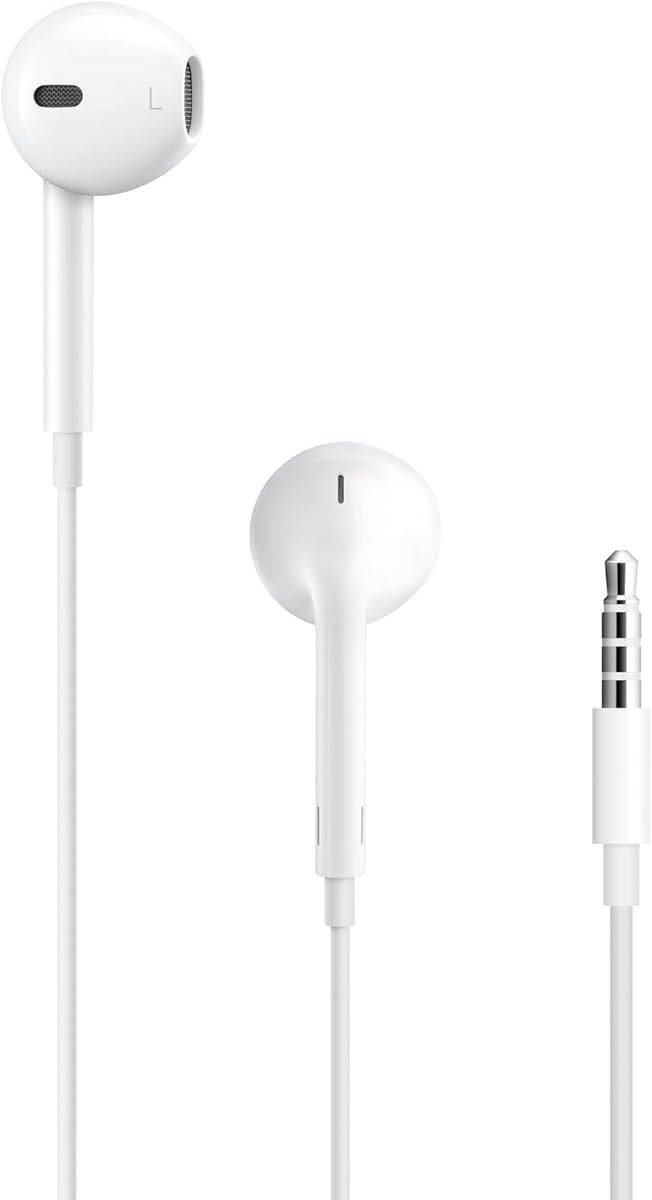
Apple EarPods with a 3.5mm plug are the most compact main headphone option in this guide. The product has a 4.6 rating, a geometry designed around the shape of the ear, and a built-in remote that handles music, video, calls, and volume. Their direct plug makes them immediately usable with devices that have a standard 3.5mm headphone jack.
We may earn a commission when you buy through this link, at no additional cost to you.
The unusual open-style shape is intended to sit more comfortably than traditional circular earbuds for many listeners. Integrated speakers are engineered to maximize output and minimize sound loss. The inline remote gives direct control over playback and volume, while the integrated microphone captures the user's voice during calls, FaceTime conversations, and voice-assistant requests.
Their primary weakness is environmental isolation. The open earbud form allows more outside sound to enter and can also permit sound to leak outward, making the EarPods less effective on a noisy commute or in a shared office. They also offer less spacious imaging and bass impact than the over-ear and studio models in this list. These are trade-offs associated with a design optimized for compactness and directness.
The EarPods are a compelling choice for listeners who want a small wired headset without sacrificing an inline remote or microphone. They are particularly appropriate for travel, calls, and lightweight everyday use. For stronger isolation, fuller sound, or a full-size fit, consider the JBL Tune 530, Sony MDR-ZX110, or Audio-Technica ATH-M20x.
The built-in remote lets users adjust volume, manage playback, and answer or end calls without opening the connected device. This keeps the EarPods practical for routine phone and media use.
The ear-shaped geometry is designed to distribute the earbuds more naturally than conventional circular shapes. The compact format also makes the EarPods easier to carry than full-size on-ear or circumaural headphones.
We may earn a commission when you buy through this link, at no additional cost to you.
The Syncwire is a replacement 3.5mm auxiliary cable rather than a full headphone, but it addresses a common need for readers who already own compatible headphones. It has a 4.6 rating, a 3.3-foot length, nylon braiding, and 24K gold-plated male connectors. The 3.5mm format connects headphones to compatible phones, tablets, laptops, car stereos, speakers, and other audio equipment.
We may earn a commission when you buy through this link, at no additional cost to you.
Its construction is designed for both signal quality and daily wear. Polished gold-plated connectors are intended to maintain a reliable connection and reduce potential signal loss or noise, while double shielding protects the audio signal from interference. The nylon braid is rated for more than 15,000 bends and resists the twisting, kinking, and fraying that commonly damage basic cables.
The main limitation is length. At 3.3 feet, the cable is convenient for a phone in a pocket, a nearby laptop, or a compact car setup, but it may not reach comfortably from a wall-mounted source to a listening position. It also cannot solve a faulty headphone driver or earpad, and it adds no microphone or playback controls of its own. Compatibility with protective phone cases should be checked because certain cases are specifically listed as incompatible.
The Syncwire is best recommended to listeners who need a compact, durable replacement cable for portable use. Buy it to replace a damaged lead, keep a spare connection in a bag, or connect existing headphones to a 3.5mm source. For a longer cable, the six-foot AUX Cord in this guide offers greater reach, while the Audio-Technica ATH-M20x remains the premium headphone choice.
The nylon braid and reinforced construction help the cable tolerate repeated bending and coiling. An organizer is also included to reduce messy storage when the cable is not in use.
Gold-plated connectors and double shielding are intended to preserve a clean stereo connection. These features are especially relevant in cars and other locations where cables may encounter interference or repeated handling.
We may earn a commission when you buy through this link, at no additional cost to you.
This AUX Cord is a six-foot replacement cable distinguished by its right-angle connector, pure copper core, and triple shielding. It carries a 4.6 rating and supports standard 3.5mm stereo connections for headphones, car stereos, speakers, PS4 and PS5 systems, PCs, and tablets. It is a practical companion for anyone who needs more cable reach or a gentler connection angle.
We may earn a commission when you buy through this link, at no additional cost to you.
The right-angle plug is especially useful where space is limited, such as inside a crowded center console or beside a gaming controller. It redirects the cable away from the device, reducing strain at the socket and avoiding a bulky straight plug pressing against the user. Its nylon braid and reinforced connectors are tested for more than 20,000 bends, supporting regular transport and repeated handling.
The product information describes pure copper cores and triple shielding as a means of reducing distortion, interference, and crackling. As with any passive analog cable, actual performance also depends on the source, headphones, and connection quality. The right-angle shape may not suit every recessed or already tightly occupied port, so users should inspect their device before buying. Modern devices without a native jack require a separate adapter, which is not included.
This cable is best for extending the practical reach of existing 3.5mm headphones or connecting them to compatible equipment around a desk, car, or gaming setup. It is not a complete listening solution, but it is a durable and thoughtfully designed accessory. For portable use, the shorter Syncwire is easier to manage, while the Audio-Technica ATH-M20x is the stronger choice when a new premium headphone is needed.
The 90-degree plug keeps the cable close to the device instead of projecting straight outward. This can reduce socket strain in a car and create a more comfortable connection beside a controller.
The six-foot length gives listeners more freedom to move around a desk or reach a car stereo. Pure copper cores and triple shielding are intended to maintain a clear stereo signal with reduced interference.
We may earn a commission when you buy through this link, at no additional cost to you.
The most useful choice depends on whether you prioritize sound isolation, calling features, portability, bass, studio accuracy, or simply a reliable connection. Review the following factors alongside your source-device ports and daily listening environment.
In short, verify the physical port and its intended audio function before ordering.
In short, choose the smallest fit that still provides the isolation and comfort you need.
In short, prioritize a microphone and control layout that match your most common devices.
In short, choose engaging bass for casual listening and monitoring-focused balance for audio work.
In short, use sealed or noise-isolating designs when privacy and distraction reduction matter most.
In short, match cable reach and connector angle to the space where you actually listen.
In short, prioritize a secure fold and short, manageable cable for frequent travel.
In short, choose pure wired simplicity or hybrid flexibility based on your need for constant connectivity.
Begin by confirming that the source device has a working 3.5mm headphone output and that the connector fits without force. Connect the plug fully, start playback at a moderate level, and then adjust the device volume. When using inline controls, consult the device guide because supported buttons can differ among phones, tablets, computers, and media players. For a replacement cable, keep the connector straight during insertion rather than bending it at the socket.
For storage, disconnect the cable from the device and avoid wrapping it tightly around the headphones. A loose loop or a dedicated case protects the conductors and ports. Fold only headphones whose hinges are designed to rotate, and avoid forcing the earcups into an unnatural position. If the cable seems dirty, disconnect it and clean it gently with a dry or lightly dampened cloth rather than pulling the fabric across the connector pins.
Listen at responsible volumes and take periodic breaks, especially with over-ear, on-ear, or earbud models that create a close seal. Inspect the cable for sharp bends, exposed insulation, loose plugs, or intermittent sound, and replace a damaged lead rather than forcing it into a port. Keep ports clear of dust and moisture, and do not use a replacement cable that is visibly bent, cracked, or incompatible with the intended 3.5mm socket.
Only if the device supports an appropriate adapter or a compatible digital connection. Some modern phones and computers require a USB-C or Lightning audio adapter, and the product must support the correct output mode. Check the device manufacturer's compatibility guidance before purchasing. The replacement cables in this guide are designed for native 3.5mm ports, and a separate adapter is not included.
A TRS cable carries two audio channels and a shared ground, while a TRRS cable includes an additional contact for microphone input and remote controls. A stereo headphone plug with two black rings commonly works with headphones and standard audio outputs. Compatibility with a headset microphone or inline buttons depends on the source device and whether the connected equipment supports the extra TRRS contact.
Wired headphones can be preferable because they provide a direct connection without battery management or wireless interference. They also eliminate wireless latency, although actual latency depends on the entire signal chain and game audio settings. Bluetooth remains more convenient when avoiding cables is essential. For a fixed gaming setup, a dependable 3.5mm connection is usually straightforward, provided the console or controller supports the relevant plug.
The ARTIX CL750, Skullcandy Riff, JBL Tune 530, and OneOdio A70 include built-in microphone functionality, making them more suitable for voice communication. The best choice depends on device controls and call compatibility. The Skullcandy Riff offers call and track controls, the JBL uses a one-button remote, the ARTIX provides an inline microphone and volume control, and the OneOdio adds a noise-reducing microphone and wireless calling.
On-ear models are usually lighter and easier to carry, while over-ear models tend to deliver stronger isolation and a fuller sound. Earbuds are the most compact but may provide less environmental isolation, particularly in an open design. Choose based on comfort, portability, sound preferences, and where you will listen. A larger headphone is not automatically more comfortable, so headband pressure and ear-cup fit remain important.
A standard male-to-male 3.5mm cable normally connects one audio source to one headphone input. Sharing two headphones usually requires a splitter with separate outputs and, in some cases, additional powered or compatible hardware. The OneOdio A70 offers a specific audio-sharing arrangement using its included cables. For general two-person listening, verify that the source and splitter support the intended configuration before purchasing.
Use a figure-eight winding method, secure it with a small tie or organizer, and avoid tight coils around the headphone earcups. A flat cable, such as the one on the JBL Tune 530, is generally easier to manage than a round cable. Replacement cables with nylon braiding and reinforced connectors also tolerate repeated bending, although proper storage remains important.
A new cable can resolve problems caused by a damaged conductor, dirty connector, or inconsistent contact, but it will not fix faults inside the headphones. Test the headphones with another known-good cable before replacing the original. If the issue persists, inspect the earpads, driver connections, and headphone plug, or consider a serviceable replacement. Never continue using a cable with visible damage.
The Audio-Technica ATH-M20x is the strongest choice for listeners who prioritize critical monitoring, detailed studio-oriented construction, and effective isolation. The JBL Tune 530 Wired is the most balanced everyday option, combining bass-forward sound, comfort, a foldable design, a tangle-free cable, and an inline microphone. The Sony MDR-ZX110 stands out as a lightweight, highly rated travel headphone for straightforward music and media playback.
Your priorities should determine the rest of the shortlist. Choose the ARTIX CL750 for a noise-isolating headset spanning work, study, calls, and compatible gaming systems. The Skullcandy Riff is ideal for mobile call and track control, the OneOdio A70 for combined wireless and wired flexibility, and Apple EarPods for a compact inline-controlled design. If you already own suitable headphones, the Syncwire and six-foot AUX cord provide dependable replacement options for different carrying needs.
Before ordering, verify native 3.5mm support, microphone and button compatibility, fit, isolation, and the length of the required cable. Product features and availability can change, and current prices should be checked at the time of purchase. With those details confirmed, you can select a wired listening setup that matches your devices rather than relying on a single universal style.