
Bugera T5 Infinium
4.3Editor score
Five-watt Class-A head
Onboard reverb
Compact cabinet design
Discover the best low wattage tube amps for guitar and home audio, comparing power, tube design, controls, speakers, connectivity, build, and features.
Low wattage tube amps appeal to guitarists and home-audio listeners who want tube character without the volume, weight, or room requirements of larger instruments. A compact amplifier can still deliver harmonic richness, musical response, and engaging dynamics, but the right choice depends on tube design, speaker compatibility, controls, connectivity, and intended use.
This guide compares ten supplied products across practical categories such as five-watt guitar combos and heads, slightly higher-powered tube designs, and tube-based home-audio amplification. The evaluation emphasizes output power, tube complement, control layout, attenuation, speaker connections, dimensions, and features that affect usability rather than treating every tube amplifier as a guitar-only product.
Each selection reveals a different route into low-wattage amplification: a ready-to-play guitar combo, a compact head requiring a cabinet, a feature-rich home-audio unit, or a premium single-ended design. Ratings, specifications, and availability can change, and current product listings should be checked before purchase because pricing and configurations are subject to change.
4.3Editor score

4.6Editor score

4.4Editor score
The comparison below places all ten products side by side, showing their form factor, power, tube configuration, and most relevant connection or control features.



The Bugera V5 INFINIUM earns a 4.6 rating and stands out as the most complete low-wattage guitar option in this group. It combines a five-watt Class-A tube amplifier with an original eight-inch Turbosound speaker, giving buyers a ready-to-play instrument rather than a head that needs a separate cabinet. Its vintage appearance and immediately recognizable control layout also make it approachable for players who value traditional amplifier design.
We may earn a commission when you buy through this link, at no additional cost to you.
The heart of the V5 is a hand-built Class-A amplifier driven by one EL84 power tube, while a single 12AX7 shapes the signal in an authentic 1960s-inspired preamp. The stated tube architecture supports everything from smooth, purring blues tones to aggressive crunch. A built-in power attenuator lets users reduce the output further, while onboard reverb provides a useful ambience without requiring an external effects unit.
The principal trade-off is that this is a fixed five-watt design, so players seeking substantial headroom for high-gain techniques or very broad volume control may find it restrictive. The supplied information also lists only one preamp tube and one power tube, which makes its tube configuration less flexible than some multi-stage models. Even so, those limitations suit an amp whose core purpose is focused, low-volume tone.
This is the strongest all-around choice for a guitarist who wants tube response, a built-in speaker, reverb, attenuation, and a vintage-style package in one unit. It is particularly suitable for home practice, recording sessions, and small stages where five watts is sufficient. Buyers who only want a tube head or require broader wattage should compare the T5 and the higher-powered selections later in this guide.
The integrated eight-inch Turbosound speaker removes the need to choose a cabinet before playing. That makes the V5 convenient for new tube-amp users, apartment practice, and anyone who values a compact single-cable setup.
The 12AX7 preamp, onboard reverb, and power attenuator work together to make the five-watt output more adaptable. Players can move from cleaner textures toward crunch while keeping the amp practical for relatively low-volume environments.
We may earn a commission when you buy through this link, at no additional cost to you.
The Fender 68 Custom Vibro Champ carries a 4.4 rating and offers a premium take on the five-watt tube combo format. Its strongest appeal comes from the recognizable Fender presentation and a control set that includes volume, treble, bass, reverb, speed, and intensity. The dedicated speed and intensity controls make the tremolo and reverb functions more granular than a simple on/off approach.
We may earn a commission when you buy through this link, at no additional cost to you.
Its tube complement includes two 12AX7 preamp tubes and one 6V6 power tube. The two preamp tubes provide a more substantial signal path than the single-stage arrangements in several competing models, while the 6V6 output tube supports the amplifier's five-watt format. Those details make this a credible choice for players who consider tube configuration as important as the exterior styling.
Its main limitation is the fixed five-watt output, which gives less latitude for very clean headroom than a higher-powered amplifier. Because it is a tube combo, buyers should also expect the normal maintenance and care associated with tube equipment, even though the supplied listing highlights a two-year warranty. Compared with the Bugera V5, the Fender has a more traditional control array and a larger preamp complement, while the Bugera includes an explicit power attenuator and Tube Life Multiplier technology.
The 68 Custom Vibro Champ is best for a guitarist who values classic Fender aesthetics, detailed tone controls, and traditional tube-combo design. It works particularly well for players who want reverb and tremolo without adding floor-based effects. It is less suitable for someone needing high-gain headroom or a separate-cabinet setup, but it remains one of the most refined five-watt choices in the roundup.
Separate speed and intensity controls give the built-in modulation and ambience functions a more precise feel. These controls are particularly useful for surf-inspired rhythms, ambient passages, and clean passages that benefit from movement.
Two 12AX7 preamp tubes and a 6V6 power tube reflect a conventional tube-amp architecture. The result is a design aimed at guitarists who value familiar components, straightforward operation, and a recognizable visual identity.
We may earn a commission when you buy through this link, at no additional cost to you.
The Bugera T5 Infinium has a 4.3 rating and offers a focused five-watt Class-A head for players who already own a suitable guitar cabinet. Its defining benefit is simplicity: instead of duplicating a combo's speaker section, it concentrates on the amplifier head and includes onboard reverb for convenient tonal shaping.
We may earn a commission when you buy through this link, at no additional cost to you.
The Class-A architecture and five-watt output target players seeking musical response at a lower level of volume. Onboard reverb adds a built-in option for both clean and overdriven passages, reducing the need for an external pedal in basic practice or recording setups. As a head, it also gives experienced players freedom to pair it with a speaker cabinet that matches their preferred tonal balance and room.
The important trade-off is that the T5 is not a complete beginner package. A separate guitar cabinet is required, and the listed package dimensions and weight describe the head rather than a full amp-and-speaker setup. Its five-watt ceiling also means it is less appropriate for high-gain applications that need greater clean volume. Compared with the Bugera V5, the T5 provides similar low-power Class-A thinking but leaves speaker selection entirely to the buyer.
The T5 is a strong budget-conscious recommendation for an experienced guitarist who wants a compact tube head and already owns a compatible cabinet. It is less convenient for a first-time amp owner because that additional selection can complicate the purchase. Those who prioritize a complete, immediately playable system should examine the V5, while those seeking more detailed EQ and switching may find another head better aligned with their needs.
The separate-head format allows the amplifier to be paired with different cabinets as a player's tastes and room change. It also reduces the need to replace an entire combo when only the amplifier head is being upgraded.
The five-watt Class-A format and onboard reverb make the T5 appealing for focused practice. It offers a deliberately restricted output range for musicians who want to work close to the dynamics of a low-volume tube amplifier.
We may earn a commission when you buy through this link, at no additional cost to you.
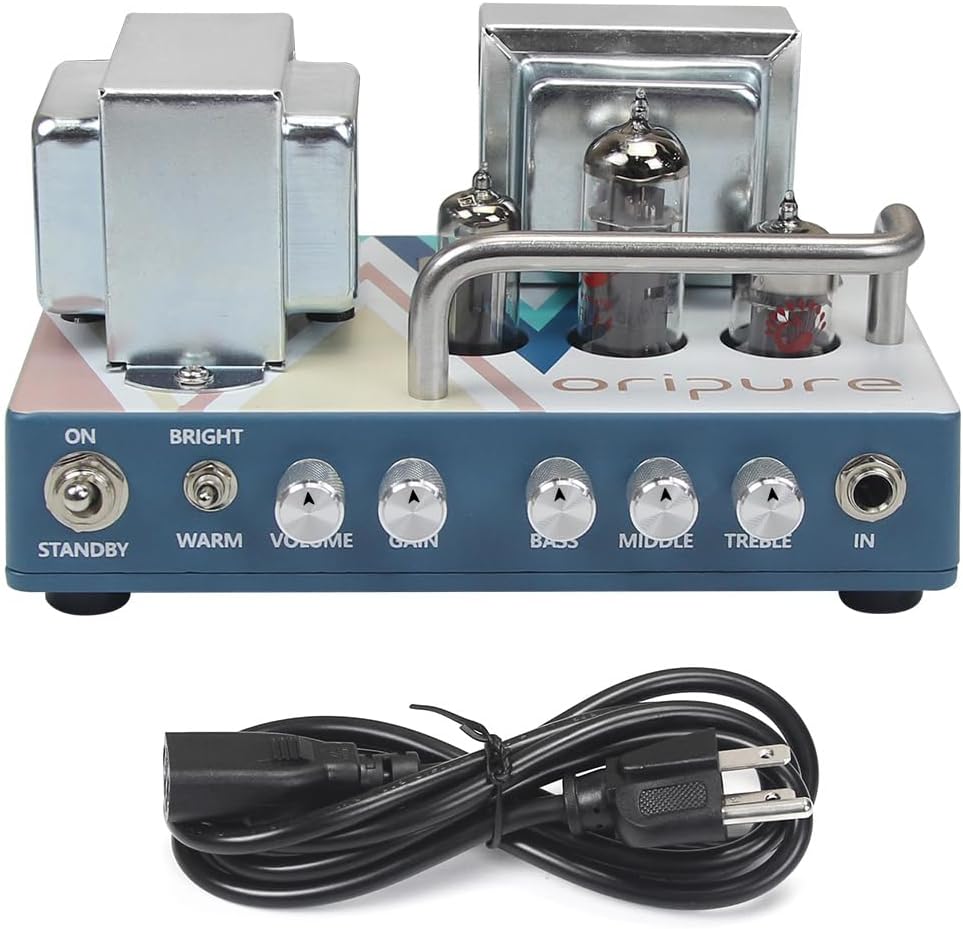
The OriPure OA-H05 carries a 4.2 rating and distinguishes itself with a five-watt all-tube head built around detailed tone controls. It uses one 12AX7 preamp tube, one EL84 power tube, and one 6Z4 rectifier tube. A gain knob, volume knob, and three-band EQ give players a direct path from clear tones to overdrive while retaining separate level and tonal shaping.
We may earn a commission when you buy through this link, at no additional cost to you.
Its single-ended output stage is designed to keep the tubes actively working across the full audio signal, with the supplied description emphasizing earlier, warmer distortion and preservation of tonal character. The handcrafted output transformer uses a paper-insulation process and grain-oriented silicon steel, while the cast-aluminum housing is intended to provide both durability and visual appeal. Output jacks accept 8-ohm and 16-ohm cabinets.
As a head-only product, the OA-H05 depends on a suitable speaker cabinet, making it less convenient than a combo. The supplied information does not list onboard reverb, so players who want that function should plan to use a pedal or an external effects device. Single-channel operation also means the amp is optimized for a straightforward one-vocabulary sound rather than instant switching between distinct channels.
This model is a compelling match for a guitarist who wants substantial manual tone control in a compact five-watt head. Its Bright/Warm switch, three-band EQ, and gain structure make it especially interesting for comparing cleaner and overdriven textures. It is a better fit for a knowledgeable player with a cabinet than for someone seeking a complete one-box guitar amplifier.
Gain and volume are separated, while high, middle, and low controls provide conventional three-band shaping. A Bright/Warm switch adds another voice-selection tool without complicating the primary control layout.
The single-ended stage aims to preserve early harmonic character and warm distortion. For players who enjoy a small-head format and already understand tube-amp voicing, that focused architecture can be more meaningful than a broad feature list.
We may earn a commission when you buy through this link, at no additional cost to you.
The Fosi Audio MC331 is a home-audio tube integrated amplifier rather than a guitar amplifier, but it deserves consideration because its tube preamp and vintage presentation serve a different kind of low-volume listener. It holds a 4.4 rating and combines a DAC, stereo power amplifier, preamplifier, and headphone amplifier in one desktop enclosure.
We may earn a commission when you buy through this link, at no additional cost to you.
Its connectivity is the defining advantage. Bluetooth, USB, coaxial, optical, and RCA inputs allow computers, phones, CD players, and turntables with built-in phono preamps to feed the system. A pre-out and 3.5mm headphone output add further routing options, while the remote provides convenient bass and treble adjustment. The visible tubes and VU meter create a retro aesthetic that complements a listening setup as well as its function.
The maximum output of 105 watts per channel into 4 ohms is far above the five- and ten-watt range represented by most products in this roundup. That distinction matters: the MC331 is not intended to compete with a five-watt guitar head, and its specifications should not be treated as equivalent. Its tube section is best understood as part of a modern, feature-heavy home-audio amplifier rather than a complete guitar amplification signal chain.
The MC331 is best for a listener seeking a compact all-in-one system with a traditional visual character and extensive source support. It is less appropriate for guitarists shopping for an amplifier to shape electric-guitar tone. Within its own category, the replaceable tube design, headphone output, and remote control make it especially convenient for desktop listening and flexible source switching.
Bluetooth and three wired digital options, combined with analog RCA input, make the MC331 adaptable to computers, phones, disc players, and suitable turntables. That flexibility reduces the need for separate conversion boxes in a compact system.
Exposed tubes and the VU meter provide the visual language of a traditional integrated amplifier. A remote, digital inputs, and a headphone output add modern convenience without changing the core home-audio focus.
We may earn a commission when you buy through this link, at no additional cost to you.
The Oldchen EL34 carries a 4.5 rating and offers a specialized ten-watt-per-channel home-audio amplifier built around a single-ended Class A design. It is intended for listeners who want a traditional tube topology, carefully presented construction, and enough output for compatible bookshelf or floor-standing speakers without approaching the scale of a large modern power amplifier.
We may earn a commission when you buy through this link, at no additional cost to you.
Its tube complement includes EL34C power tubes, a 5U4G rectifier, and 6SN7GT preamp tubes. The hand-wired, point-to-point layout uses Teflon silver-plated wiring, while a custom-wound output transformer uses imported Japanese Z11 silicon steel. A Japanese ALPS potentiometer, Black Gold capacitors, and a five-henry CLC inductor filter form a specification list aimed at minimizing unwanted coloration and background noise.
The stated noise floor of 0.5 to 1mV is a key specification for a low-power design, where hum can become more noticeable. The supplied information says hum at zero volume is negligible and mainly audible with an ear pressed against the speaker. The trade-off is that a single-ended, ten-watt design is inherently specialized: it is not a guitar amplifier, and its output may not suit speakers with low sensitivity or demanding impedance requirements.
The Oldchen is a compelling choice for a home listener with 88dB-or-higher-sensitivity speakers and a preference for EL34-based single-ended tone. The 4- and 8-ohm terminals accept banana plugs, spade connectors, or bare wire, making setup more flexible. It is not the right selection for guitarists seeking distortion controls, an effects loop, or a guitar-specific signal path.
The design uses one active output path rather than a conventional mirrored stereo topology. The result is positioned for listeners who value the harmonic presentation of single-ended Class A amplification and are willing to match it carefully to a suitable speaker.
A custom transformer, CLC filter, and specified 0.5-1mV noise floor address a central concern in low-power tube amplification. The clean power-supply foundation is especially relevant when the amplifier is used at quiet nighttime listening levels.
We may earn a commission when you buy through this link, at no additional cost to you.
The JOYO BanTamp ZOMBIE is a 20-watt mini tube head with a 4.2 rating. It is compact enough to appeal to players building a small practice or recording system, yet it offers more output than the strict five-watt designs at the top of the list. Its dimensions are listed as 163 by 110 by 140 millimeters, and its weight is approximately 1.2 kilograms.
We may earn a commission when you buy through this link, at no additional cost to you.
A single 12AX7 handles preamp duties, while the front-panel controls cover gain, tone, and volume. That concise layout favors quick adjustment over deep signal routing. The included effects loop can place external processing after the preamp, and the 8- or 16-ohm speaker output provides useful cabinet-matching flexibility. Bluetooth and a 3.5mm headphone jack add modern functions that are uncommon on very traditional tube heads.
The main qualification is its 20-watt rating, which places it near the upper edge of this roundup rather than squarely in the lowest-power category. It also requires an external cabinet, and the single-preamp-tube arrangement does not offer the multi-stage flexibility visible in the Fender 68 Custom Vibro Champ. The compact dimensions are practical, but actual placement and speaker setup still need to suit the intended room.
The ZOMBIE is best for a guitarist who wants a small, modern-practice-oriented tube head with Bluetooth and an effects loop. It suits players who want more power than a five-watt amp but less bulk than a traditional full-size head. It is a less exact fit for someone focused exclusively on the lowest possible output or a vintage-style control panel without digital connectivity.
Bluetooth can reduce cable clutter during casual practice, while the 3.5mm headphone output supports quieter personal monitoring. These additions make the small head easier to integrate into a contemporary home setup.
Gain, tone, and volume keep the front panel approachable, and the effects loop provides a path for external pedals. The design offers enough routing for practice and recording without attempting to reproduce a complex multi-channel amplifier.
We may earn a commission when you buy through this link, at no additional cost to you.
The Orange Rocker 15 is a 15-watt, two-channel all-tube combo with a 10-inch speaker, power attenuation, and an effects loop. Its 3.3 rating is the lowest in this group, so buyers should weigh that visible customer feedback carefully. Even so, the supplied specifications describe a conventional guitar-amplifier package with a feature set that appeals to players who want more flexibility than a fixed low-wattage combo.
We may earn a commission when you buy through this link, at no additional cost to you.
Two channels allow more distinct approaches than the single-channel OA-H05 or compact JOYO designs. The power attenuator can bring the 15-watt output down for lower-volume use, while the effects loop provides a location for external modulation, delay, or other processing. The one-by-ten-inch speaker arrangement also keeps the cabinet focused compared with a larger two-speaker combo.
At 15 watts, the Rocker 15 sits above the strictest interpretation of a low-wattage tube amp. It may therefore be unnecessary for a bedroom player who only wants a few watts, and it will not deliver the same low-level immediacy as a five-watt design. The lower rating is another reason to examine current owner feedback and ensure that the available feature set meets your needs before choosing it over better-rated models.
The Orange is best for a guitarist who wants a complete tube combo, two channels, attenuation, and an effects loop in one package. It can serve small rehearsals or practice rooms where more output than a five-watt amp is useful. For the lowest possible volume, a model explicitly designed around five watts may be a safer fit, while users seeking a more portable practice setup could look to the JOYO ZOMBIE.
Dual-channel operation makes it easier to separate clean and overdriven sounds or compare different gain structures. That flexibility is useful for gig preparation, recording, and players who change amplifiers more than a minimal single-channel head allows.
The included power attenuation function is valuable because it lets the player exploit the amp's broader tone range at lower output. It is a practical feature for home use, although 15 watts remains more than the smallest designs in this guide.
We may earn a commission when you buy through this link, at no additional cost to you.
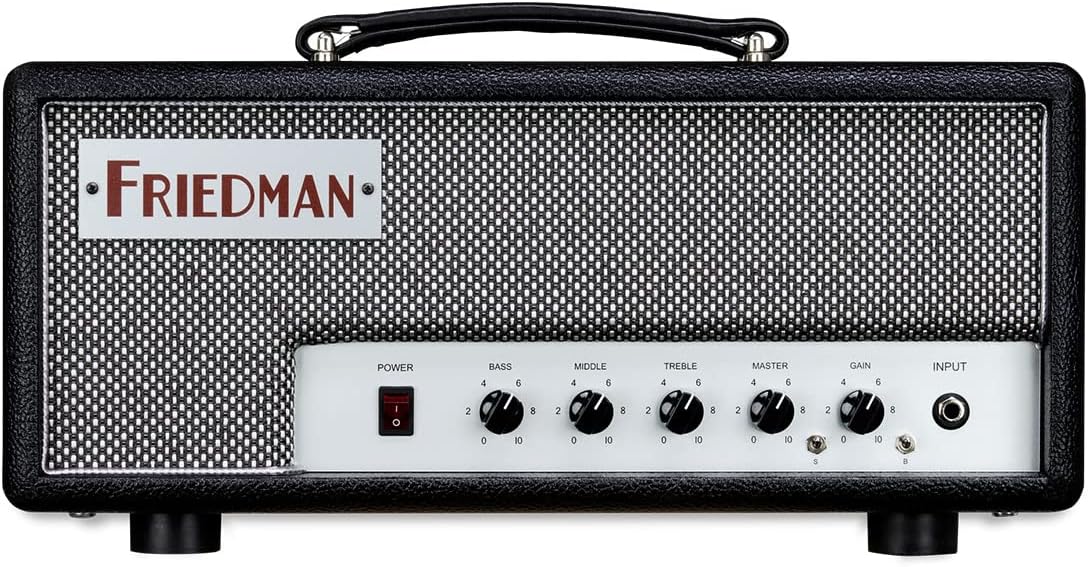
The Friedman Little Sister has a 5.0 rating, making it the highest-rated product in the supplied data. It is a 20-watt, one-channel all-tube guitar head with custom transformers, a three-band EQ, a bright switch, and an S-switch. The design offers fewer immediate features than many modern amps but concentrates them around the tonal decisions guitarists make most often.
We may earn a commission when you buy through this link, at no additional cost to you.
The three-band equalizer provides dedicated control over low, middle, and high frequencies, while the bright switch offers an alternate voicing. The S-switch adds another operating choice intended to broaden the usable range of the amplifier. Custom transformers are a notable feature of this head, reflecting the importance of the output and power-supply stages in determining how a tube amplifier behaves.
As a 20-watt head, the Little Sister is better described as a lower- or mid-volume guitar amplifier than a strictly low-wattage model. It also requires an external cabinet and does not provide two channels for quick clean-to-overdrive switching. Its 5.0 rating is compelling, but ratings should be considered alongside the fact that the product is positioned at a premium end of the selection.
This head is best for a guitarist with a suitable cabinet who values a focused control layout, custom transformer construction, and strong customer feedback. It is particularly attractive for players focused on a single core sound rather than an effects-heavy or multi-channel system. Those searching for the smallest possible wattage should prioritize the five-watt Bugera, OriPure, or Fender models instead.
The three-band EQ, bright switch, and S-switch provide meaningful tonal choices while maintaining a one-channel design. This keeps the head aimed at players who want to refine one dependable sound instead of switching among several preset channels.
Custom transformers are among the head's most prominent technical features. In a tube amplifier, the transformer and surrounding power stages are central to response and tone, making this detail relevant to players who value the underlying design.
We may earn a commission when you buy through this link, at no additional cost to you.
The JOYO Bantamp Vivo Mini is a 20-watt hybrid tube amplifier with a 4.3 rating. It combines a 12AX7 tube in the preamp with clean and overdrive modes, offering an approachable mix of tube coloration and modern convenience. Bluetooth is included, making it one of the more connected products in the roundup.
We may earn a commission when you buy through this link, at no additional cost to you.
The clean and overdrive modes provide two broad starting points for guitar tone without requiring the multiple channels of a larger combo. A 12AX7 preamp adds tube character at the front of the signal chain, while the compact format appears intended for home practice and small-space use. Selectable 8- or 16-ohm loudspeaker outputs allow the amp to work with different compatible cabinets.
Because this is a hybrid design, it should not be compared as an all-tube amplifier. Its 20-watt output is also above the five-watt category, and the supplied information gives fewer details about its power-stage design, construction, and control set than the listings for several other products. That makes it harder to assess the amp's finer technical characteristics before purchase.
The Bantamp Vivo Mini is best for a guitarist who wants a small practice amplifier with a tube preamp, convenient mode switching, and wireless connectivity. It is a practical alternative for someone who values easy setup and modern features more than a fully tube-based signal path. Buyers seeking the most authentic low-wattage experience should give closer attention to the dedicated five-watt and all-tube designs.
The 12AX7 preamp and separate clean and overdrive modes provide a simple structure for everyday playing. This makes the amp approachable without requiring a complex control layout just to move between basic tonal states.
Wireless connectivity can be useful for lessons, casual playing, or keeping a phone and amplifier physically separate. The feature adds convenience, though it should complement rather than replace a properly selected guitar cabinet.
We may earn a commission when you buy through this link, at no additional cost to you.
The best low-wattage tube amplifier is the one whose power, topology, controls, and connections fit your instrument, room, and listening habits. These factors help separate purpose-built guitar combos and heads from specialized home-audio tube amplifiers.
In short, choose a guitar-oriented model for distortion, preamp controls, instrument outputs, and cabinet matching; choose a home-audio model for speakers, sources, and listening flexibility.
Match output to the room and playing style: choose five watts for focused low-volume work, and consider 15 or 20 watts when clean headroom or a broader stage range matters.
Compare the complete tube complement rather than the tube count alone, and verify the amplifier's topology before expecting specific channel, gain, or output characteristics.
Choose a combo for convenience and immediate use; choose a head when you already own a suitable cabinet or want independent control over the speaker pairing.
Prioritize controls that you will use regularly, and choose a straightforward layout when fast, dependable operation matters more than deep signal modification.
Always verify speaker impedance, recommended power range, and connector type before connecting any head or integrated amplifier, and never substitute a specification that the manufacturer does not support.
Choose connectivity that solves a real workflow problem, and do not allow extra features to outweigh sound, control, and compatibility considerations.
Check the cabinet dimensions, weight, speaker requirements, construction, and warranty against your storage and transport situation before ordering.
Before connecting an instrument or speaker, confirm that the amplifier's output impedance and power rating match the cabinet or home speakers. Use appropriate speaker cable for guitar heads, secure connections, and avoid connecting or disconnecting the speaker output while the amplifier is powered unless the manufacturer specifically permits it. For the Fosi Audio MC331, select the appropriate source and let the unit warm up before judging its sound at low listening levels.
Set the guitar volume, amplifier input level, and channel or mode appropriately before increasing the amp's master control. For attenuated or low-wattage designs, begin with the volume low and move gradually through the usable range. On the Bugera V5 and Orange Rocker 15, power attenuation can help control output, but it should not replace sensible gain staging. For home-audio models, match the source level carefully and use the pre-out or headphone connection for compatible alternative routing.
Tube amplifiers need time to cool before moving them, especially after extended use. Keep ventilation paths clear, avoid placing the unit in a closed cabinet during operation, and allow the chassis to cool before changing tubes. Store the amplifier in a dry location, use a protective cover, and follow the manufacturer's instructions for tube replacement and fuse checks. Always disconnect power before opening the cabinet or servicing an output connection.
Low-wattage tube amplifiers are generally compact amplifiers that produce substantially less output than traditional high-powered tube amps. Five-watt designs are the clearest examples in this guide, although 10-, 15-, and 20-watt models offer more volume and headroom. The term can also describe lower-powered home-audio tube amplifiers, so the intended application and speaker requirements should always be considered.
A five-watt tube amp can be sufficiently loud for practice, particularly in a small room or with a closed-back speaker. Its near-field volume also feels more immediate than a higher-wattage amplifier played at a similar perceived distance. For rehearsals, high-gain playing, or a larger room, 10 to 20 watts or an external power attenuator may offer more practical flexibility.
No. The Bugera, Fender, Orange, Friedman, and JOYO products are identified as guitar amplifiers or heads. The Fosi Audio MC331 and Oldchen EL34 are home-audio integrated amplifiers, included to show another use of tube technology. Their speaker connections and controls are designed for audio systems rather than electric-guitar signal paths.
Yes, a tube amp head needs a compatible guitar speaker cabinet unless the product listing specifically includes a speaker. Check the manufacturer's required impedance, recommended cabinet power, and output-jack type before connecting one. The Bugera T5, OriPure OA-H05, Friedman Little Sister, and JOYO models in this guide are presented as head-only products.
An effects loop provides an input and output for external effects such as modulation, delay, or reverb. It allows those devices to process the signal differently from placing them entirely before the amplifier's preamp. The Orange Rocker 15 and JOYO ZOMBIE list effects-loop functionality, which can be helpful for players who want more control over how external effects interact with the tube amplifier.
Match the head's supported output impedance to the cabinet's impedance and confirm that the cabinet's power handling is sufficient for the amplifier. The JOYO heads offer 8- or 16-ohm outputs, while the OriPure lists both options, allowing some flexibility in cabinet choice. If the information is unclear on either product, consult the current manufacturer documentation before making a connection.
Not necessarily. A properly designed tube amplifier can have an excellent background-noise level, but tube designs are also sensitive to hum, grounding, tube condition, and electromagnetic interference. The Oldchen lists a specified 0.5-1mV noise floor, while other products do not provide comparable figures, so published specifications should not be compared as if they were standardized.
Choose a combo if you want the simplest ready-to-play package and do not already have a preferred cabinet. Choose a head if you own a compatible speaker cabinet or want the freedom to pair the amplifier with different cabinets. Head-based systems can also make upgrades easier because the speaker and amplifier can be changed independently.
The Bugera V5 INFINIUM is the most complete overall choice because it combines a five-watt Class-A tube section, an eight-inch speaker, reverb, and power attenuation. The Bugera T5 Infinium is a compelling head-only option for players who already own a cabinet, while the Fender 68 Custom Vibro Champ serves buyers who prefer classic styling and granular reverb and tremolo controls.
Prioritize output level, intended application, speaker compatibility, and the controls you will actually use. Five-watt models suit concentrated practice, whereas 15- and 20-watt heads provide more room for clean headroom and broader gain structures. The Fosi Audio MC331 and Oldchen EL34 belong on a different shortlist: they are compelling home-audio products, not substitutes for dedicated guitar amplifiers.
Before ordering, check the current listing, availability, warranty information, and the manufacturer's compatibility guidance. Product configurations, customer ratings, and prices can change over time, so the final purchase should reflect both the amplifier's technical specifications and the way you intend to use it.