
Uniden BC365CRS
4.2Editor score
500 conventional analog channels
Desktop alarm clock and radio
Priority channel monitoring
Our Fire and Police Scanner for Home Use guide compares ten analog and digital scanners for coverage, programming, alerts, connectivity, and ease of use at
A home fire and police scanner can provide timely awareness of local emergencies, severe weather, and public-safety radio traffic, but the right model depends heavily on the systems used in your area. Analog scanners offer an approachable starting point, while digital and trunked scanners provide broader coverage for many modern departments.
We compared all ten products using the supplied specifications, focusing on radio-system support, channel capacity, programming method, weather alerts, display usability, connectivity, and practical home features. The list includes conventional analog units, digital handheld scanners, and advanced base or mobile models designed for different levels of monitoring experience.
Each pick highlights a distinct use case, from an entry-level desktop scanner to feature-rich digital platforms with location-based scanning. Ratings and specifications reflect the available product information, while market conditions, product availability, and prices can change as sellers update their listings.
4.2Editor score

4.1Editor score

4.5Editor score
This side-by-side comparison covers ten scanners across conventional analog, digital mobile, and advanced trunk-tracking formats, making it easier to match radio support, programming convenience, alerts, and home usability to your local communications infrastructure.




The Uniden BC365CRS is a conventional analog desktop scanner that combines local radio monitoring with an FM receiver, weather alerts, and an alarm clock. Its 4.2 rating reflects a generally approachable design with useful home features. The attractive enclosure and readable backlit display make it especially relevant to listeners who want a permanent bedside or desk setup rather than a portable radio.
We may earn a commission when you buy through this link, at no additional cost to you.
Its main attraction is the combination of functions in one enclosure. The scanner provides 500 channels, preset search bands for non-digital police, fire, emergency, weather, marine, aviation, amateur radio, and railroad traffic, plus 30 FM station presets. A priority channel feature checks important frequencies every two seconds, improving the odds of catching high-priority activity while the rest of the frequency list remains active.
The important limitation is that this is exclusively a conventional analog scanner. It cannot receive Project 25, DMR, NXDN, or other digital trunked systems, so it may not suit many larger cities where public-safety agencies have migrated to digital systems. That limitation is acceptable for users in areas that still operate conventional analog frequencies or anyone wanting a straightforward introduction to scanning.
This is the best budget-oriented choice in the roundup because it avoids unnecessary complexity while adding features most home listeners appreciate. It is particularly well suited to monitoring local analog fire, police, EMS, weather, aviation, marine, and railroad channels. Buyers should first verify that the agencies they want to hear use compatible analog transmissions; otherwise, a digital model will be a more useful investment.
The FM radio and alarm clock turn the BC365CRS into more than a communications receiver. You can wake to scanning, a weather channel, or a favorite local FM station while keeping emergency and public-safety traffic accessible from the same unit.
Storing key frequencies in priority channels makes them stand out from routine traffic. The scanner checks them every two seconds, which is especially useful for stations or channels that receive consistent attention and still need to be monitored alongside other programmed services.
We may earn a commission when you buy through this link, at no additional cost to you.
The Uniden BC355N is an entry-level base and mobile scanner focused on conventional analog monitoring. It carries a 4.0 rating and brings together 300 user-programmable frequencies, six service banks, Close Call RF capture, NOAA weather information, and multiple power options. Its straightforward design makes it a common choice for listeners who want more control than a basic preset radio.
We may earn a commission when you buy through this link, at no additional cost to you.
Close Call RF Capture Technology is the defining extra feature. When the scanner encounters a nearby transmission, it can tune to the active signal and help reveal frequencies that may not yet appear in a programmed list. That capability is valuable for travelers or new listeners, although it works best with compatible conventional signals and should not be treated as a substitute for complete local research.
The included AC adapter, DC power cable, and automotive power outlet plug make the scanner flexible enough for a home office, vehicle, or mobile setup. Its backlit display supports low-light use, while the 300-channel limit is adequate for many conventional emergencies and aviation, marine, railroad, weather, and highway-patrol frequencies. The main drawback is that it cannot follow modern digital or trunked systems.
This model suits buyers who want an approachable analog scanner with flexible placement and frequency discovery. It is a sensible recommendation for an area with conventional police and fire systems, particularly for someone who also wants aviation, marine, railroad, NASCAR, or other non-digital services. Confirm local radio formats before purchasing, because a digital scanner would be necessary in many metropolitan regions.
Close Call RF capture quickly searches for active nearby transmitters, helping users find conventional frequencies that are not already stored. It adds discovery value without requiring the more complex programming associated with full digital trunking platforms.
The included power options and backlit screen make the BC355N easy to use in either location. It is particularly convenient for listeners who want one analog scanner for emergency traffic at home and local events or road information while traveling.
We may earn a commission when you buy through this link, at no additional cost to you.
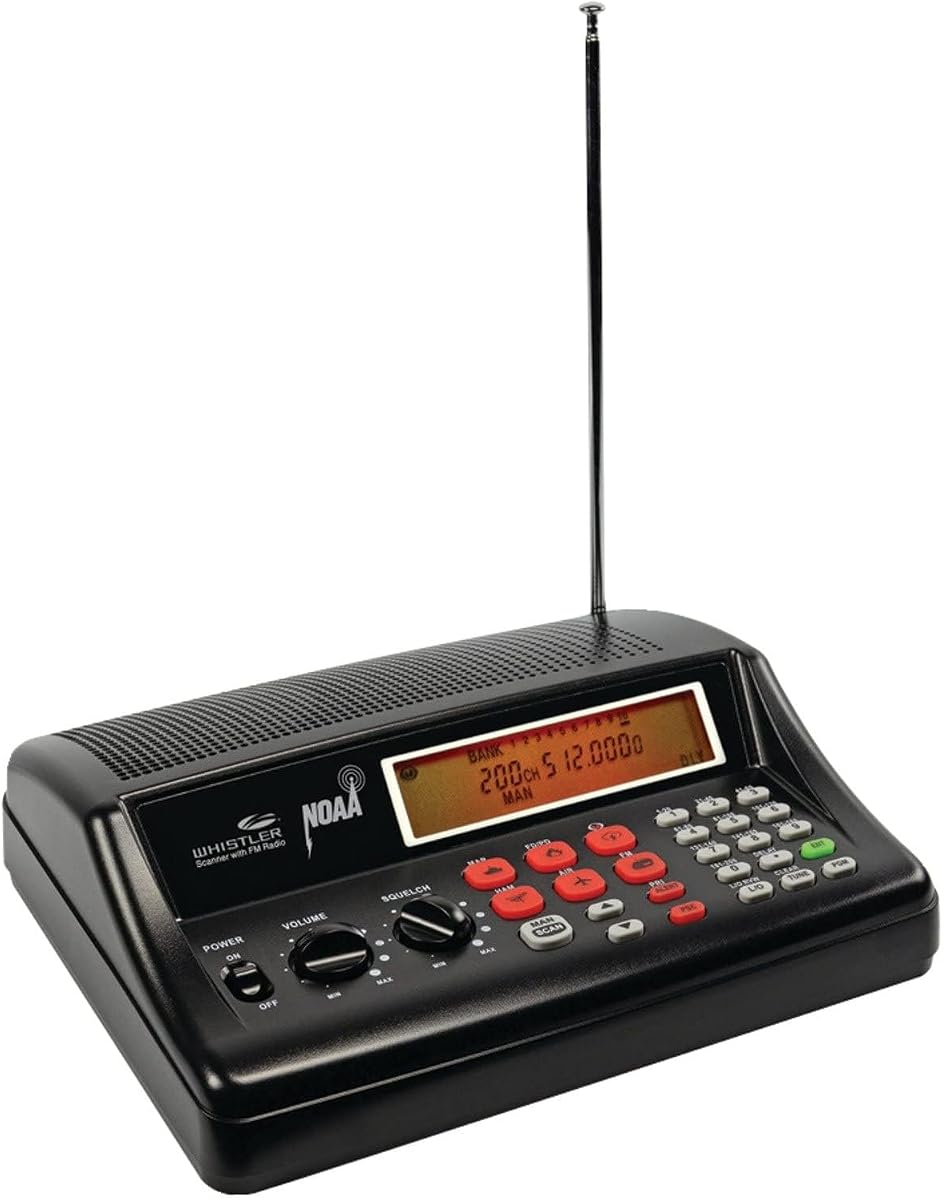
The Whistler WS1025 is a compact analog desktop scanner designed for programmable police, fire, and weather reception. It has a 4.1 rating and supports 200 memory channels through a desktop-style interface. The backlit LCD, priority channel function, scan delay, and tune feature make it a functional middle ground for listeners who are comfortable operating scanners.
We may earn a commission when you buy through this link, at no additional cost to you.
Its priority channel can be checked every two seconds during a scan, helping key frequencies remain noticeable without stopping the broader search. The two-second scan delay gives a dispatcher time to answer or respond before the receiver moves to another channel. For users who discover an unlisted or newly activated frequency, the tune function can begin a search from a chosen point on the spectrum.
Whistler recommends this model for experienced desktop-scanner users, which is an important limitation for beginners. It has a smaller 200-channel capacity than the two Uniden analog models above it and does not offer their extended convenience features. Most importantly, it cannot receive digital trunked transmissions, so local radio-system compatibility remains the decisive consideration.
The WS1025 is worth considering when a compact desktop format, straightforward channel programming, and a tunable frequency search are the priorities. It can work well for local conventional channels and users who already understand scanner terminology. New buyers should compare it with easier preset-oriented models, while experienced listeners may appreciate its control and compact layout.
The two-second scan delay is a meaningful operational feature because transmissions are often followed by a response on the same channel. Pausing briefly before moving on can prevent users from missing that reply and improves the flow of monitored conversations.
The backlit display and compact enclosure suit a fixed home station. For users comfortable with programming, the tune function also makes it easier to investigate frequencies without manually adding every new signal immediately.
We may earn a commission when you buy through this link, at no additional cost to you.
The Whistler WS1065 is a digital trunking desktop scanner that bridges modern radio compatibility and programmable home operation. Its 4.2 rating reflects a well-equipped feature set, including 1,800 memory channels, automatic P25 tracking, multi-color alert indicators, flexible memory, and fast USB transfers. It is a strong candidate for areas where departments use trunked digital systems.
We may earn a commission when you buy through this link, at no additional cost to you.
Automatic Adaptive Digital Tracking analyzes shifting signals and adjusts reception in real time, while digital automatic gain control helps maintain usable audio as signal conditions change. P25 Network Access Code filtering can suppress unwanted transmissions, and the scanner supports Motorola, EDACS, LTR, and P25 Phase 1 trunked systems. This compatibility range is the core advantage over an analog desktop scanner.
Programming is handled through a menu-driven interface with built-in help, while the included USB cable supports rapid PC transfers and cloning between units. Free-form memory can hold more than 37,800 objects without wasting space in rigid banks. A spectrum sweeper and tune function help locate active channels, but setup still requires more effort than choosing a location and letting a database-oriented scanner configure the system.
The WS1065 is best for users who want a stationary digital scanner without moving to a more advanced premium platform. It rewards listeners who want flexible programming, multiple trunking formats, and customizable alerts. Those new to digital scanning should expect a learning curve, but the help text, USB interface, and free-form storage make the system approachable for users willing to invest some setup time.
Automatic P25 decoding and digital automatic gain control are particularly valuable as signals fade or experience multipath distortion. These systems adjust in the background, reducing the need for repeated manual correction during active transmissions.
USB transfers and cloning are described as substantially faster than conventional methods, while dynamic free-form memory makes better use of available storage. Menu help also reduces the burden of learning advanced settings directly from the manual.
We may earn a commission when you buy through this link, at no additional cost to you.
The Uniden HomePatrol-2 combines broad digital radio support with one of the most approachable interfaces in this roundup. Its 4.1 rating is supported by a color touchscreen, TrunkTracker V operation, S.A.M.E. emergency and weather alerts, and support for public-safety, aviation, military, weather, and other unencrypted radio systems.
We may earn a commission when you buy through this link, at no additional cost to you.
Rather than requiring extensive manual channel entry, users can view available radio services on the touchscreen and select the ones they want. The included Sentinel software manages favorites lists, the radio database, and firmware updates. Digital reception covers APCO P25 Phase I and Phase II, Motorola, EDACS, LTR, conventional analog, and P25 digital channels, giving it broad relevance across the United States and Canada.
Its main tradeoff is that it represents a greater commitment than a basic analog desktop scanner, even though the interface is simpler than many programming-heavy alternatives. The product was designed around a color touchscreen, which may feel dated beside current handheld devices, and advanced users may eventually want finer control than the primary service-selection workflow provides. It also monitors unencrypted, non-proprietary traffic rather than encrypted systems.
This is the editor's choice for most buyers who want modern digital coverage without a difficult programming process. It is well suited to a home environment where a clear display, local database updates, emergency alerts, and simple favorites management matter more than portability. Buyers should still confirm that desired agencies use a supported, unencrypted radio format.
The touchscreen presents radio services in a visual list, allowing users to choose what to monitor instead of building every channel from scratch. Sentinel keeps favorites lists, databases, and firmware current, reducing the ongoing maintenance burden.
Support for P25 Phase I and II, Motorola, EDACS, LTR, conventional analog, and P25 channels gives the HomePatrol-2 flexibility. It can cover police, fire, ambulance, aircraft, military, weather, and other open two-way traffic without changing platforms.
We may earn a commission when you buy through this link, at no additional cost to you.
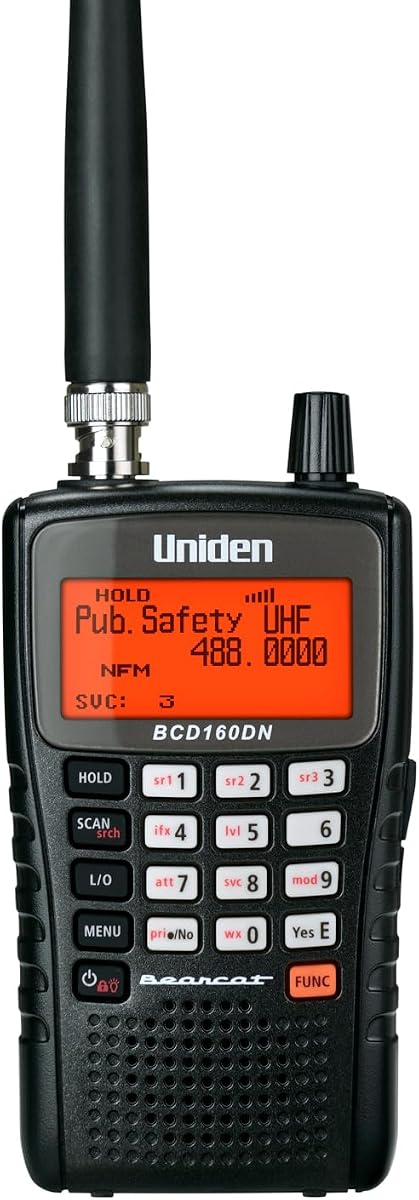
The Uniden BCD160DN is a compact handheld digital scanner built around DMR and NXDN rather than the P25 trunking found in many competitors. It has a 3.2 rating, 1,000 channels, rapid DCS and CTCSS decoding, narrowband reception, and preloaded digital modes. Its defining strength is focused support for users whose local systems use these formats.
We may earn a commission when you buy through this link, at no additional cost to you.
Band Scope Rapid System and Channel Number Tagging are designed to help identify signals more quickly, while custom search can begin at a displayed frequency or at a frequency entered by the user. PC programming supports management of profiles, favorites lists, databases, and firmware. Two rechargeable AA Ni-MH batteries are included, and the supplied USB cable charges them while the scanner remains off.
The significant limitation appears in the product information: trunking and APCO P25 are not supported. That makes the scanner unsuitable for many major public-safety systems, even if it has a generous channel count and useful search features. Its 3.2 rating also suggests more mixed customer feedback than the other products, so potential buyers should evaluate compatibility and expectations carefully.
For a home user in an area served by DMR or NXDN conventional systems, the BCD160DN offers a compact and approachable solution. It is less suitable as a general police-and-fire scanner where agencies use P25 Phase 1 or Phase 2. Its preloaded modes and narrowband reception are valuable, but only when they align with the radio formats found in the user's own area.
Rapid DCS and CTCSS detection quickly displays subaudible tones, helping users identify system settings. This is especially useful when working with the included DMR and NXDN modes or investigating unfamiliar conventional signals.
The scanner includes two rechargeable AA Ni-MH batteries and a charging cable. That makes it easy to keep monitoring available around the home without requiring a permanent base connection, while USB charging keeps battery management straightforward.
We may earn a commission when you buy through this link, at no additional cost to you.
The Uniden BCD436HP is a feature-rich digital handheld that brings location-aware scanning to a portable form. It has a 4.2 rating, TrunkTracker V operation, an extra-large display, GPS connectivity, radio-system analysis, and an 85-channel-per-second scan rate. Its strongest attraction is the combination of portability and straightforward database-based programming.
We may earn a commission when you buy through this link, at no additional cost to you.
Users can turn on the scanner, enter a ZIP code, and let TrunkTracker V identify relevant nearby systems. The database uses radio-system information for the United States and Canada to select systems in the area. GPS connectivity, radio-system analysis, and discover modes extend that convenience, while instant replay can reproduce up to the most recent 240 seconds of received transmissions.
Custom alerts are unusually detailed. The scanner can alert on a channel or unit ID, Close Call hit, emergency-alert ID, or tone-out hit, with multiple tone patterns, volume levels, colors, and flash patterns available. This is helpful for prioritizing local incidents, although the large number of options may take time to configure. The handheld form also demands frequent charging compared with a desktop unit.
The BCD436HP is ideal for a listener who wants one device to handle home monitoring, travel, and changing local radio systems. It is a particularly strong all-round recommendation because it balances modern digital reception with uncomplicated setup. Buyers should consider the need for a separate GPS receiver and should prefer a permanent desktop unit if continuous home display and effortless charging are the top priorities.
Entering a ZIP code lets the BCD436HP identify and monitor nearby systems without extensive manual programming. Optional GPS connectivity can support more precise system selection as the user travels, making it especially adaptable beyond a fixed home location.
Instant replay provides a valuable second look at recent traffic, while customizable alert patterns help separate important events from routine activity. The result is a more engaging and informative monitoring experience for users who follow multiple services.
We may earn a commission when you buy through this link, at no additional cost to you.
The Uniden BCD996P2 is a high-capacity digital mobile scanner built for listeners who need extensive system coverage and flexible programming. It carries a 4.2 rating and provides 25,000 dynamically allocated channels, a four-line alpha display, Close Call RF Capture, TrunkTracker V, NOAA weather access, S.A.M.E. alerts, and location-based scanning.
We may earn a commission when you buy through this link, at no additional cost to you.
TrunkTracker V supports APCO P25 Phase 1 and Phase 2, X2-TDMA, Motorola, EDACS, and LTR trunked systems, as well as conventional analog and P25 digital channels. Close Call can identify nearby transmissions, and a do-not-disturb option checks for Close Call activity without interrupting the channel currently being received. The dynamic memory structure makes the large channel count more useful than a small fixed bank would.
The scanner can connect to a compatible GPS receiver and automatically select programmed systems according to the user's location, although the receiver is not included. That limitation is manageable for fixed-home use, where location programming can be established once. Users must also be comfortable with a more advanced programming workflow than the database-first HomePatrol approach.
The BCD996P2 is a strong recommendation for a home installation that prioritizes channel capacity, display detail, and broad trunking support. It suits experienced listeners monitoring numerous agencies or traveling between regions. Beginners may find the Uniden HomePatrol-2 easier to operate, while advanced users will appreciate the BCD996P2's control, alpha display, and mobile-oriented design.
The 25,000 dynamically allocated channels allow a broad collection of conventional and trunked systems without rigidly separating them into small banks. This is valuable for listeners who monitor multiple counties, agencies, or radio systems from one location.
S.A.M.E. alerts use a location code to notify users of severe conditions in their immediate area. Coupled with optional GPS-based system selection, the scanner can become more geographically aware as the user moves.
We may earn a commission when you buy through this link, at no additional cost to you.
The Uniden BCT15X, also known as the BearTracker, is a base and mobile scanner that combines 9,000 channels with older-generation trunk tracking. It has a 4.0 rating and supports Motorola, EDACS, and LTR systems, along with Close Call RF capture, state-by-state presets, and location-based scanning when paired with a compatible GPS receiver.
We may earn a commission when you buy through this link, at no additional cost to you.
Dynamic memory makes the channel count meaningful, while 100 system Quick Keys and 10-channel group Quick Keys provide faster access to programmed content. Alpha tagging and individual channel volume control help organize traffic, and continuous band coverage extends from 25 MHz to 1.3 GHz, excluding UHF television and cellular bands. Compatibility with the BC-RH96 remote head also allows more flexible installation.
The crucial drawback is that the BCT15X is not a digital scanner. It can follow certain analog trunked formats, but it cannot receive digital systems, and its TrunkTracker III technology is older than the TrunkTracker V and X implementations offered by newer Uniden models. State-by-state presets also cannot replace checking the exact systems used in a particular county or city.
The BCT15X is worth considering for a home listener in an area using compatible Motorola, EDACS, or LTR systems and for someone who wants trunking support without moving to a more advanced digital platform. It is less appropriate for regions dominated by P25, DMR, or NXDN. Confirming local formats before buying is essential.
Motorola, EDACS, and LTR support gives the BCT15X meaningful trunking capability in areas still using those systems. It is a useful option for listeners whose agencies have not moved entirely to modern digital standards.
System and group Quick Keys reduce the effort required to reach frequently monitored content. Alpha tags, individual volume offsets, and the remote-head option make it easier to organize a permanent home installation around specific services and talkgroups.
We may earn a commission when you buy through this link, at no additional cost to you.
The Uniden SDS200 is the premium digital scanner in this roundup, combining software-defined radio, True I/Q technology, TrunkTracker X, and a customizable 3.5-inch color display. Its 4.5 rating is the highest among the ten products, reflecting the appeal of its advanced digital performance and HomePatrol-style ease of use.
We may earn a commission when you buy through this link, at no additional cost to you.
True I/Q reception is designed to improve decoding performance, particularly in challenging digital simulcast environments where signals overlap or vary in quality. The HomePatrol database includes known radio systems across the United States and Canada, and Sentinel software plus regular database updates help keep the information current. Users can also create custom programming or use ARC-536 software for more advanced control.
The display is highly customizable, with selectable colors and information for individual fields, allowing a permanent desktop layout that shows only what the listener wants. Location can be set by ZIP or postal code, coordinates, or an external GPS receiver, which is not included. Favorites Lists can be scanned in combination with the full database, and the unit can be programmed directly from the front panel.
The SDS200 is the premium choice for listeners who want top-tier digital reception, a polished fixed display, and extensive programming options. Its cost and feature depth are less appropriate for a simple analog need, but for a serious home monitoring setup it offers the most advanced combination of usability and reception technology in this comparison. Check supported local systems before making a final decision.
Software-defined True I/Q reception and TrunkTracker X are the scanner's strongest technical differentiators. These features are particularly relevant to modern P25 systems and challenging simulcast environments where conventional decoding can become inconsistent.
The 3.5-inch color screen can be tailored by field, allowing important identifiers, tags, and status details to remain visible without displaying every element. That customization makes the SDS200 well suited to a permanent desk or wall-mounted home installation.
We may earn a commission when you buy through this link, at no additional cost to you.
The most important choice is compatibility with the radio systems used by your local police, fire, EMS, weather, aviation, and other agencies. Channel count, programming method, alerts, display quality, connectivity, and physical placement should then be considered according to how you plan to monitor traffic.
A conventional analog scanner receives continuous, unencrypted signals on fixed frequencies and is usually the simplest to operate. A digital scanner can decode formats such as P25, DMR, or NXDN, while a trunking scanner follows control channels as talkgroups move across frequencies. The BCT15X is a special case because it follows certain analog trunking formats but does not receive digital systems. Buying the wrong category can make an otherwise capable scanner useless in your area.
Radio range depends on terrain, buildings, antenna placement, transmitter power, and the selected receiving antenna. A scanner that sounds excellent at a kitchen counter may perform differently inside a basement or upstairs. Consider how far away the relevant transmitters are, whether the home has obstructions, and whether a larger external antenna or better-positioned receiver would create a meaningful improvement.
Database-oriented scanners such as the HomePatrol-2 can select nearby systems using simple location information, while manually programmed models offer finer control over individual channels. Traditional desktop and mobile scanners may require more involved programming, but that control can be valuable when a database is incomplete or a new system needs to be added. Beginners generally benefit more from automatic database selection and clear menus.
Channel count is meaningful when a scanner can dynamically allocate memory across conventional and trunked systems. The compact analog WS1025 stores 200 channels, while digital options range from 1,000 to 25,000. More capacity supports more agencies and talkgroups, but it is not automatically better if the extra capacity is difficult to program or the local area contains only a few active systems.
NOAA weather reception and S.A.M.E. location alerts can provide timely severe-weather notices. Features such as programmable audible alarms, colored LEDs, emergency-alert identifiers, and tone-out alerts make important transmissions easier to notice. Consider whether you want alerts for the scanner generally or for particular channels, units, or events, and how noticeable they need to be in a busy home.
A permanent home scanner benefits from a readable display, simple controls, and a backlight for nighttime use. The BC365CRS combines scanning with an FM radio and alarm clock, while the SDS200 offers a large customizable color display. The HomePatrol-2 uses a color touchscreen, and the BCD436HP favors a portable handheld layout. Choose based on desk space, viewing distance, charging preference, and whether the scanner will remain stationary.
Zip-code programming can be enough for a fixed home installation, while GPS support becomes valuable for travel or automatic system changes. Several scanners support external GPS receivers, although the receiver may not be included. Location-based scanning can reduce manual reprogramming, but it works best when the radio database accurately reflects the systems in your area and the user understands the selected systems.
USB programming, free-form memory, cloning, database updates, and downloadable management software can make a scanner much easier to maintain. Check whether the listed computer cable and software are included, how frequently the radio database is updated, and whether the interface supports your preferred workflow. Firmware, database, and favorites-list maintenance are especially important for trunked systems that change over time.
Begin by confirming the radio systems used by the local agencies and services you want to hear. Download the manufacturer's current database and computer software, register the scanner if required, update its firmware, and then use the supplied location-based database to identify nearby conventional, P25, Motorola, EDACS, LTR, DMR, or NXDN systems. For models intended for manual programming, save the published frequencies and system details before attempting to build the list.
Place the scanner where it can receive a clean signal without being surrounded by metal furniture or dense electronics. Begin with moderate volume, set priority channels and favorites lists, and configure weather-alert locations before adding less-important services. Use headphones only in situations where doing so is lawful, keep the antenna extended, and avoid transmitting on any channel or frequency that the scanner does not explicitly support for transmission.
For a permanent installation, follow the included mounting options, use the supplied power supply, and leave ventilation around the chassis unobstructed. Handheld models should use compatible rechargeable cells when available, and batteries should be stored at a sensible charge level if the unit will sit unused for long periods. Periodically update the database and software, review favorites lists after agencies change systems, and clean the exterior with a dry or lightly dampened cloth rather than harsh chemicals.
No. A scanner must support the specific analog or digital format used by each agency, and some communications are encrypted or proprietary. Before buying, compare local agency records with the scanner's supported systems, keeping in mind that trunked channels require compatible trunk-tracking technology. A powerful scanner cannot decode a format it does not support.
The Uniden HomePatrol-2 is designed around simple database and service selection, making it a strong option for users who do not want to program channels manually. The Uniden BC365CRS is even more approachable but only receives conventional analog systems. The easiest choice therefore depends on whether the user's local agencies use digital, analog, or trunked systems.
No. Channel capacity only matters if the scanner can use that memory efficiently and the local area contains enough systems to justify it. A 25,000-channel model may be unnecessary for a small community, while a 200-channel analog model can be perfectly adequate for conventional frequencies. Compatibility, programming convenience, and reception performance usually matter more than the headline number.
GPS is usually optional for a fixed installation because a ZIP code, postal code, or manually selected database profile can be used instead. GPS becomes more useful when traveling or when the scanner should automatically change systems as the user moves. If a model supports GPS but does not include the receiver, that accessory must be considered separately.
A conventional channel usually transmits on one continuously monitored frequency. A trunked system uses a control channel to direct traffic among many frequencies, so a compatible scanner must follow talkgroups as they move. The BCT15X can follow some older analog trunking formats, while newer digital models generally use TrunkTracker V or X technology for P25 and other systems.
These consumer scanners monitor unencrypted public-safety traffic. They are not designed to bypass encryption, and receiving encrypted communications may also be restricted by law. The listed systems support conventional and selected digital unencrypted formats, so users should verify local agency technology and applicable regulations before monitoring.
Regular updates are recommended because agencies can add frequencies, change talkgroup assignments, or alter system configurations. The Uniden SDS200 and HomePatrol-2 use the Sentinel database, with the SDS200 listing weekly database updates, while other models also offer downloadable database and firmware management. Updating after a noticeable loss of traffic or during a major local system change is a sensible additional trigger.
A desktop model is generally easier to keep powered and often provides a larger display, making it convenient for continuous monitoring in one room. A handheld offers portability, GPS flexibility, and the ability to listen in different parts of the home. The BCD436HP is especially versatile, while the SDS200 and HomePatrol-2 are more naturally suited to a permanent home setup.
The Uniden BC365CRS is the best budget-oriented home option for conventional analog traffic and adds an FM radio, alarm clock, and priority monitoring. The Uniden HomePatrol-2 is the editor's choice for users who want broad digital support, a clear touchscreen, and database-driven setup, while the Uniden SDS200 delivers the most premium package through True I/Q reception, a customizable color display, and extensive location-based programming.
Before choosing, prioritize compatibility with the systems used by your local police, fire, EMS, and weather agencies. Then consider whether you need database simplicity or manual control, a permanent desktop layout or portable operation, and optional GPS. The Whistler WS1065, Uniden BCD436HP, and Uniden BCD996P2 each offer strong alternatives for particular digital and mobile-monitoring needs.
Finally, review the current listing, included accessories, software availability, and supported radio systems before purchasing. Product features, firmware, database coverage, availability, and prices can change, so current seller information is more useful than an old specification or promotional description. A quick compatibility check can prevent a technically impressive scanner from becoming an impractical one.