
Liquid Solder Flux Dropper
4.6Editor score
Precise 30 mL packaging
No-clean RMA rosin formula
Two tapered applicator tips
Discover the best liquid flux for soldering by comparing ten options for electronics, jewelry, stained glass, HVAC, and hard-to-solder metals.
Liquid flux for soldering helps remove oxides, improve wetting, and let molten solder flow cleanly across metal surfaces. A suitable formula can make intricate electronics work more consistent while remaining important for jewelry, stained glass, fabrication, and harder metals. The right choice depends on the metals involved, joint design, residue tolerance, and application method.
This guide compares ten liquid fluxes using their stated formulas, intended applications, packaging, and customer ratings. It covers electronic no-clean RMA rosin fluxes, precious-metal jewelry flux, water-soluble zinc flux, industrial acid flux, and general-purpose copper soldering flux. The list also distinguishes precision droppers from larger workshop bottles and sets with accessories.
Each review explains the product's strongest qualities, practical trade-offs, and best-fit users without assuming every formula suits every task. The top picks represent a budget-friendly electronics option, an editor-selected electronics kit, and a premium workshop-oriented product. Availability, formulations, and prices can change, so readers should verify current product details before purchasing.
4.6Editor score

4.8Editor score

4.7Editor score
The comparison below organizes ten liquid fluxes by their principal use, chemistry, container, and practical features, making it easier to narrow the field before reading the full reviews.




This liquid flux dropper combines an advanced RMA rosin formula with a compact 30 ml container, making it a versatile option for electronics soldering. Its 4.6 customer rating reflects a broadly positive reception, while the stated formula emphasizes oxide removal, smooth wetting, and low-residue joints across common tin-lead, lead-free, gold, silver, and copper alloys.
We may earn a commission when you buy through this link, at no additional cost to you.
The product's strongest qualities are its broad material compatibility and careful control of application. A dropper is useful on crowded circuit boards because a technician can place a small amount directly around a pad, lead, or component rather than flooding the area. The description also identifies the formula as RoHS compliant, organic, low-volatility, and free from zinc chloride, ammonium chloride, and lead.
The main trade-off is capacity. Thirty milliliters is enough for focused repairs and many hobby projects, but it may be less convenient than a larger bottle for a busy repair bench or extended production work. Users working with jewelry or hard-to-solder industrial metals should also recognize that this is an electronics RMA flux rather than a specialized precious-metal or acid flux.
This is a strong general recommendation for PCB work, lead-free electronics, connectors, and mixed hobby soldering. Choose it when controlled dispensing, broad alloy support, and minimal residue matter more than having a large supply on hand. Users who need a more established professional formula or a different flux chemistry should continue comparing the specialist options in this guide.
The dropper format helps keep liquid away from nearby components and reduces the amount used per joint. That control is especially valuable around fine-pitch leads, small pads, and dense consumer electronics where excess liquid can complicate cleanup.
The stated oxide-removal and anti-oxidation properties support soldering, desoldering, rework, and reflow processes. Compatibility with tin-lead, lead-free, gold, silver, and copper alloys also makes it adaptable to mixed electronics projects.
We may earn a commission when you buy through this link, at no additional cost to you.
Aquiflux Silver Flux is purpose-built for jewelry soldering, where clean, reliable joints on precious metals are the priority. It carries a 4.6 rating and is described as a clear, low-residue liquid that supports gold, silver, platinum, and other fine jewelry applications. The eight-ounce bottle suits established jewelry benches, repair shops, and serious hobbyists.
We may earn a commission when you buy through this link, at no additional cost to you.
Visibility is one of its most attractive practical features. Because the liquid is transparent, the jeweler can continue observing the seam, setting, or joint as flux moves through the area. Its low-residue approach is also well aligned with jewelry work, where preserving the appearance of finished pieces matters and excess residue can complicate the final finish.
This product is specialized, and that is both its strength and limitation. It is a better fit for precious-metal fabrication and repair than for dense PCB work, where a fine dropper or needle applicator usually offers better control. An eight-ounce container may also be more fluid than a novice needs, particularly for occasional jewelry repairs.
For jewelers, metalsmiths, and crafters who routinely solder gold, silver, or platinum, Aquiflux is a compelling choice. Its transparent formula, claimed low residue, and bench-friendly capacity distinguish it from general electronics flux. PCB hobbyists should favor one of the precision droppers instead.
The transparent formula lets users see the joint and seam while flux is applied. This is useful around small settings, fine seams, and detailed components where visibility can influence placement and finishing.
The stated gold, silver, and platinum compatibility directly addresses the needs of jewelry makers, repair technicians, and professional studios. Its larger bottle reduces the need for frequent refilling during busy bench work.
We may earn a commission when you buy through this link, at no additional cost to you.
Novacan Old Masters Flux is an established all-purpose zinc flux offered in an 8 oz container. Its 4.7 rating is the highest among the standalone products in this list, reflecting a favorable customer reception. The concise specification highlights three practical benefits: broad utility, simple water cleanup, and enough supply for regular workshop tasks.
We may earn a commission when you buy through this link, at no additional cost to you.
Traditional zinc flux has a different role from modern RMA electronics chemistry. Rather than being marketed primarily as a no-clean product, it is positioned as a practical general-purpose aid for soldering jobs. The easier water cleanup is especially valuable when a user wants a straightforward process that does not require specialized residue-removal products.
Users should still account for the nature of zinc flux and the need to clean the finished work. The concise product information does not claim that the residue is non-conductive, neutral, or harmless between maintenance intervals, so it should not be treated like a no-clean electronics flux without checking the technical requirements of the workpiece.
Novacan is a strong choice for a general workshop, hobby bench, or metalworking setup that values one versatile bottle over several highly specialized products. It is particularly attractive as the premium top pick because of its strong rating, large capacity, and easily understood cleanup benefit. Electronics users who require minimal residue should select an RMA alternative.
An all-purpose zinc formula can be valuable when a user performs occasional work across mixed projects. The broad positioning reduces the need to keep numerous specialized containers in the same workshop.
The ability to clean up with water makes post-solder cleanup easier to plan. It is a practical advantage for users who prefer conventional flux handling rather than relying on a no-clean formulation.
We may earn a commission when you buy through this link, at no additional cost to you.
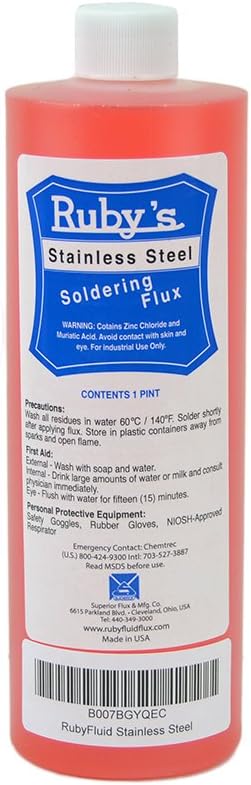
Rubyfluid Stainless Steel Soldering Flux targets metals that can defeat conventional rosin or mild fluxes. Its industrial-grade acid formula is specifically positioned for stainless steel, nickel, brass, and other hard-to-solder surfaces. The 1 pint resealable bottle and 4.6 rating make it a practical option for fabricators, repair shops, HVAC technicians, and serious metalworkers.
We may earn a commission when you buy through this link, at no additional cost to you.
Its key advantage is aggressive cleaning action. The product description emphasizes rapid wetting, uniform flow, and reliable connections on demanding surfaces where general-purpose fluxes may struggle. The larger bottle is appropriate for shop floors and toolkits, while the resealable container helps protect the remaining liquid between jobs.
Acid flux is not interchangeable with no-clean RMA rosin. It calls for disciplined application, appropriate ventilation, and careful removal of residue after the joint is complete. The strong cleaning chemistry that makes it effective on difficult metals also means it should be kept away from sensitive surfaces and never selected merely because a larger or more specialized container is available.
For stainless steel, nickel, brass, HVAC, and industrial repair work, this is a purpose-built recommendation rather than a general electronics choice. Those who solder ordinary circuit boards should use a no-clean electronics flux instead. For fabricators regularly joining hard metals, the larger capacity and specialized action justify the additional handling discipline.
The acid-based formula is intended to break down stubborn oxide layers that can prevent solder from spreading evenly. This makes it more relevant to difficult industrial metals than to conventional electronics repair.
A resealable one-pint container is more convenient for fabrication shops, HVAC work, and metalworking toolkits than a small hobby dropper. It supports repeated projects while reducing the likelihood of running out mid-task.
We may earn a commission when you buy through this link, at no additional cost to you.
TOWOT Liquid Solder Flux is a compact no-clean RMA rosin flux intended for electronics, PCB repair, and lead-free soldering. Its 4.2 rating is the lowest among the ten products, but it remains a viable option for users seeking precise dispensing and minimal post-solder cleaning. The 30 ml dropper format suits benchtop and DIY work.
We may earn a commission when you buy through this link, at no additional cost to you.
The formula is described as high-purity rosin that is mildly activated. It is intended to promote fast wetting and smooth solder flow while leaving minimal non-conductive, non-corrosive residue. Those qualities make it useful where a user wants the convenience of no-clean handling without committing to a large bottle.
The lower rating suggests that the product may not offer the same depth of customer feedback or overall satisfaction as the more established options. The supplied description also provides fewer application details than many competing listings, so buyers should review the current product information and assess the applicator for their own precision requirements.
This flux is best for electronics hobbyists, PCB repairers, and users working with lead-free solder who want targeted application and limited cleanup. It is less compelling for large production work, jewelry, or hard metals. Among no-clean droppers, its main appeal is the combination of RMA chemistry, precise delivery, and a compact container.
The precision dropper helps users apply flux only where it is needed. This is useful for small PCB pads, component leads, and repair areas where controlled placement can reduce mess.
The stated minimal residue reduces the need for intensive post-solder cleaning. It also positions the product for users who regularly use lead-free solder and want a compact RMA formula.
We may earn a commission when you buy through this link, at no additional cost to you.
This no-clean liquid rosin flux combines a 30 ml squeeze bottle with a detailed electronics-focused formula and a 4.6 customer rating. It is positioned as an efficient general option for soldering, desoldering, rework, wave soldering, reflow, PCB work, SMD work, and audio cable connectors, making it our best budget pick for general electronics work.
We may earn a commission when you buy through this link, at no additional cost to you.
Its high-purity RMA rosin formula is described as neutral, non-corrosive, lead-free, chloride-free, halogen-free, non-toxic, and non-flammable. It is also said to leave a non-conductive insulating residue and provide strong wetting across tin, lead, copper, silver, and nickel alloys. These characteristics cover many common needs without requiring a specialized acid or precious-metal formula.
The 30 ml capacity is the main limitation. A hobbyist or repair technician working on a few boards may find it adequate, while frequent service work could require a larger bottle. The user also needs to manage application carefully: a squeeze bottle gives control, but the amount used still depends on the bottle tip, joint size, and technique.
This is a strong value for students, electronics hobbyists, and bench technicians who want no-clean RMA performance in a compact package. The two tapered tips improve access around small leads and pads, while the broad process and alloy compatibility make it flexible. Jewelry specialists and industrial metalworkers should choose a more targeted formula.
The squeeze bottle and tapered attachments help place small amounts around leads, pads, and tight joints. This makes the product practical for fine electronics without investing in a separate needle dispenser.
The combination of neutral pH, non-corrosive behavior, and non-conductive dried residue addresses several common concerns in electronics work. Broad compatibility also reduces the chance of choosing the wrong flux for ordinary board-level projects.
We may earn a commission when you buy through this link, at no additional cost to you.
IMPRESA Liquid Zinc Flux is designed specifically for stained glass soldering and carries a 4.6 rating. It comes in an 8 oz bottle with an included precision brush, providing a complete setup for hobbyists and professionals who work with copper, zinc, or lead foil. The design focuses on controlled application and a manageable cleanup process.
We may earn a commission when you buy through this link, at no additional cost to you.
Having a dedicated brush is a meaningful convenience because stained glass joints can require carefully distributed flux along foil lines. The water-soluble formula simplifies removal, and the product guidance recommends washing within 6 to 8 hours. That timing is important: allowing the flux to remain longer can make cleanup less convenient and may affect the finished project.
This is a specialized product, so its strengths do not necessarily translate directly to PCB or jewelry work. The included brush may be less convenient than a fine tip on tiny electronic joints, and users working with sensitive substrates should follow the stated cleanup schedule rather than assuming a no-clean behavior.
IMPRESA is a strong recommendation for stained glass makers, hobbyists, repair artists, and professional craft studios. The complete package, compatible foil coverage, and water-soluble formula form a coherent kit for the intended task. Electronics users should look to an RMA dropper, while jewelry workers may prefer a clear precious-metal flux.
The included precision brush gives stained glass makers direct control over where flux is placed. It is especially useful for applying a thin, even layer along foil seams without flooding the work surface.
Because the formula is water soluble, the finished piece can be washed rather than treated with a specialized electronics cleaner. Washing within the stated 6-to-8-hour window keeps cleanup practical and protects the appearance of the project.
We may earn a commission when you buy through this link, at no additional cost to you.
The RMA Rosin Liquid Solder Flux Dropper and Desoldering Wick Kit is the highest-rated product in this roundup at 4.8. It combines a 30 ml no-clean RMA flux with two 5 ft rolls of 2.5 mm copper desoldering braid, giving electronics users both a wetting aid and a practical solder-removal tool in one package.
We may earn a commission when you buy through this link, at no additional cost to you.
The flux is described as halogen-free, chlorine-free, non-toxic, environmentally friendly, low-residue, and non-corrosive. Its applicator tips allow flux to reach fine-pitch components, leads, and pads, while the copper braid is intended to absorb excess solder, clear bridges, prepare through-hole pads, and support component replacement.
The combination is more specialized than a plain bottle of flux, but that specialization creates a coherent repair kit. The two braid rolls offer useful total length, and the flux bottle provides controlled dispensing. Users who only need a large quantity of liquid flux may find the packaging less economical than buying a larger bottle separately.
This is our editor's choice for electronics repair because it covers two complementary operations: soldering with controlled flux and removing unwanted solder with wick. It suits game console repair, audio cable work, computer and smartphone repair, and general component-level soldering. Jewelry, stained glass, and industrial metal tasks call for other formulas.
Flux improves wetting, while desoldering braid removes excess solder. Including both helps users handle common rework stages without assembling a separate collection of basic tools before starting a repair.
Replacement needles and fine tips help guide flux into tight spaces around leads and pads. This targeted application is especially useful for fine-pitch work, bridges, and component replacements.
We may earn a commission when you buy through this link, at no additional cost to you.
Kester 186 Liquid Soldering Flux is a rosin-based RMA product specifically designed for rework on conventional and surface-mount circuit board assemblies. Its 4.6 rating reflects a favorable reception, and its defining feature is low residue: the low-solids content and activator system are intended to leave little material that could interfere with electrical testing.
We may earn a commission when you buy through this link, at no additional cost to you.
The product also claims improved soldering performance that helps minimize solder bridges during rework. This makes it particularly relevant to technicians working around closely spaced components or removing and replacing parts. A low-residue formula is useful when inspection, testing, coating, or long-term assembly cleanliness matters.
Its two-ounce bottle is compact and may require frequent refilling for active bench work. The supplied information does not describe the exact dispensing system, so users should confirm the current package details. It is also a professional board-rework product rather than a broad household flux for jewelry, copper plumbing, or industrial metals.
Kester 186 is an excellent choice for electronics rework professionals and serious hobbyists who value clean assemblies. It stands out from generic dropper fluxes because its stated purpose, low-solids behavior, and bridge-reduction focus are tightly connected to PCB maintenance. Buyers with frequent production volume may prefer a larger package or bulk dispensing arrangement.
The low-solids content is designed to leave minimal residue after soldering. That property supports electrical testing and reduces concern about leftover material interfering with subsequent inspection or assembly steps.
The formulation is tailored to conventional and surface-mount assembly rework. Its reported ability to reduce solder bridges is particularly relevant when correcting mistakes or replacing components in compact electronic assemblies.
We may earn a commission when you buy through this link, at no additional cost to you.
Oatey No. 11 Soldering Liquid Flux is a four-ounce traditional soldering flux with a 4.5 rating. Its core benefit is a strong cleaning agent that removes oxidized copper and supports fast, effective soldering. The product information also identifies HVAC applications, placing it in the practical world of copper fitting installation and maintenance.
We may earn a commission when you buy through this link, at no additional cost to you.
For copper work, having a dedicated cleaning flux can improve solder flow where oxidation has already formed. The four-ounce bottle offers more capacity than a precision dropper while remaining smaller than the one-pint industrial container. Its simple, recognizable product format is convenient for technicians who already work with conventional copper-soldering systems.
The 4.5 rating is slightly below the other products, and the listing does not make a no-clean or electronics-specific claim. Users should therefore avoid assuming that residue is non-conductive or that the product is suitable for sensitive circuit boards. A conventional flux used around copper fittings may also require appropriate post-job cleanup.
Oatey No. 11 is a practical recommendation for HVAC work, copper fitting, and conventional metal-soldering tasks. It is a better fit for installation and repair work than precision board rework, where RMA rosin products provide clearer electronics-specific information. Choose it when reliable copper cleaning and traditional flux action are the priorities.
The strong cleaning agent is the product's defining feature. It is intended to remove oxidation from copper so solder can wet and flow more effectively during fitting and repair work.
The four-ounce container provides enough flux for repeated service tasks without the footprint of a workshop-size bottle. Its stated HVAC relevance makes it especially relevant to technicians who regularly install or repair copper joints.
We may earn a commission when you buy through this link, at no additional cost to you.
The best liquid flux is the one whose chemistry, residue behavior, dispensing method, and material compatibility fit the actual soldering task. Start by identifying the metals and workpiece, then consider cleanup requirements, joint size, and how frequently you will use the product.
Flux chemistry should correspond to the difficulty of the surface being soldered. RMA rosin products are generally suited to electronics and common alloys, while precious-metal work benefits from a formula explicitly designed for gold, silver, or platinum. Harder metals such as stainless steel, nickel, and brass may require an industrial acid flux with stronger cleaning action. The appropriate product is the one whose stated compatibility directly includes the workpiece rather than one that merely sounds powerful enough to handle it.
No-clean flux is designed to leave a non-conductive residue that generally does not require removal, though cleaning may still be needed for appearance or process reasons. Water-soluble and conventional zinc or acid fluxes may call for more deliberate cleanup. PCB users should favor a product that states its residue is non-corrosive and non-conductive, while users joining copper fittings, stained glass, or metalwork should plan an appropriate washing or cleaning step.
A dropper or needle tip offers precise placement around small pads, leads, seams, and joints. A squeeze bottle provides controlled flow over a somewhat larger area, while a wide bench bottle is convenient for brush application or repeated shop jobs. A stained glass kit with an included brush suits distributed application along foil lines. The most useful dispenser is the one that can place flux where needed without spreading it across unrelated surfaces.
Fine-pitch electronic components benefit from a small, controlled quantity of liquid. Excess flux can spread beneath components, complicate inspection, or create unnecessary cleanup. Larger copper fittings and fabrication joints can tolerate broader application, especially when using a brush or conventional bottle. Consider the visibility of the joint, nearby heat-sensitive parts, and whether the product needs to enter a narrow seam before choosing a container or dispensing style.
RMA, or rosin mildly activated, flux is a common electronics middle ground with useful wetting and manageable residue. Zinc flux is widely associated with traditional soldering, stained glass, and general metalwork. Acid flux offers stronger cleaning for difficult industrial surfaces but requires greater care. Understanding the chemical family helps buyers anticipate handling, cleanup, and compatibility instead of treating every liquid flux as interchangeable.
Small droppers minimize waste and make storage convenient, but they are less suitable for constant professional use. Eight-ounce bottles serve jewelry and stained glass benches well, while four-ounce and one-pint containers suit installation and fabrication work. Check whether the container seals securely, whether the applicator can reach the required joint, and whether the available volume matches the expected frequency of use. A larger bottle is not automatically more efficient if it is difficult to dispense precisely.
Some fluxes are positioned for ordinary hand soldering, while others explicitly support desoldering, wave soldering, reflow, or surface-mount rework. The product description should identify the processes most relevant to the user's work. A repair technician may need both wetting and solder removal, making a flux-and-wick bundle more useful than a basic bottle. A jewelry artist may prioritize joint visibility, whereas a stained glass artist may value a water-soluble formula and included brush.
Good product information should clarify the flux chemistry, non-corrosive or corrosive properties, storage expectations, and any necessary cleanup or ventilation guidance. Electronics users can benefit from claims about neutral pH, non-toxic ingredients, and non-conductive residue, while users of acid flux should recognize the need for careful handling. Safety claims should be considered together with the instructions supplied for the specific product.
Prepare the joint by cleaning away grease, loose oxidation, and contaminants with a method appropriate to the metal and workpiece. Heat the solder and the connection to a suitable working temperature, then apply a small amount of flux to the joint while it is warm. Many users find it effective to touch the flux applicator to the joint, allow the liquid to spread, and then feed solder into the heated area rather than applying a large pool of liquid to a cold surface.
Use only enough flux to improve wetting. Excess product can run onto nearby components, create unnecessary residue, or make cleanup more difficult. Keep the applicator clean, close the bottle promptly, and avoid touching the tip to the workpiece. For wick-assisted removal, place the braid over the joint, heat the wick and pad together, and feed solder so the copper braid absorbs the molten metal before lifting it away.
Allow the joint to cool without movement, then inspect it for wetting, bridges, residue, and mechanical stability. Follow the formula's cleanup instructions: no-clean electronics flux may still need cleaning for appearance, while zinc, acid, and water-soluble fluxes may require prompt washing or another suitable method. Store the container upright when appropriate, cap it tightly, and keep it away from heat, open flame, incompatible materials, and surfaces that could be damaged by a spill.
Liquid flux cleans or disrupts oxide layers that can prevent molten solder from wetting a metal surface. It also helps solder spread smoothly through a joint, which can create a more uniform and visually consistent connection. The correct flux should match both the base metal and the type of assembly being soldered.
A no-clean liquid flux is formulated to leave a non-conductive residue that generally does not require aggressive removal. The products in this roundup that claim no-clean behavior also describe non-corrosive or insulating dried residue. Users should still avoid excessive application and follow the manufacturer's instructions, particularly around sensitive components or areas where cosmetic cleanliness matters.
Possibly, but the best choice is usually a flux explicitly formulated for the material and task. Jewelry users benefit from clear precious-metal formulas designed for gold, silver, and platinum, while copper fitting and HVAC work often uses a stronger traditional cleaning flux. RMA rosin remains most closely associated with electronics assembly and rework.
That depends on the formula. A no-clean RMA flux may leave only a thin non-conductive residue, while zinc, acid, and water-soluble products may call for more deliberate cleanup. Jewelry work may benefit from a clean finish, and stained glass instructions often call for washing within a set period after soldering.
RMA flux uses mildly activated rosin chemistry and is primarily associated with controlled electronics soldering and rework. Acid flux uses more aggressive cleaning chemistry for difficult metals such as stainless steel, nickel, and brass. Acid flux can require greater handling discipline and careful residue removal, so it should not be selected for ordinary electronics without checking compatibility.
A dropper is usually easier to control around small pads, leads, and fine-pitch components because it places a small amount exactly where needed. A larger bottle is more convenient for repeated bench work or broad surfaces. The best choice depends on joint size, workspace, and how much flux is normally used.
No. Flux prepares the surface and assists solder flow, but it does not replace the solder itself. A suitable solder alloy and enough heat are still required to form a metallurgical connection. The correct flux helps that solder wet and flow properly.
Keep the container tightly closed, clean, and upright when the packaging instructions call for it. Store it in a cool, dry area away from heat, flames, direct sunlight, and incompatible materials. Replace applicator tips if they become clogged or contaminated, and avoid leaving an open bottle where the liquid can evaporate or spill.
The best liquid flux for soldering depends heavily on the application. The no-clean rosin dropper is a capable budget choice for ordinary electronics, the RMA flux and wick kit is the most complete option for repair work, and Novacan Old Masters Flux is the premium pick for a broad traditional workshop. Aquiflux, Kester 186, IMPRESA, Rubyfluid, and Oatey each address more specialized needs.
For electronics, prioritize stated compatibility, no-clean residue behavior, and precise dispensing. For jewelry, look for a clear precious-metal formula and joint visibility. Stained glass users should prioritize water solubility and brush application, while stainless steel, nickel, brass, HVAC, and copper fitting work may call for a stronger traditional or acid flux. Always account for the required cleanup and safe handling.
Product formulations, packaging, availability, and prices can change, so check the current listing before ordering. Compare the metal compatibility, chemistry, container, residue behavior, and intended processes against the specific joint in front of you rather than choosing solely by rating or bottle size.
