
Omada PoE+ Injector POE160S
4.6Editor score
30W PoE+ output
Gigabit input and output
100-meter cable support
Compare the 10 best Gigabit POE injector adapters for speed, power, compatibility, range, and flexible installation in this practical expert buying guide.
Gigabit POE injector adapters combine electrical power and network data over one Ethernet cable, making it easier to deploy IP cameras, wireless access points, VoIP phones, and other powered endpoints where a nearby outlet is inconvenient. The right adapter should match your device's power standard, preserve Gigabit throughput, and provide dependable auto-detection.
We compared all ten adapters using the supplied specifications, focusing on supported IEEE 802.3af, 802.3at, and 802.3bt standards, available power, Gigabit port configurations, transmission distance, installation features, and practical device compatibility. The list covers budget-friendly PoE models, 30W PoE+ options, passive PoE, and high-power PoE++ solutions.
Each review explains the strongest feature, worthwhile compromises, and the kind of setup for which the injector is best suited. Rankings reflect the supplied ratings and specifications rather than personal testing, while product availability and current prices can change at any time, so shoppers should verify both before ordering.
4.6Editor score

4.7Editor score

4.5Editor score
This side-by-side comparison covers output power, supported PoE standards, Gigabit connectivity, range, installation considerations, and notable compatibility features across all ten injectors.


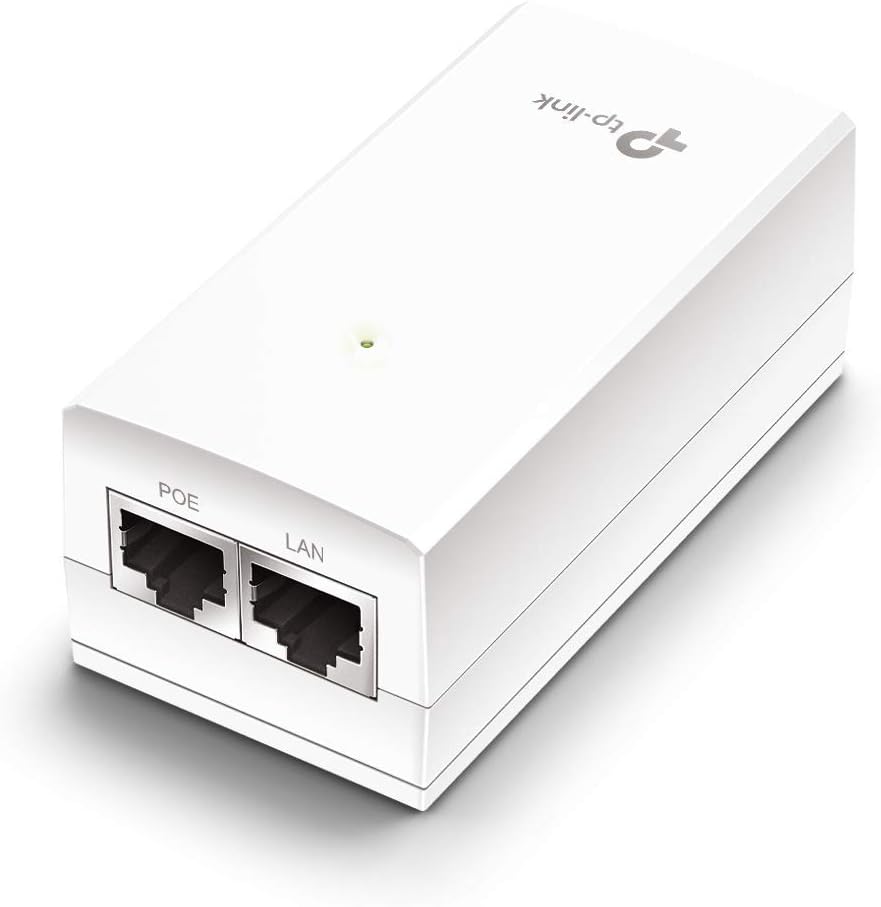


The Omada POE160S combines a 4.6 rating with a balanced set of features for users who need straightforward power and data delivery over Ethernet. It supplies up to 30W to PoE+ equipment, remains compatible with 15.4W 802.3af devices, and provides both a Gigabit Ethernet input and Gigabit Ethernet output. Its UL certification adds a useful layer of assurance for installations where electrical safety matters.
We may earn a commission when you buy through this link, at no additional cost to you.
The injector's strongest quality is its practical balance. Auto Detect identifies the connected equipment and supplies appropriate power, while the plug-and-play design removes the need for software installation or configuration. It can carry power and data as far as 100 meters, which makes it useful for IP cameras and access points in sheds, hallways, outdoor areas, or other locations without a convenient power outlet.
The limitation is that 30W is not enough for every modern high-power endpoint. A device requiring a PoE++ budget or a passive-only arrangement may need a more capable injector. The POE160S is also designed around an AC-powered desktop adapter rather than a completely cable-free installation, so an outlet must remain reasonably close to the injector.
This is the strongest general recommendation for most homes, small offices, surveillance systems, and access-point projects. Choose it when a standard 802.3at PoE+ device needs reliable Gigabit connectivity, the run is within 100 meters, and straightforward auto-detection is preferable to a complex installation.
Auto Detect technology automatically accommodates 802.3af and 802.3at devices, delivering up to 30W when the endpoint supports PoE+. The result is a simple installation that can be completed by connecting the data and power cables.
A single Ethernet run can carry Gigabit network traffic and electrical power for distances up to 100 meters. This reduces cable clutter and makes remote endpoint placement considerably easier.
We may earn a commission when you buy through this link, at no additional cost to you.
This Gigabit PoE+ Powerline Network Adapter earns a 4.6 rating through a broad set of installation and compatibility features. It supports IEEE 802.3af and 802.3at equipment, includes an integrated power supply, and provides a Gigabit Ethernet input plus a PoE+ Gigabit Ethernet output. That makes it a natural fit for IP cameras, VoIP phones, and wireless access points.
We may earn a commission when you buy through this link, at no additional cost to you.
Auto-sensing technology handles power requirements automatically, allowing the adapter to deliver 15.4W to ordinary PoE devices and up to 30W to PoE+ endpoints. Its compact form and plug-and-play operation are useful when a camera or phone must be deployed quickly. Power and data can travel over one Ethernet cable for up to 100 meters, reducing the need for nearby electrical receptacles.
There is an important usage distinction: the unit only supports PoE devices and PoE cameras, not cameras that use separate data and power connections. Its red load light is described as normal during output, and the connected equipment's power demand must remain below 30W. Buyers who need PoE++ output or passive PoE flexibility should look elsewhere.
This adapter is a versatile choice for installers who support mixed PoE and PoE+ equipment. It is particularly suitable for standard 802.3af or 802.3at devices, especially in offices or homes where a single Ethernet connection can reach several different endpoint types.
The adapter can serve both 15.4W PoE and 30W PoE+ endpoints. Automatic sensing reduces setup time while maintaining compatibility with widely deployed IEEE 802.3af and 802.3at hardware.
The integrated supply and simple connection process keep the installation tidy. Users can place it near an available outlet and connect a standard Ethernet run to the powered endpoint.
We may earn a commission when you buy through this link, at no additional cost to you.
The TRENDnet TPE-115GI has the highest supplied rating in this group at 4.7 and combines that strong reception with a 30W PoE+ output, full-duplex Gigabit connectivity, and a 100-meter connection distance. It is particularly compelling for organizations that need an injector meeting procurement rules rather than merely a basic home-network accessory.
We may earn a commission when you buy through this link, at no additional cost to you.
The adapter is listed as NDAA and TAA compliant for customers in the United States and Canada, a distinction that can be valuable for government-oriented network plans. It also includes an integrated power supply, auto-sensing that serves 802.3af and 802.3at devices, and wall-mountable construction. LED indicators provide visible confirmation of PoE connectivity during installation.
Its ceiling is 30W, so it does not address high-power 802.3bt applications. The compliance statement also has a geographic limitation, and buyers outside the United States or Canada may not need those particular procurement attributes. For ordinary 30W devices, however, the feature set is focused and capable.
The TPE-115GI is an excellent fit for eligible institutional, public-sector, or contractor-led deployments that value documented standards, mounting flexibility, and established support. It is also a sound general option when a wall-mountable 30W injector is preferred over a compact desktop model.
NDAA and TAA compliance can simplify planning for covered government installations in the United States and Canada. The distinction gives procurement teams another factor beyond power and speed.
The housing is designed to fit a wider range of permanent installation scenarios. Mounting near a network closet or service area can keep the injector and its power connection organized.
We may earn a commission when you buy through this link, at no additional cost to you.
The Omada POE2412G serves a narrower but important segment: low-power equipment using 24V passive PoE. Its 4.4 rating reflects a solid specialist product, and the combination of a 12W output, Gigabit support, automatic power detection, and a wall-mountable design makes it useful for compatible cameras, access points, or other endpoints that do not need a full 30W budget.
We may earn a commission when you buy through this link, at no additional cost to you.
Auto-detection determines the necessary power requirements, reducing the risk of manually configuring a device that expects passive PoE. The injector works without configuration, and its wall-mountable enclosure supports more permanent placements than a loose desktop adapter. Gigabit speed support preserves headroom for data-intensive equipment.
The central compromise is its 12W maximum. It cannot meet the needs of a typical 30W PoE+ endpoint, so buyers should not mistake the word Gigabit for unlimited power capability. Passive and standard PoE also have different negotiation behavior, making the POE2412G more appropriate for explicitly compatible equipment.
Choose this injector when the target device requires 24V passive PoE and draws no more than 12W. It is less suited to modern PoE+ installations or endpoints with heaters, motors, high-power lighting, or other demanding loads.
The injector specifically supports 24V passive PoE, making it useful where the endpoint expects that arrangement. Matching the correct voltage and class avoids unnecessary adaptation.
The unit determines the connected device's power requirements automatically. This supports a quicker setup for compatible 12W-or-lower equipment.
We may earn a commission when you buy through this link, at no additional cost to you.
The BV-Tech 30W Gigabit PoE+ Injector combines a 4.4 rating with a clear emphasis on efficient operation and flexible mounting. It delivers up to 30W at 54V to IEEE 802.3at and 802.3af devices, supports 10/100/1000Base-T networks, and is listed as NDAA compliant. That combination makes it relevant to surveillance, CCTV, and IP phone installations.
We may earn a commission when you buy through this link, at no additional cost to you.
Level VI energy efficiency is a meaningful feature for an adapter intended to remain connected continuously. Automatic detection and protection help ensure that non-standard Ethernet terminals receive only the power they need, while the plug-and-play design simplifies deployment. A unique interlocking feature also allows multiple units to be organized together more neatly than isolated adapters.
Integrated wall-mounting slots provide another installation advantage, particularly for permanent camera or access-point deployments. The compromise is that maximum output stops at 30W, so it cannot power equipment that requires a 60W or 95W PoE++ budget. The listed NDAA status is also less relevant to buyers outside covered procurement environments.
This injector is a good choice for 30W-or-lower PoE+ deployments that value efficiency, protective detection, and organized installation. It is especially attractive to users adding IP cameras, CCTV equipment, or IP phones while keeping the injector permanently mounted.
Level VI power efficiency is particularly relevant to cameras, phones, and access points that may remain energized for long periods. An efficient adapter helps reduce unnecessary standby consumption.
Interlocking construction and integrated mounting slots help keep several injectors or their cables more orderly. This is useful in equipment rooms with multiple powered endpoints.
We may earn a commission when you buy through this link, at no additional cost to you.
This Gigabit PoE++ Injector offers a 4.6 rating and a useful middle ground between ordinary 30W PoE+ and the highest-power options. It can deliver up to 60W to 802.3bt PoE++ devices while retaining backward compatibility with 15.4W PoE and 30W PoE+ equipment. Its Gigabit input and output preserve full-duplex networking performance.
We may earn a commission when you buy through this link, at no additional cost to you.
Automatic detection distinguishes compliant PoE equipment from non-standard hardware and powers off the latter to protect connected devices. An internal AC/DC converter removes the need for a separate external power brick, making the unit tidier and easier to deploy. LED power and PoE-output indicators give users visible status information.
Passive PoE support is included, but passive devices do not negotiate in the same way as standard compliant PoE equipment. Users should therefore confirm voltage and power expectations before connecting a passive-only endpoint. Also, while 60W exceeds most 30W devices' needs, it is less than the 95W offered by the premium TRENDnet model.
This is an attractive middle-tier choice for a newer high-power device that needs more than 30W but does not require the full 95W budget. It also works well when backward compatibility with several generations of PoE equipment is important.
The 60W output supports modern high-power equipment while remaining compatible with standard 15.4W and 30W endpoints. That versatility makes one injector useful across mixed device populations.
Compliant equipment receives appropriate power, while non-standard terminals are shut down. This automatic behavior helps reduce the risk of damaging improperly wired hardware.
We may earn a commission when you buy through this link, at no additional cost to you.
The TRENDnet TPE-119GI is the premium option in this group, with up to 95W of 802.3bt PoE++ output and a 4.5 rating. It converts a non-PoE Gigabit port into a PoE++ Gigabit port and can serve conventional PoE, PoE+, or PoE++ devices. That broad output range gives it an advantage for demanding modern endpoints.
We may earn a commission when you buy through this link, at no additional cost to you.
Auto-sensing technology selects the correct wattage for the connected equipment, while the Gigabit data input and PoE++ output support full-speed network delivery over a connection of up to 100 meters. A sturdy metal enclosure and wall-mount design suit permanent installations better than a lightweight disposable-style adapter.
The hardware is also listed as NDAA and TAA compliant for the United States and Canada, and TRENDnet includes three years of manufacturer protection plus technical support. The trade-off is that this capability exceeds the needs of most cameras, phones, and standard access points, so buyers should match the injector to real endpoint requirements.
This is the strongest choice for high-power devices, future-oriented installations, and organizations that want one injector to cover several PoE generations. It is less compelling when a 12W passive device or ordinary 30W endpoint is all that needs power.
A 95W ceiling accommodates demanding 802.3bt equipment and creates room for future upgrades. One unit can also cover 15.4W and 30W devices through auto-sensing.
The metal enclosure and wall-mount design suit structured deployments. A fixed installation can keep the injector secure and reduce visible cable clutter.
We may earn a commission when you buy through this link, at no additional cost to you.
The black Gigabit PoE+ Injector provides a 30W, 48V power budget and a 4.5 rating. It uses one Gigabit Ethernet input and one PoE/PoE+ Gigabit Ethernet output, delivering 1000Mbps data while supporting IEEE 802.3af and 802.3at devices. Its compatibility list covers a particularly broad selection of household and office endpoints.
We may earn a commission when you buy through this link, at no additional cost to you.
Auto-sensing technology identifies the attached device and supplies 15.4W for 802.3af equipment or up to 30W for PoE+ devices. The injector can also convert a non-PoE Gigabit port into a powered Gigabit port, with data and power traveling as far as 100 meters. This makes it useful for cameras, wireless access points, IP phones, NAS equipment, smart TVs, and compatible 802.11n, ac, or ax routers.
The flame-retardant plastic housing is compact and appropriate for a wide range of installation scenarios, although the specifications do not describe passive PoE support. The 30W ceiling is another constraint, preventing use with endpoints that require PoE++ power. Buyers also need to match the endpoint's expected 48V arrangement when considering passive equipment.
This model is a versatile selection for mixed home and small-office networks. It is especially compelling when one injector may power different standard PoE devices over time and a full 95W budget would be unnecessary.
The stated compatibility covers cameras, IP phones, access points, NAS devices, smart TVs, and several wireless router standards. That flexibility is useful in evolving home and office networks.
The small flame-retardant plastic enclosure supports flexible placement. Its reduced footprint makes it easier to position near a network outlet without dominating the installation area.
We may earn a commission when you buy through this link, at no additional cost to you.
The REOLINK RLA-PI1 has a 4.7 rating and is explicitly positioned for installations using compatible Reolink PoE equipment. It converts a non-PoE Gigabit port into a PoE+ Gigabit port, supplying up to 30W to PoE+ devices or 15.4W to standard PoE devices. The result is a focused option for cameras, video doorbells, and floodlight cameras.
We may earn a commission when you buy through this link, at no additional cost to you.
Its most convincing benefit is installation simplicity. Connecting the injector to an outlet and Ethernet cable provides both data and power to the endpoint, eliminating the need for a separate local power adapter or cord. Power and data can be transmitted together for up to 100 meters, which is especially helpful when a camera is positioned away from a convenient outlet.
The main trade-off is specialization. Although its standards and output make it usable with suitable non-Reolink PoE equipment, its product information specifically recommends it for Reolink products. It also tops out at 30W and therefore cannot meet a 60W or 95W PoE++ requirement. A mixed network with high-power access points may need a more universal option.
This is the preferred choice for a Reolink-centric surveillance system using a non-PoE router, switch, or NVR connection. It is also a sound standard PoE option when the endpoint's requirements are known to fall within 15.4W or 30W.
The injector is specifically recommended for compatible Reolink PoE cameras, video doorbells, and floodlight cameras. That focus simplifies product selection for an existing Reolink ecosystem.
Power travels with the Ethernet connection, so the camera does not need a nearby outlet or a separate power adapter. This simplifies remote camera installations and reduces cable clutter.
We may earn a commission when you buy through this link, at no additional cost to you.
The TP-Link TL-PI30G is a conventional 30W Gigabit PoE+ injector with a 4.5 rating. It allows an existing non-PoE switch or device to power a compliant endpoint through a single Ethernet cable, and it supports both 802.3at and 802.3af equipment. The simple one-input, one-output arrangement makes the intended connection path easy to understand.
We may earn a commission when you buy through this link, at no additional cost to you.
Auto Detect technology provides up to 30W to PoE+ devices and remains compatible with 15.4W PoE endpoints. Gigabit Ethernet is supported on both the input and output sides, preserving high-speed wired connectivity. Installation requires no software or configuration, while the 100-meter reach is suitable for cameras and access points distributed across a large property.
As with other 30W models, the main limitation is that it cannot support 60W or 95W PoE++ devices. It also needs a nearby AC power source, meaning the injector does not eliminate the need for an outlet; it eliminates the need for a separate power connection at the remote endpoint. Users should confirm that their switch port and connected equipment are compatible with the injector's data path.
This TP-Link model is a dependable general recommendation for expanding a non-PoE network with one standard PoE or PoE+ endpoint. It suits users who value familiar, uncomplicated operation and do not need passive or high-power PoE++ support.
The TL-PI30G can add PoE capability where replacing a non-PoE switch is inconvenient. One Gigabit input and one powered Gigabit output create a focused upgrade path.
Auto Detect supplies up to 30W to a PoE+ endpoint and supports 15.4W devices. This reduces configuration work for common compliant equipment.
We may earn a commission when you buy through this link, at no additional cost to you.
Choosing a Gigabit POE injector requires matching the adapter's electrical standard, power budget, and physical design to the endpoint and installation. The most important checks are voltage, PoE class, cable distance, and whether the remote equipment truly requires PoE rather than a separate data and power connection.
PoE devices negotiate power using IEEE standards, and selecting the wrong class can leave an endpoint unpowered or expose it to an unsuitable arrangement. Standard PoE under IEEE 802.3af is associated with 15.4W, PoE+ under IEEE 802.3at can supply up to 30W, and 802.3bt PoE++ extends the power range further. Begin with the endpoint's manual or product documentation rather than assuming every injector is interchangeable. The ten options range from a 12W passive model to injectors offering 60W or 95W.
In short, match the device's documented PoE standard before considering any other feature.
Maximum wattage alone does not tell the whole story. Some products deliver 30W at 48V, the BV-Tech model supplies 30W at 54V, and the Omada POE2412G supports 24V passive PoE at up to 12W. Passive equipment may require a specific voltage and may not perform standard power negotiation. Check the endpoint's input requirements and the injector's output arrangement, then leave adequate margin below the stated maximum for reliable operation.
In short, verify both voltage and required wattage, not just the headline output class.
Every product in this guide supports Gigabit connectivity, which is essential for high-resolution video, large file transfers, modern access points, and busy office networks. Look for a Gigabit input connected to a Gigabit PoE output rather than accepting a lower-speed intermediary port. A Gigabit injector can still be limited by the switch, router, cabling, or endpoint attached on the other side, so the entire path should be capable of Gigabit transfer.
In short, choose Gigabit on both ports and confirm the rest of the network path can sustain that speed.
Most listed injectors support power and data transmission as far as 100 meters, or 328 feet, over a single Ethernet cable. That distance makes it possible to place a camera or access point in a remote room, exterior wall, or outbuilding without installing a dedicated outlet. Ethernet standards and local regulations can impose practical limitations, especially when combining lengthy runs, patch leads, and high ambient temperatures. The injector should be placed to keep the complete run within the supported channel length.
In short, plan the entire Ethernet route and keep the combined cable length within 100 meters.
Some injectors are compact desktop units, while others include wall-mounting slots, metal enclosures, or interlocking features for organized multi-unit installations. Consider whether the adapter will remain visible, whether heat can dissipate, and whether an outlet is available nearby. A permanent camera or access-point deployment may benefit from wall mounting, whereas a temporary test bench can use a compact plug-in model. Flame-retardant housing and an integrated converter can also simplify placement.
In short, choose a housing and mounting style that suit both the available space and permanence of the installation.
Standards-based injectors are broadly reusable, but manufacturer-specific recommendations can add confidence. The REOLINK RLA-PI1 is specifically recommended for compatible Reolink PoE cameras, video doorbells, and floodlight cameras. Other models emphasize cameras, access points, IP phones, NAS devices, smart TVs, and wireless routers. If the endpoint uses a nonstandard passive arrangement, confirm that exact requirement instead of assuming IEEE compatibility. Separately powered devices that lack PoE inputs cannot be powered by any injector.
In short, verify the endpoint's PoE input and consult its documentation, especially for passive equipment.
Auto Detect or auto-sensing technology can identify the connected class and supply appropriate power, while protective behavior can prevent unsafe output to nonstandard terminals. The BV-Tech unit describes automatic detection and protection, and the 60W PoE++ model powers off non-standard equipment. LED indicators on several adapters provide quick confirmation of power and PoE connectivity. These features are particularly useful during troubleshooting because they can help distinguish a missing link from a missing power handshake.
In short, prefer automatic detection, protective shutoff, and clear status indicators for easier installation and maintenance.
Institutional buyers may need more than technical compatibility. The TRENDnet TPE-115GI and TPE-119GI are listed as NDAA and TAA compliant for customers in the United States and Canada, while the BV-Tech injector also carries an NDAA compliance claim. These characteristics can matter for covered procurement environments. The TPE-115GI and TPE-119GI additionally include three years of manufacturer protection and access to English-speaking technical support during normal business hours.
In short, government, institutional, and contractor buyers should check compliance, warranty, and support terms before ordering.
Begin by confirming that the endpoint requires PoE and that its voltage, power class, and connector arrangement match the injector. Connect the injector's Gigabit Ethernet input to a non-PoE switch, router, or network port, then connect its PoE output to the endpoint using a suitable Ethernet cable. Connect the injector to AC power and wait for the status lights to indicate power and PoE output before checking the network connection.
For a 100-meter run, use quality Ethernet cabling and avoid unnecessary intermediate patch leads. Keep the injector and cable path within the manufacturer's specified environmental and distance limits. Do not connect a device that requires separate data and power unless it is explicitly designed for PoE over the relevant output, and do not exceed the injector's maximum wattage. Passive PoE devices require especially careful voltage matching because they may not negotiate power automatically.
Routine care is simple: keep the power connection secure, ensure the housing has ventilation, and avoid moisture, excessive heat, or cramped locations. If a device disconnects, check the endpoint's power requirement, Ethernet cable, upstream link, and indicator states before changing hardware. Treat the adapter as electrical equipment, avoid opening the housing, and follow local wiring and installation codes.
A Gigabit POE injector adapter adds electrical power to a non-PoE Gigabit network connection. It accepts data from a switch or router through one Ethernet port and sends data plus power through the other. This is especially useful for IP cameras, wireless access points, VoIP phones, and other powered devices located away from a convenient outlet.
Usually not. A switch with sufficient PoE output can power compatible endpoints directly through its network ports. An injector is most useful when the available switch or router has a non-PoE port, only one device needs power, or a single adapter is more convenient than replacing the existing network equipment.
It normally will if both devices follow compatible IEEE standards and the injector supports backward compatibility. The 802.3at injectors in this guide support 15.4W 802.3af devices as well as 30W PoE+ endpoints. Confirm voltage, power requirements, and whether the camera uses standard or passive PoE before connecting it.
PoE under IEEE 802.3af supplies up to 15.4W, PoE+ under IEEE 802.3at supplies up to 30W, and PoE++ under IEEE 802.3bt supports substantially higher budgets. The featured high-power injectors offer 60W or 95W, while the standard 30W models are appropriate for most conventional cameras, phones, and access points.
No. The endpoint must include a compatible PoE receiver or power-input arrangement that accepts power and data over the same Ethernet cable. A standard non-PoE network device may use the data connection but cannot draw operating power from the injector. Passive PoE devices need a specifically compatible voltage and power arrangement.
Most products in this guide state a maximum distance of 100 meters, or 328 feet, for combined power and data transmission. The complete Ethernet path, including patch cables, should remain within that limit. Signal quality can also depend on cable quality, topology, interference, and the capabilities of the switch and endpoint.
All ten products described here are designed primarily for plug-and-play use, and none requires software installation or configuration. Auto-detection or auto-sensing handles compatible device classes in most cases. Passive PoE equipment may need more careful manual voltage verification, but it still does not turn the injector into a managed network device.
These products have one Gigabit input and one PoE output, so each injector is intended for one endpoint. Multiple devices generally require a multiport PoE switch, individual injectors, or another suitable distribution method. Splitting one output with an unmanaged passive hub can also violate power and network-design assumptions.
The Omada POE160S is the most balanced general pick, combining 30W PoE+ output, Gigabit connectivity, auto-detection, and a straightforward installation. The REOLINK RLA-PI1 stands out for compatible Reolink camera systems, while the TRENDnet TPE-119GI provides the premium power budget and a durable metal enclosure for high-power or future-oriented deployments.
Prioritize the endpoint's actual PoE standard, voltage, and power demand before considering range or mounting style. Standard 15.4W and 30W models suit most cameras and access points, passive 24V equipment requires careful matching, and PoE++ becomes relevant when an endpoint needs more than 30W. A Gigabit path on both injector ports remains essential for high-speed networks.
Finally, confirm that the chosen adapter is compatible with the complete installation, including the switch, cable, environment, and powered device. Product ratings, configurations, and especially current prices can change, so checking the latest listing details before purchase will help ensure the selected injector still fits the project.