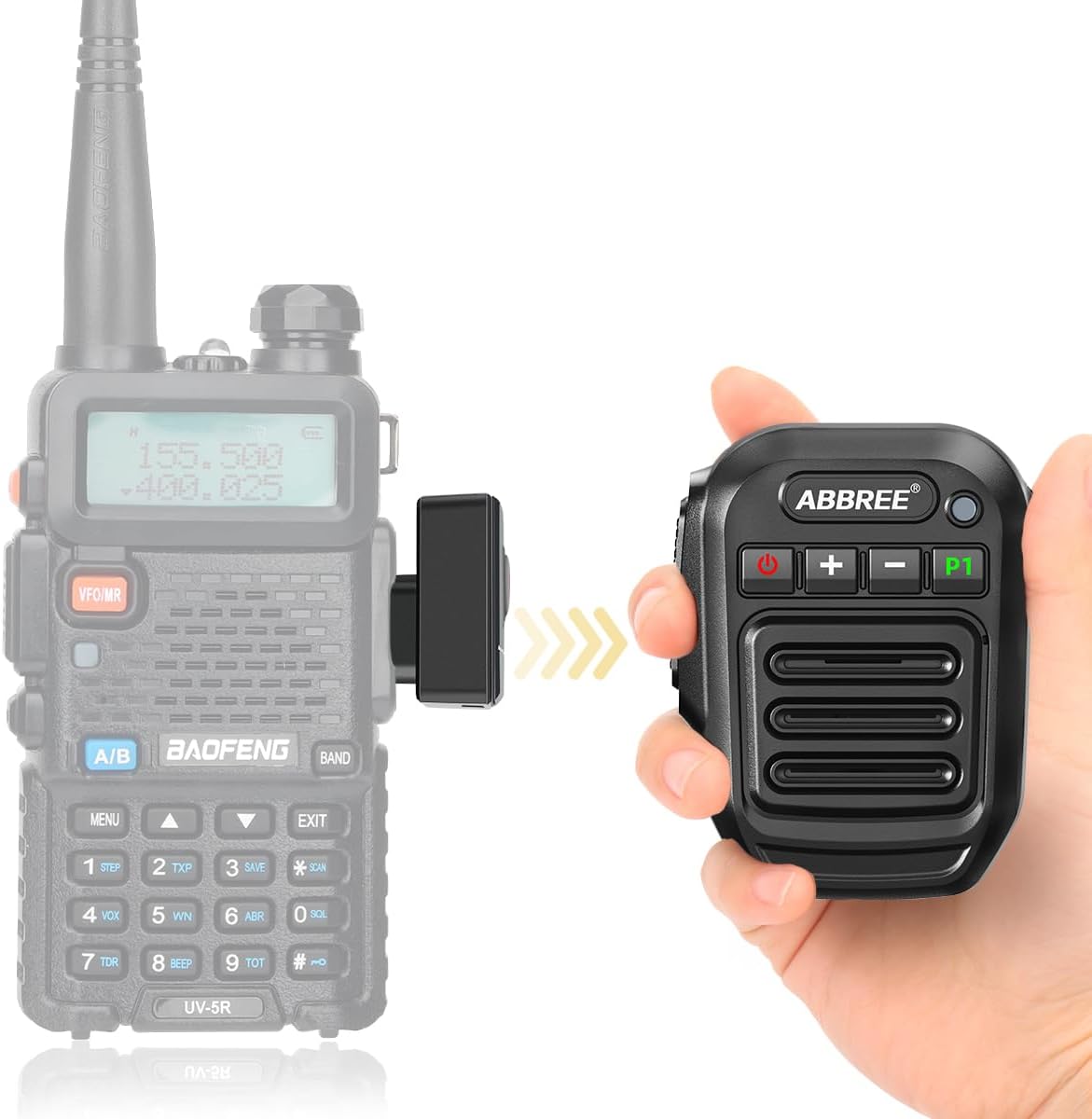
ABBREE Wireless Handheld Speaker Mic
4.0Editor score
Extensive radio compatibility
USB-C fast charging
Adjustable rotating clip
Best Bluetooth Headset for Ham Radio Operators guide compares wireless PTT, noise cancelling, radio compatibility, comfort, battery life, and key features.
A Bluetooth headset can make ham radio operation cleaner, safer, and more comfortable by reducing cable clutter around the radio and placing audio and transmission controls closer to the operator. The right model depends heavily on radio connector type, PTT behavior, microphone performance, fit, and whether hearing protection is needed in the operating environment.
This guide compares ten wireless headset and related audio products for their compatibility with two-way radios, Bluetooth functions, push-to-talk controls, microphone features, wearing style, battery considerations, and suitability for amateur-radio use. It includes purpose-built radio solutions, multi-pin shoulder microphones, hearing-protection headsets, and general Bluetooth models that may supplement rather than directly replace a radio accessory.
Each selection highlights its strongest use case while also identifying limitations that matter to operators. The rankings reflect the supplied product information, feature fit, compatibility boundaries, and user ratings; they are not the result of personal laboratory testing. Product details, availability, and prices can change, so confirm the connector and radio model before buying.
4.0Editor score

3.8Editor score

3.5Editor score
The comparison below places radio-specific wireless accessories beside Bluetooth and hearing-protection options, showing which products support direct radio connections, wired adapters, PTT controls, phone connectivity, and extended-wear features.
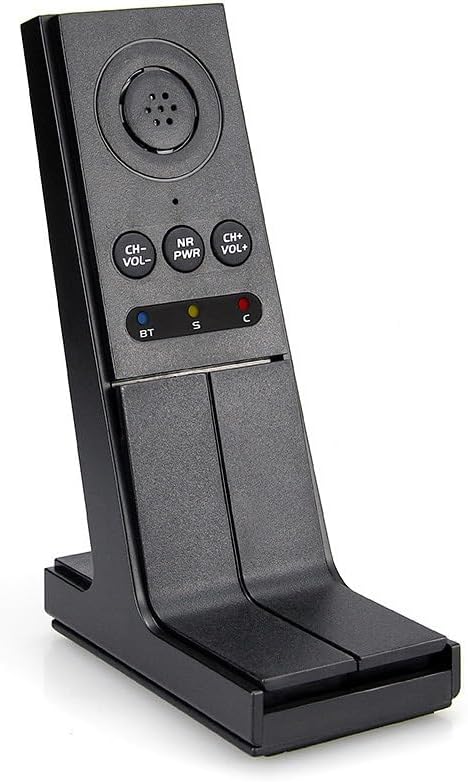


The AnyTone BT03 is a wireless desktop microphone made specifically for the AnyTone AT-578UV and AT-878 radios. Its supplied rating is 3.7, which is moderate, but its strongest feature is not an isolated specification: it is the tight integration between a desktop PTT microphone and two named radio platforms. That makes it more of a specialized base-station accessory than a universal Bluetooth headset.
We may earn a commission when you buy through this link, at no additional cost to you.
The connection uses a proprietary low-latency protocol rather than a general Bluetooth profile. As a result, the microphone can provide stable wireless transmission with clear voice pickup while freeing the operator from a conventional cable running from the radio to the desk microphone. A responsive physical PTT button is useful during casual conversations and sustained communication, while the desktop format suits a fixed operating position.
The primary limitation is compatibility. The BT03 does not work with other radio brands or models, so an operator who owns a mixed fleet of radios cannot standardize on it without confirming every compatible unit. Its proprietary protocol also means it should not be treated as a general Bluetooth headset for calls or media. The supplied 3.7 rating and lack of broader radio support keep it from dominating more flexible choices.
This is the strongest dedicated option for an AnyTone 578 or 878 owner who wants a tidy fixed-station setup with wireless PTT. It is less appropriate for portable operations, mixed-brand stations, or operators who need one headset to serve radios, phones, and computers. Confirm the exact model before ordering, because the naming variations across AnyTone products can be misleading.
Removing the direct microphone cable reduces desk clutter and lets the radio sit more conveniently within reach. For a base station, dispatch desk, or long-duration home operating position, that separation can make the station feel less constrained without changing the core push-to-talk workflow.
Because the wireless protocol is proprietary, compatibility is the decisive buying criterion. The product makes sense only when the operator controls the radio model or can verify that every unit at the station uses one of the two supported AnyTone platforms.
We may earn a commission when you buy through this link, at no additional cost to you.
The black ABBREE wireless handheld speaker microphone provides a useful bridge between conventional two-pin radios and Bluetooth phone connectivity. It carries a 4.0 rating and supports an extensive list of Baofeng, Quansheng, and related two-way radio models. That combination of radio coverage, smartphone use, and a conventional shoulder-speaker form factor makes it an accessible option for many operators.
We may earn a commission when you buy through this link, at no additional cost to you.
The microphone includes a two-pin K adapter, a Type-C charging cable, and a belt. Its rotating back clip lets the operator adjust the microphone angle, while the wired radio connection remains familiar even though phone communication is wireless. USB-C charging from a power bank, computer, vehicle, wall outlet, or laptop adds practical flexibility for field and travel use.
The supplied information includes an important delay warning: some walkie-talkies may take one to two seconds to transmit. That delay is unacceptable for some rapid tactical or contest exchanges, but it may be acceptable in ordinary amateur conversations, base-station use, or situations where the radio's own behavior determines the latency. Volume adjustment is available only while a call is active, another limitation worth noting.
This microphone is best for an operator who wants one accessory to cover several compatible two-pin radios while also handling basic phone audio. It is less suitable when immediate PTT response is critical or when the radio uses a different connector. The long compatibility title still needs to be checked against the exact radio model, particularly when buying a used or revision-specific unit.
The ability to connect with iOS and Android phones adds value beyond ordinary radio traffic. That makes the accessory practical for operators who coordinate dispatch-style activities on cellular calls or want a single speaker microphone for radio and smartphone communication.
Buyers should accept that some supported radios may introduce a one-to-two-second delay. For routine QSOs this can be manageable, but operators needing instant response should evaluate their radio's behavior before relying on the microphone for rapid exchanges.
We may earn a commission when you buy through this link, at no additional cost to you.
The green ABBREE handheld speaker microphone closely follows the functionality of the black version while offering a distinctive visual option. Its 4.0 rating places it among the better-rated dedicated radio accessories in this group. Compatibility includes common Baofeng UV-5R variants, BF-F8HP PRO, GM21, K5PLUS, GM-15Pro, UV-5G Plus, AR-152, and Quansheng UV-K5 variants.
We may earn a commission when you buy through this link, at no additional cost to you.
The speaker microphone adds wireless connection with iOS and Android phones. Its 360-degree rotating back clip supports placement at a comfortable angle, while USB-C charging makes it convenient to replenish from a wall outlet, vehicle, laptop, computer, or power bank. Those details suit an operator who alternates between portable radio work and phone-based coordination.
The same transmission-delay warning applies: some walkie-talkies may show one to two seconds of delay during transmission. The plus and minus volume controls work only during a call, which means they are not general audio controls for other phone applications. The green finish has no technical effect but may make the accessory easier to distinguish from other equipment in a shared radio bag.
Choose this version if the operator prefers green equipment or already owns compatible two-pin radios. For most users, its feature set is similar enough to the black ABBREE model that color, availability, and personal preference can be the deciding factors. Confirm connector shape and radio revision before purchase, and consider alternatives if split-second PTT response is essential.
Unlike a tiny concealed earpiece, the shoulder-microphone format places the speaker and microphone in a conventional position. It can be easier to locate quickly and may serve operators who prefer visible controls and do not need a fully concealed communications setup.
The list of supported models is extensive, but connector conventions can vary across brands and revisions. Comparing the radio's accessory port with the supplied two-pin K adapter is the safest way to avoid a mismatch before ordering.
We may earn a commission when you buy through this link, at no additional cost to you.
The generic walkie-talkie Bluetooth headset with finger PTT combines radio audio, phone synchronization, and a separate wireless transmission control in a compact earpiece system. Its 3.8 rating reflects a positive but not exceptional user reception. The feature combination is especially relevant for operators who want private listening and quick access to transmit without repeatedly handling the radio.
We may earn a commission when you buy through this link, at no additional cost to you.
Compatibility covers Baofeng UV-5R and UV-82 variants, BF-F8HP, UV-82HP, RT21, H777, and other devices using a K-type connector. The finger PTT can be secured to a finger, bicycle or motorcycle handlebar, or steering wheel. A built-in microphone and noise-cancellation function support voice transmission, while the earpiece uses a lightweight, adjustable over-ear design.
The most important drawback is its connector boundary. It is explicitly not compatible with Motorola, ICOM, or Hytera radios, which rules it out for operators using those brands. It also assumes the radio has the required Bluetooth dongle or appropriate connection arrangement. Although the earpiece is wireless, compatibility still depends on the radio-side hardware, so it should not be confused with a universal Bluetooth headset.
This is the best-balanced pick for a compatible two-pin radio operator who values a concealed earpiece and accessible PTT. It works especially well for mobile operation where one hand may be occupied. Owners of Motorola, ICOM, or Hytera equipment should choose a purpose-built adapter or headset for their connector instead.
The finger-mounted PTT places the transmit control exactly where the operator's hand already is. During driving, biking, or other activities that limit movement, this can reduce the need to locate and pick up the radio for every transmission.
An over-ear earpiece helps keep received audio more private than a shoulder speaker. Combined with a noise-cancelling microphone, it gives compatible two-pin users a balanced solution for private monitoring and intelligible transmission.
We may earn a commission when you buy through this link, at no additional cost to you.
The Kenwood-style wireless earpiece uses a radio adapter and a clip-on Bluetooth receiver to create a wireless link between supported two-way radios and an over-ear headset. It uses Bluetooth 5.3 and is designed to pair in approximately five to ten seconds. Voice prompts report power, connection, disconnection, and low-battery status, making the setup easier to manage during daily use.
We may earn a commission when you buy through this link, at no additional cost to you.
Rather than requiring a separate finger control, the receiver itself carries a PTT button. Press and hold it to transmit and release it to listen. The ear-hook design is lightweight, and the coiled cable keeps excess wire from tangling as the operator moves. A clothing clip allows the receiver to sit on a collar, shirt, vest, or backpack strap.
The included adapter uses a Kenwood K1-style configuration with a 3.5 mm and 2.5 mm two-pin arrangement. The product information says it can suit select Baofeng, Quansheng, Retevis, and Pxton radios, but explicitly warns that layouts can differ by model or version. No user rating is supplied, so buyers have less customer-feedback information to guide the decision than with the more heavily reviewed alternatives.
This is a practical choice for an operator who wants simple wireless setup, a reachable PTT, and a compact receiver. Its appeal depends on finding a radio with a genuinely compatible port. Do not rely only on the brand name: compare the connector with the product images and confirm whether the radio provides the required accessory interface.
Automatic pairing and spoken status updates reduce the need to memorize button sequences. This is especially helpful when the headset is used intermittently or by more than one operator who may not know the device's settings.
Putting PTT on the clipped receiver removes the need for a second wearable control. Its placement on a collar or strap keeps the transmit button accessible while the over-ear cable carries the received audio.
We may earn a commission when you buy through this link, at no additional cost to you.
The PRYMEBLU BT-503-V2 is a radio-side Bluetooth adapter for Motorola radios using the standard two-pin M1 or x03 connection. Although its supplied rating of 3.5 is the lowest among the rated radio-focused products, its feature set is unusually comprehensive. It supports PRYME wireless accessories and most consumer Bluetooth headsets that use the HSP profile, giving operators more freedom in headset selection.
We may earn a commission when you buy through this link, at no additional cost to you.
Automatic pairing and reconnection reduce setup friction. The adapter remembers a connected headset and reconnects when powered on. Users can transmit through the adapter's built-in PTT or an optional PRYME wireless PTT, while PRYME accessories with their own PTT buttons operate directly. A boom microphone positioned near the mouth is recommended for the best transmit audio quality.
Compatibility is intentionally narrow. The adapter supports named Motorola families including CLS, CP, DTR, Mag One, R2, RDX, RMX, and VL50, but it does not cover other connector styles. It also blocks phone music and streaming while connected to a headset, which is sensible for radio reliability but limits casual entertainment use. Its claimed operating duration is ten to twelve hours per full charge.
The BT-503-V2 is best for professional or serious Motorola-radio operators who want to choose their own HSP-compatible headset. It is also notable for supporting compatible hearing aids using the HSP profile, although users should confirm with their hearing-aid manufacturer and audiologist. Owners of other radio brands should look elsewhere rather than attempting to use an incompatible adapter.
Because the adapter works with most HSP-compatible consumer headsets, operators are not tied to one bundled earpiece. This can help users select a microphone, wearing style, and comfort level that better matches their activity.
Remembering a paired headset and reconnecting automatically is valuable for operators who move between vehicles, bases, or work areas. It minimizes repeated pairing and supports a more consistent daily workflow.
Support for HSP-compatible hearing aids is a distinctive accessibility feature. It does not apply to A2DP-only or AuraCast-only streamer devices, so users should consult their hearing-aid manufacturer before purchasing.
We may earn a commission when you buy through this link, at no additional cost to you.
The radtel Bluetooth earpiece is sold as a two-pack and is designed to connect with compatible walkie-talkies as well as smartphones. Its 2.8 rating is the lowest in this roundup, so the feature description should be evaluated carefully rather than treated as proof of dependable field performance. The two-unit format is nevertheless useful for teams, spare equipment, or operators who alternate between radios.
We may earn a commission when you buy through this link, at no additional cost to you.
Its advertised features include a noise-cancelling microphone, stable Bluetooth connectivity within ten meters, and soft ear cushions shaped for extended wear. The dual connectivity means the headset can handle radio communication and smartphone calls or media rather than being dedicated to one device. That flexibility may suit an amateur-radio operator who also handles internet-based remote station functions.
The main weakness is limited detail about radio-side connections and PTT implementation. The title names BaoFeng, Kenwood, Btech, UV-32, UC-5R, AR-5RM, and BF-F8HP PRO among compatible radios, but users need to verify whether the radio requires an adapter, supports the same Bluetooth profile, or merely pairs through a phone. The low rating also makes independent checking of user feedback especially valuable.
This two-pack is most appropriate for buyers who want spare units and flexible radio-phone use, provided they confirm the exact radio and PTT arrangement first. It is not the first choice for critical communications where immediate transmission response, a clearly documented connector, and extensive customer feedback are priorities.
A two-pack provides an immediate spare or allows two operators to share the same product type. That makes it more practical for club events, portable contest setups, and field activities where losing one earpiece would otherwise interrupt operations.
The lightweight construction and soft ear cushions are designed for long wear. Actual comfort varies by ear shape and activity, so the adjustable fit and included options should be evaluated rather than assumed to suit every operator.
We may earn a commission when you buy through this link, at no additional cost to you.
The 3M WorkTunes Connect combines hearing protection, Bluetooth audio, and AM/FM radio reception in an over-ear headset. Its 4.3 rating is the highest among the ten supplied products. It is not a direct replacement for a walkie-talkie PTT headset, but it can be a useful companion for amateur-radio operators who work in noisy environments and need protected hearing during radio activity.
We may earn a commission when you buy through this link, at no additional cost to you.
The headset has a 26 dB Noise Reduction Rating and a self-adjusting safe-volume limiter. Bluetooth wireless technology supports connected audio, while the built-in AM/FM receiver includes three equalizer settings. Water and sweat resistance improves durability for field use, and two AA batteries provide operation, with an optional Alpha 1100 lithium-ion rechargeable battery listed as an alternative.
The decisive drawback is the lack of a documented radio connector or PTT function. Operators cannot assume that radio traffic will flow through the Bluetooth connection simply because they can connect a phone. Its strengths lie in hearing protection, entertainment, and environmental awareness rather than direct two-way-radio control, making it better suited to a base station or work environment than mobile radio operation.
Choose this headset if noise reduction and Bluetooth audio matter more than integrated radio PTT. An operator who works around generators, workshop equipment, or other loud machinery may appreciate hearing protection while monitoring or logging activity. Ham-radio users needing live two-way-radio audio should choose a radio-specific adapter or shoulder microphone instead.
A 26 dB NRR is a meaningful protective feature in noisy settings. The headset lets an operator listen to protected audio without removing hearing protection for calls, music, or broadcast radio.
AM/FM reception and Bluetooth connectivity broaden the product beyond communications. This makes it more versatile for workshop breaks, travel, or background listening, provided those features matter more than direct PTT operation.
We may earn a commission when you buy through this link, at no additional cost to you.
The 3M Pro-Comms headset combines Bluetooth wireless technology with electronic hearing protection for team-based work environments. Its 4.1 rating is among the strongest in the group. Unlike a basic Bluetooth headset, it is designed to support communication while preserving hearing protection and situational awareness in high-noise settings.
We may earn a commission when you buy through this link, at no additional cost to you.
External microphones allow users to hear important environmental sounds, while the noise-cancelling boom microphone supports intelligible communication in loud conditions. Recessed microphones are designed to resist damage and reduce wind noise. The stated NRR is 26 dB, or 25 dB when used with a hard hat, making the product relevant to operators working near machinery, vehicles, generators, or other industrial noise.
Its push-to-talk feature operates through a third-party application for headset-to-headset and group communication. That is useful for coordinated teams, but it is not documented as direct two-pin radio PTT. A ham-radio operator should therefore view it as a team-communications and hearing-protection headset rather than a drop-in accessory for an amateur transceiver.
This is the most suitable pick for an operator whose activity combines radio monitoring with noisy fieldwork and team coordination. It is less attractive for a home station or a simple handheld-radio user seeking a tiny concealed earpiece. Confirm that the application-based PTT workflow fits the intended communication method before choosing it.
External microphones let wearers remain more aware of nearby equipment, warnings, and coworkers while the headset continues providing hearing protection. This is especially valuable when a radio operator also needs to notice activity outside the headset.
App-based group PTT can support short, structured exchanges among workers using compatible headsets. The requirement for a third-party application makes setup less radio-direct, but it expands the potential for organized team traffic.
We may earn a commission when you buy through this link, at no additional cost to you.
The PHILIPS Trucker Bluetooth headset is designed primarily for calls, navigation, office work, and driving rather than direct ham-radio transmission. It carries a solid 4.2 rating and offers a useful single-ear form for operators who also need to hear the radio or other equipment around them. It is best considered a complementary Bluetooth headset rather than a radio PTT accessory.
We may earn a commission when you buy through this link, at no additional cost to you.
An AI noise-cancelling microphone helps isolate the user's voice in loud environments, and an instant mute button permits a nearby conversation without ending the call. The headset can maintain connections to two devices, making it useful for a phone plus computer combination. Voice-assistant compatibility supports hands-free control for common tasks such as calls and directions.
Its most important limitation is that no radio-side connector, adapter, or radio PTT function is specified. Users cannot assume it will connect directly to an amateur transceiver or two-way radio. The single-ear design also leaves one ear open, which can help with awareness, while the adjustable headband and soft cushion support long work periods.
This headset is a good match for a ham-radio operator who needs hands-free phone communication while monitoring a radio with separate equipment. It is not the right choice for transmitting directly over a handheld radio. For that purpose, select one of the dedicated two-pin, Kenwood-style, Motorola, or AnyTone products in this guide after confirming the exact connector.
The mono, single-ear format is useful when monitoring a nearby radio or tracking activity in the surrounding environment. That open awareness is more important for many ham-radio applications than the isolation created by a dual-ear headset.
Connecting a phone and computer at the same time helps an operator move between cellular calls, online remote-station functions, and meetings. It does not add radio PTT, but it can simplify the non-radio side of an operator's communications workflow.
We may earn a commission when you buy through this link, at no additional cost to you.
A suitable communications headset depends on more than Bluetooth branding. Connector standards, radio-side PTT support, microphone placement, wearing style, environmental noise, and battery behavior should guide the decision, with compatibility checked before every other feature.
The most important factor is whether the accessory can connect to the exact radio being used. Two-pin connector layouts are not universally interchangeable, even when products share the same general physical description. The options in this guide include Kenwood-style K1 arrangements, Motorola M1 or x03 ports, and a proprietary connection for specific AnyTone radios. Some products also work through a radio Bluetooth dongle or an included K adapter. Check the port on the radio, compare its pin sizes and arrangement with the product images, and identify the precise radio model and version rather than relying on the brand name alone.
PTT behavior affects the rhythm of real communication. Some radio-specific accessories include the PTT in a desktop microphone, shoulder speaker, or clip-on receiver. Others require a separate finger controller that connects to a radio Bluetooth dongle. The ABBREE shoulder microphones may also show a one-to-two-second transmission delay on some radios, making them less appealing for rapid exchanges. General phone headsets and hearing-protection models may offer app-based PTT rather than direct radio control. Determine whether PTT is integrated, external, app-based, or unavailable, and consider whether transmission latency is acceptable for contesting, emergency-style drills, mobile driving, or ordinary QSOs.
A clear headset microphone must separate speech from background noise without creating excessive distortion. Products with a noise-cancelling microphone or boom design are most appropriate when the operator works in vehicles, workshops, field locations, or alongside machinery. The PRYMEBLU adapter is especially flexible because it can use compatible consumer headsets, and its guidance favors positioning a boom microphone near the mouth for better transmit audio. Smaller concealed microphones may be more discreet but harder to place consistently. Evaluate boom length, microphone position, and the level of background noise rather than relying only on a general noise-cancellation label.
A headset that sounds capable but becomes uncomfortable can reduce productivity during long operations. Over-ear hooks, adjustable ear bars, light receiver clips, and soft cushions offer different compromises. A single-ear headset leaves one ear open for radio monitoring or environmental awareness, while a concealed earpiece provides privacy and less visual distraction. A shoulder microphone is easier to locate and may be more practical for beginners. Fit also depends on ear shape, headgear, clothing, and whether the operator is seated, walking, cycling, or driving. Use the included adjustment options and consider whether controls can be reached without shifting the earpiece.
Operators around loud equipment may need hearing protection integrated into the headset. The 3M WorkTunes Connect and 3M Pro-Comms models both provide a stated 26 dB NRR, with the Pro-Comms version noting 25 dB with a hard hat. External microphones on the Pro-Comms model help maintain situational awareness, while the WorkTunes Connect adds AM/FM reception and Bluetooth entertainment. Neither is documented as a direct radio PTT accessory, so they should be paired with compatible radio equipment or considered as alternate communication tools. Choose a protected model for noisy work, but check regulations, equipment requirements, and the correct NRR for the actual environment.
Battery behavior affects whether a headset is ready for a long operating session. The ABBREE microphones use included USB-C charging cables, allowing recharging from a wall outlet, vehicle, laptop, computer, or power bank. The PRYMEBT adapter lists ten to twelve hours of operation and includes a micro-USB charger, while the WorkTunes Connect can run on two AA batteries. General headsets may support all-day work but often require their own charging routines. Look for an accessible charging method, enough endurance for your shift, and a clear way to check battery status. Wireless reliability is equally important: a familiar physical PTT and automatic reconnection can prevent missed transmissions during repeated setup.
Radio-side and headset-side compatibility are separate questions. A radio adapter may support Motorola ports but only accept headsets using the HSP profile, while a dedicated earpiece may require a specific radio dongle. Some products can synchronize with iOS or Android phones, but that does not guarantee that amateur-radio audio will follow the same route. The PRYMEBLU adapter works with most HSP-compatible consumer headsets and compatible hearing aids, whereas A2DP-only streamer devices are excluded. A general two-device headset may handle a phone and computer but provide no radio connection at all. Review both the radio interface and the headset's Bluetooth profiles before buying.
A ham-radio operator may need a fixed-station microphone, a concealed mobile earpiece, a shoulder microphone, a hearing-protection headset, or a general phone headset for remote-station coordination. Fixed operators can favor the AnyTone desktop microphone, while portable two-pin users may prefer an earpiece with finger PTT. Two-pin shoulder microphones cover many radios but can introduce transmission delay. General headsets can coexist with a separate radio and provide useful phone or computer audio without replacing the transceiver. Match the product to the operating location, communication volume, privacy requirements, and expected mix of radio, phone, and digital activities.
Before pairing, fully charge the headset or its radio adapter, identify the radio model and connector type, and read the included instructions. Pair the headset with the appropriate dongle or adapter first when required, then confirm that received audio is present before transmitting. For models with separate PTT controls, connect or bind that control according to the manufacturer's sequence. Speak briefly and listen for sidetone or a received reply to confirm the full path works.
During operation, use a moderate speaking volume and keep a boom microphone close to the mouth without pressing it against clothing. Test for clipping, wind noise, background pickup, and radio delay on the first transmission. Keep the radio and headset within their stated working range, avoid obstructing the earpiece or microphone, and confirm that volume adjustments work only during active calls where the product description specifies that limitation. If using a multi-device headset, learn how calls are switched before an important exchange.
After use, disconnect or power down the devices when appropriate, remove the headset, and wipe the earpiece, microphone, cable, and adapter with a soft, slightly damp cloth. Avoid pushing moisture into openings and do not use harsh chemicals. Charge the unit before a long session, keep connectors free of dirt, and inspect the cable, clip, ear hook, and PTT button for damage. Replace a damaged component early, because a loose connector or intermittent microphone can create confusion during an important transmission.
No. Most ham radios do not offer universal Bluetooth headset support. Compatibility depends on the radio model, its connector or built-in Bluetooth implementation, and the adapter used by the headset. Some products support two-pin radios, some target Motorola ports, and others are proprietary to particular models. Always check the exact radio model, revision, and accessory port before ordering.
For handheld-radio use, a usable PTT is generally important because it controls exactly when the transmitter is active. Some products integrate PTT into the earpiece or shoulder microphone, while others use a separate finger control or radio-side adapter button. General phone headsets may have call controls but no radio PTT, so they should not be assumed to transmit on an amateur transceiver.
Many common Baofeng models use a two-pin accessory connection, but versions and models can differ. Products in this guide include two-pin K adapters for compatible Baofeng radios and Kenwood-style connections for select models. Rather than assuming every radio with the same brand name has the same port, compare the connector, pin sizes, and spacing with the product images before purchasing.
They can be, especially concealed earpieces with a finger PTT. Wireless audio removes cable snagging, and the finger control may reduce the need to pick up the radio. The operator should still verify that the radio supports the required Bluetooth dongle or adapter, test transmission delay, and ensure the headset remains securely positioned during movement.
Several models can connect to iOS or Android phones, and the PRYMEBLU adapter supports most consumer headsets using the HSP profile. A phone connection is useful for internet remote stations, mobile coordination, and calls, but it does not necessarily carry amateur-radio traffic. Phone audio and radio audio may also use different controls, so test both paths separately.
Hearing protection is relevant when your surroundings are loud enough to damage hearing or make received audio unsafe. The 3M WorkTunes Connect and 3M Pro-Comms provide a stated 26 dB NRR, but they are not direct walkie-talkie PTT accessories. Operators can use them for protected phone or team communication while using separate radio equipment, or choose a radio-specific headset for direct transmission.
The delay may come from the radio, its Bluetooth interface, the wireless accessory, or the interaction among those components. The ABBREE speaker-microphone documentation specifically notes that some walkie-talkies can take one to two seconds to transmit. Operators who require immediate response should test the exact radio and accessory combination before committing to a setup for rapid exchanges.
Keep moisture and dirt away from the microphone, earpiece, connector, and charging port, and clean the surfaces with a soft damp cloth rather than harsh chemicals. Charge before long sessions, inspect cables and clips for damage, and avoid leaving the equipment in extreme heat or direct storage conditions. A loose connector or damaged PTT control should be addressed before the next important operation.
The most versatile radio-specific selection is the walkie-talkie Bluetooth headset with finger PTT because it combines concealed listening, a noise-cancelling microphone, and direct transmission control for compatible two-pin radios. The ABBREE black speaker microphone offers the strongest budget-oriented mix of wide radio compatibility, phone connectivity, and convenient charging, while the PRYMEBLU BT-503-V2 stands out for Motorola users who want broad headset choice and professional reconnection features.
The AnyTone BT03 is compelling for its intended base-station environment but requires an exact 578 or 878 model. The 3M products prioritize hearing protection and team audio rather than direct radio PTT, and the PHILIPS headset is most useful as a phone-and-computer companion. Before choosing any model, prioritize connector compatibility, dependable PTT behavior, microphone placement, and the wearing style that remains comfortable during your normal operating schedule.
Ratings and product descriptions provide a useful starting point, but they cannot reveal every installation issue. Check the latest listing, supported radio list, pairing instructions, battery guidance, and current price at the time of purchase. A short compatibility check can prevent an incompatible connector or unsuitable PTT arrangement, while the right match can make daily operation much cleaner and less distracting.