
Kidde 30CUDR-V
4.4Editor score
Spoken fire and CO warnings
Two included AA batteries
Bright 85-decibel alarm
Compare the best talking smoke and carbon monoxide detector options by voice alerts, power, connectivity, coverage, and installation ease.
A talking smoke and carbon monoxide detector combines two vital home protections in one device while verbally identifying the danger it detects. The best models add clear voice alerts, visible warnings, reliable sensing, and flexible installation options, making them especially useful for households that want faster, more specific emergency guidance.
We compared ten combination alarms across the features that most affect daily protection and whole-home coverage. The list includes AA-powered, sealed-battery, hardwired, interconnected, wireless, and smart options, with particular attention to spoken hazard announcements, sensing technology, backup power, installation requirements, and certification standards.
Each review explains who the model is best suited for, what stands out, and where compromises may arise. Ratings and product details reflect the supplied listings, while features and availability can vary over time. Compare current product pages carefully, especially as prices, package contents, installation rules, and retailer offers change.
4.4Editor score

4.3Editor score

4.1Editor score
The table below compares all ten combination alarms by alert style, power source, interconnection approach, and notable safety features, making it easier to identify the model that fits a particular home or installation plan.


The Kidde 30CUD10-V combines smoke and carbon monoxide detection with a built-in ten-year battery and useful voice announcements. Its 4.3 rating reflects generally favorable customer sentiment, while the defining benefit is clarity: the unit announces whether it has detected fire or carbon monoxide rather than relying only on an undifferentiated alarm pattern.
We may earn a commission when you buy through this link, at no additional cost to you.
The advanced sensing system is designed for more than 25 percent faster smoke detection than the leading product used in the stated comparison. More practically for buyers, the alarm pairs this sensing approach with an 85-decibel audible warning, a red LED, and spoken hazard announcements. Its sensing technology is also intended to distinguish genuine smoke from common cooking fumes and steam, potentially reducing nuisance alarms in busy kitchens.
The sealed ten-year battery is the principal convenience advantage. It removes the routine need to open the unit, replace cells, climb a ladder, or respond to a surprise low-battery chirp. That maintenance reduction is particularly valuable in bedrooms, upstairs hallways, finished ceilings, and other locations where access is inconvenient. The tradeoff is that the battery and therefore the complete alarm are designed for a fixed service life, and this listing is a one-pack rather than a whole-home system.
This is our strongest all-around recommendation for a buyer who specifically wants a talking alarm without taking on hardwired electrical work. It offers the essential smoke and CO coverage, specific voice messages, long battery life, and recognized safety testing in a straightforward package. For a larger residence, however, consider the interconnected three-pack options later in the guide or confirm local placement requirements before buying a single unit.
The unit announces “Fire” for smoke and “Warning, Carbon Monoxide” for CO, giving occupants information before they act. This can help people choose an evacuation route or move to fresh air instead of guessing which danger caused the alarm.
A built-in battery that operates for ten years removes routine cell replacement. That makes the 30CUD10-V appealing in high or difficult-to-access locations where changing batteries is inconvenient.
We may earn a commission when you buy through this link, at no additional cost to you.
The Kidde 30CUDR-V is a cost-conscious choice for adding a single combination alarm with voice alerts to a bedroom, hallway, rental, or older home. It carries a 4.4 rating and uses two included AA alkaline batteries, so it avoids both hardwired installation and the higher commitment associated with a sealed ten-year battery.
We may earn a commission when you buy through this link, at no additional cost to you.
Its safety functions cover both smoke and carbon monoxide, and the advanced sensing technology is engineered for more than 25 percent faster smoke detection in the manufacturer's stated comparison. The 85-decibel alarm supplies a strong audible warning, while the red LED gives users a visual indication. The most useful feature for this roundup is the voice system, which distinctly announces “Fire” or “Warning, Carbon Monoxide.”
The important compromise is battery upkeep. AA cells must be replaced periodically, and the unit may chirp when power becomes low. That makes this model less attractive for a high ceiling, attic, or other difficult-to-access location, but it remains a practical option when straightforward operation matters more than decade-long battery life. It also does not have the listed whole-home interconnection or app features of premium models.
Choose the 30CUDR-V when you want effective voice identification, a quick battery-based setup, and an approachable single alarm. It is a particularly sensible choice for renters, secondary spaces, and temporary housing situations where rewiring may be impossible. For multiple rooms, the three-pack version provides better value and more consistent coverage.
Separate voice messages distinguish smoke from carbon monoxide. This specificity is valuable when a household includes children, older adults, or anyone who may need straightforward instructions during a stressful alarm event.
The alarm runs on two included AA batteries and does not require household wiring. It is easy to position in a suitable location and move with a tenant or homeowner, subject to local safety guidance.
We may earn a commission when you buy through this link, at no additional cost to you.
The three-pack Kidde 30CUA10-V is a premium whole-home option for households ready to hardwire combination alarms. It combines 120-volt AC operation, a built-in ten-year backup battery, voice alerts, and interconnection capability, allowing compatible units to sound together when one detects danger.
We may earn a commission when you buy through this link, at no additional cost to you.
Its 4.2 rating does not stand out as dramatically as the highest customer scores in the list, but the package solves a broader coverage problem than a single detector. Three units can be placed on multiple floors or in separated sleeping areas, with interconnection extending the notification beyond the room where smoke or CO is detected. The voice system remains an important advantage, announcing “Fire” or “Warning, Carbon Monoxide” so residents know what kind of response is needed.
The advanced smoke sensing technology is stated to deliver more than 25 percent faster smoke detection in the manufacturer's comparison, and its sensing design aims to reduce false alarms caused by cooking or steam. The ten-year battery backup maintains protection during power interruptions without requiring routine cell changes. These features make the system appropriate for new construction, major renovations, and owners who prefer a permanent installation.
Hardwiring is the clear trade-off. Existing wiring must be compatible, and some installations may require an electrician or a person experienced with household electrical systems. The three-pack is a strong choice for a coordinated safety upgrade because it combines voice identification, reliable backup power, and synchronized alerts. It is less appropriate for a quick rental improvement where existing alarm wiring is unavailable.
Compatible interconnected units sound when one detects a hazard. This is especially useful for occupants sleeping on another floor or in a different part of a large home.
The ten-year sealed battery supports operation during an outage. Homeowners avoid routine battery changes while retaining a hardwired alarm for a permanent installation.
We may earn a commission when you buy through this link, at no additional cost to you.
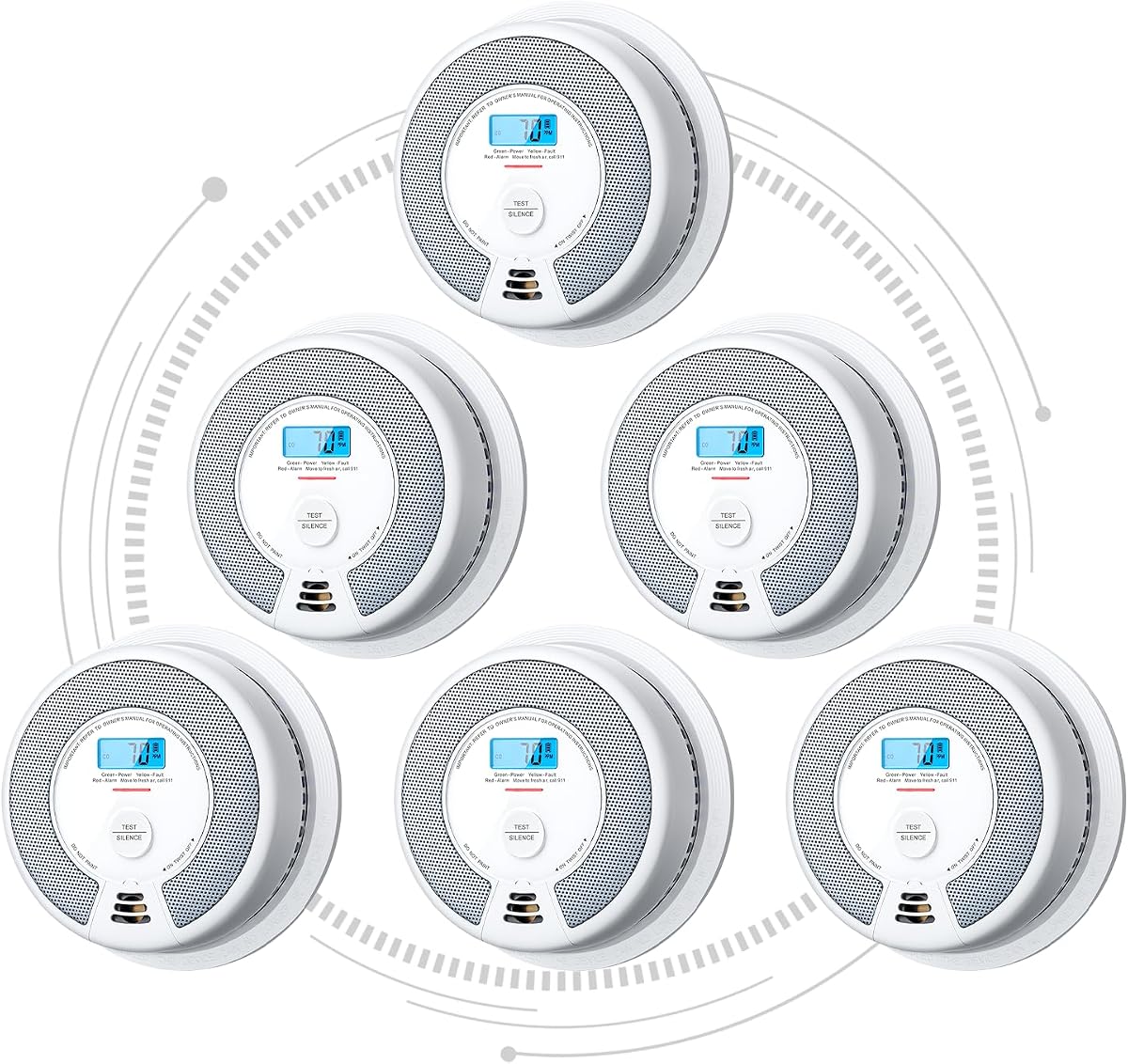
The X-Sense SC07-W is a six-pack built for broad, interconnected coverage without household rewiring. It has a 4.4 rating, a photoelectric smoke sensor, an electrochemical carbon monoxide sensor, and a sealed lithium battery rated to power each alarm for ten years. Wireless interconnection allows all compatible units to sound when one detects a hazard.
We may earn a commission when you buy through this link, at no additional cost to you.
That six-unit quantity gives the SC07-W an obvious advantage for larger homes, multifamily layouts, or properties with several sleeping areas. Instead of installing electrical wiring, each unit mounts to a wall or ceiling with the included bracket, screws, and anchor plugs. The listing explicitly notes that the model supports wireless interconnection but does not offer Wi-Fi, making it a focused alternative to a smart detector.
The photoelectric sensor is designed to respond to slow-smoldering fires and help reduce cooking-related nuisance alarms, while the electrochemical CO sensor addresses the separate danger of carbon monoxide. The ten-year sealed battery removes routine replacements and low-battery chirps. The trade-off is that its alerts are primarily on-device and interconnected rather than delivered through a mobile ecosystem.
This is a compelling option for a complete retrofit when six suitable placement points are needed and electrical work is undesirable. Verify that all units in the installation are compatible, and check the requirements of your local authority before changing an existing alarm layout. It is especially attractive to homeowners who value synchronized sound, a long service interval, and simple battery-based installation.
Six wireless units can cover more of a home without connecting each detector to household power. This makes the bundle useful for retrofits and properties where the existing wiring does not support alarms.
A photoelectric smoke sensor works alongside an electrochemical CO sensor. The two sensing systems address fire and carbon monoxide without requiring two separate alarm bodies.
We may earn a commission when you buy through this link, at no additional cost to you.
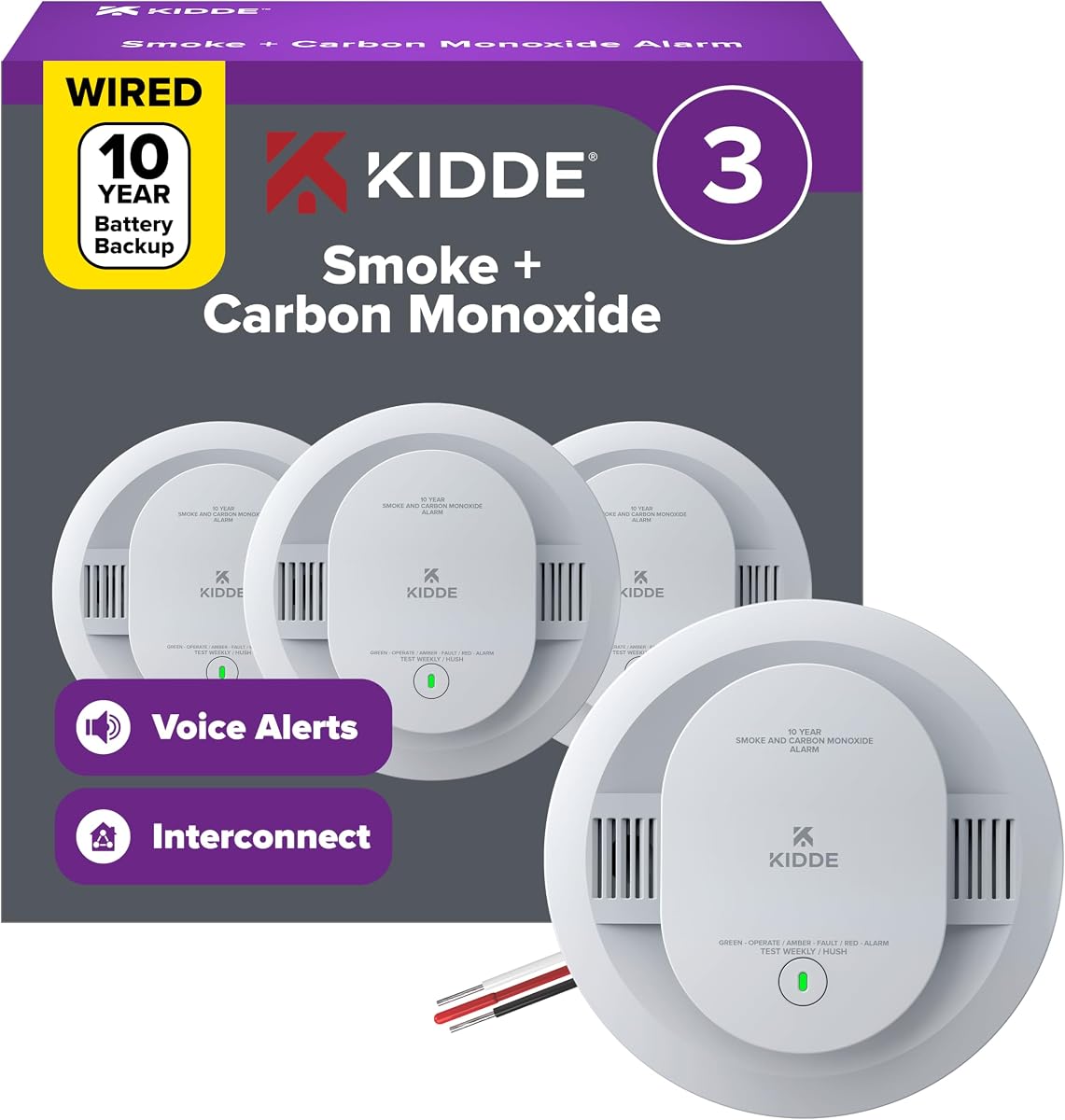
The three-pack Kidde 30CUDR-V offers a straightforward way to add voice-equipped smoke and CO alarms in several rooms. It shares the core design of the higher-ranked 30CUDR-V, including two-AA-battery operation, an 85-decibel alarm, a red LED, and distinct voice messages for fire and carbon monoxide.
We may earn a commission when you buy through this link, at no additional cost to you.
Its 4.4 rating is among the strongest in the comparison. More importantly for a household, three units allow protection to be distributed across bedrooms, hallways, and other suitable locations without hardwiring. The advanced sensing technology is designed to respond quickly while helping distinguish real smoke from cooking fumes and steam, addressing a common source of alarm fatigue.
Unlike the interconnected premium options, the supplied information does not list wireless or wired interconnection for this model. Each alarm must therefore be heard in the area it protects, and placement becomes especially important. The batteries also need periodic replacement, so the product is less suited to inaccessible locations than the sealed ten-year alternatives.
Choose this bundle when you need several accessible, battery-powered alarms and value spoken hazard identification more than network-wide synchronization. It may work well in a medium-sized home, an apartment, or a rental where renters cannot modify electrical wiring. Confirm compatibility with any existing alarms and follow placement guidance to avoid both missed coverage and nuisance alarms.
Three alarms can be positioned where each is most likely to be heard. This makes the bundle more useful than a single unit for bedrooms, occupied rooms, and common escape routes.
The alarm announces the detected danger in plain language. Household members can begin the appropriate response while still investigating the source and location of the warning.
We may earn a commission when you buy through this link, at no additional cost to you.
The Kidde 30CUA10-V is a single hardwired combination alarm that combines voice identification with a ten-year battery backup. Its 4.2 rating makes it a solid choice for a permanent installation, particularly in a home already equipped with compatible alarm wiring.
We may earn a commission when you buy through this link, at no additional cost to you.
The device operates on 120-volt AC power and retains its built-in ten-year battery as backup. The primary advantages over a portable battery alarm are continuous hardwired operation and the ability to interconnect with other Kidde alarms. When one unit detects danger, compatible interconnected units can sound together, extending alerts to remote areas of the home.
Its voice system announces “Fire” when smoke is detected and “Warning, Carbon Monoxide” for CO, alongside the 85-decibel sound and red LED. Advanced sensing technology is stated to provide more than 25 percent faster smoke detection in the manufacturer's comparison and to help separate true smoke from cooking or steam. The main limitation is installation: household electrical work may be required.
This single-unit version is most useful when replacing one hardwired location or when you intend to build a larger interconnected network over time. If you already need multiple alarms immediately, the three-pack is more convenient and helps ensure compatible interconnection from the start. Do not assume a single unit is sufficient for an entire home without reviewing applicable placement requirements.
Hardwired AC operation is a familiar choice for permanent residential systems. The sealed ten-year battery supplies backup when household electricity is interrupted.
The unit can work with compatible Kidde alarms so that a detection in one location triggers warnings elsewhere. This can help occupants on another floor react sooner.
We may earn a commission when you buy through this link, at no additional cost to you.
The First Alert Hardwire Combination Smoke & Carbon Monoxide Alarm with Voice differentiates itself by announcing both the danger and its location. Its 3.8 rating is the lowest among the ten products, but that figure should be considered alongside the model's location-alert feature and installation system.
We may earn a commission when you buy through this link, at no additional cost to you.
Voice and location alerts can provide more direct guidance than a generic alarm, particularly in a multi-level home. Early-warning interconnection also allows compatible alarms to sound when one unit detects danger. The alarm is hardwired, and its battery backup supports continued protection during a power outage. A Quick Connect Plug is included to simplify installation and may avoid some rewiring when a compatible outlet is available.
First Alert's Precision Detection technology is described as complying with newer industry standards, reducing cooking-related nuisance alarms, and providing early warning in a fire emergency. The main compromise is that the supplied information gives fewer model-specific details than for the Kidde alternatives, including no stated interconnectable unit quantity, specific decibel level, or sealed battery duration.
Choose this model if spoken location information is a priority and a compatible First Alert installation is already in place. The lower rating may warrant checking recent customer feedback and verifying the exact package contents before purchase. It is best suited to permanent installations rather than renters who need a simple battery unit.
Announcing the location can help occupants navigate a smoky environment or determine which area may contain a CO source. The information complements the audible warning rather than replacing it.
The Quick Connect Plug is intended to make installation easier where compatible wiring exists. Buyers without suitable electrical connections may still need professional assistance.
We may earn a commission when you buy through this link, at no additional cost to you.
The Kidde 30CUD10 three-pack is built around long-lasting sealed batteries and advanced smoke sensing. With a 4.0 rating, it provides a solid middle ground for shoppers who want three low-maintenance combination alarms but do not need the voice-focused models featured elsewhere in this guide.
We may earn a commission when you buy through this link, at no additional cost to you.
Each unit detects both smoke and carbon monoxide and uses a built-in ten-year battery. That removes low-battery chirps and the need to replace cells over the alarm's life. Advanced sensing technology is intended to distinguish actual smoke from everyday cooking or steam, helping preserve alarm reliability in areas where false activations are common.
The three-unit format supports wider placement, while a red LED provides a clear visual notification. The key limitation is that the supplied product information does not specifically identify spoken hazard announcements. If your top requirement is a unit that clearly says “Fire” or “Warning, Carbon Monoxide,” choose one of the 30CUD10-V models whose voice alerts are explicitly documented.
This three-pack is a good choice for a medium-sized home, rental, or property with several accessible installation points. Its strengths are low maintenance, a useful quantity, and dual-hazard detection. Before installation, confirm whether local rules require interconnected alarms and verify that the model is appropriate for the number and placement of units needed.
A three-pack makes it easier to protect multiple rooms without hardwiring. The sealed batteries remain especially useful in locations where regular battery service would be difficult.
The advanced sensing system is designed to separate genuine smoke from common cooking and steam events. It may help reduce nuisance alarms in kitchens and nearby spaces.
We may earn a commission when you buy through this link, at no additional cost to you.
The First Alert Battery Combination Smoke & Carbon Monoxide Alarm earns the highest customer rating in this guide at 4.5. It is a simple, battery-operated unit designed to provide two-in-one protection without hardwired installation, making it an attractive option for renters and quick household improvements.
We may earn a commission when you buy through this link, at no additional cost to you.
First Alert's Precision Detection technology is described as complying with newer industry standards, reducing cooking nuisance alarms, and providing early warning during a home fire. The unit detects both smoke and carbon monoxide, while a test and silence button supports regular checks and temporary silencing after a known nuisance event.
Its end-of-life warning is a useful maintenance feature because it signals when the alarm has reached the end of its service life and should be replaced. The principal drawback for this particular keyword is that the supplied information does not confirm spoken hazard announcements. It is therefore a strong general combination alarm, but buyers who need precise verbal warnings should favor an explicitly voice-equipped model.
Choose the First Alert battery combination for straightforward protection, easy placement, and dependable maintenance prompts. It works particularly well for a bedroom or secondary dwelling where existing wiring is not available. For vocal guidance, check the product listing for current packaging details or consider a model whose voice alerts are explicitly stated.
The end-of-life warning helps owners know when replacement is due. This reduces the risk of relying on an aging alarm that may no longer provide dependable protection.
A dedicated test and silence button makes routine checks more convenient. Silence can also reduce irritation after a verified cooking-related nuisance event.
We may earn a commission when you buy through this link, at no additional cost to you.
The Kidde RGCUAR-RW is the most connected product in the guide, combining hardwired smoke and CO detection with Ring app notifications and smart-home compatibility. Its 4.1 rating reflects a more specialized proposition than conventional combination alarms, with remote warnings serving as the defining feature.
We may earn a commission when you buy through this link, at no additional cost to you.
The detector sends real-time smoke, CO, and low-battery notifications through the Ring app whether occupants are home or away. A subscription is not required for these basic app alerts, although an optional Ring subscription is available for 24/7 smoke and CO monitoring. Users can also receive notifications through Alexa-enabled devices, providing an alternative to checking a phone directly.
Its advanced sensing technology is stated to deliver more than 25 percent faster smoke detection and reduce cooking-related false alarms compared with prior Kidde generations. The product is comprehensively tested and certified to UL 217 and FCC requirements. One smart detector can add mobile alerts for compatible hardwired alarms throughout the home, although buyers should consult the user guide for exact compatibility requirements.
The premium trade-off is setup complexity and ecosystem dependence. Hardwiring, a compatible app, network access, and careful configuration are all relevant, while optional professional monitoring introduces an ongoing service choice. Nevertheless, this is the best pick for homeowners who want remote awareness and smart-home integration as part of their safety strategy.
The Ring app delivers smoke, CO, and low-battery notifications while you are away. That visibility can shorten uncertainty when a family member, landlord, or neighbor is near the home.
Adding one compatible Kidde smart detector can enable mobile alerts for compatible hardwired alarms in the home. Check the user guide before mixing models or brands.
We may earn a commission when you buy through this link, at no additional cost to you.
Choosing the right talking combination alarm means balancing voice clarity, power requirements, network capability, placement, and maintenance. The best device is one that provides appropriate warnings, remains operable under expected conditions, and fits the installation rules for your property.
A true talking detector should communicate more than the fact that an alarm is sounding. The strongest examples in this guide announce the hazard explicitly, such as “Fire” for smoke and “Warning, Carbon Monoxide” for CO, while the First Alert hardwired model also provides location information. Clear language can help residents begin the correct response, but speech must support rather than replace the audible alarm, visible warning, and standard emergency procedure.
Prioritize products that explicitly state their voice features in the official listing. Do not assume every combination alarm provides spoken announcements merely because the housing resembles a talking model. Check the manual, package images, and manufacturer documentation to confirm the exact phrases and capabilities.
Battery-powered alarms are easy to install and suitable for rentals or homes without compatible alarm wiring, but they require periodic attention. Sealed ten-year batteries reduce maintenance, while hardwired models provide a permanent household power connection and usually include backup batteries for outages. The RGCUAR-RW combines hardwiring with AA backup and adds smart notifications.
Choose based on installation access and maintenance preferences rather than battery convenience alone. If a location is difficult to access, favor a sealed battery or hardwired alarm with long-term backup. For frequent battery changes, verify the approved battery type and replacement interval.
A locally sounding alarm is most useful when it can be heard from sleeping areas and other occupied rooms. Interconnected units sound together when one detects danger, helping alert occupants who are far from the source. The Kidde 30CUA10-V supports wired interconnection, while the X-Sense SC07-W uses wireless interconnection. The RGCUAR-RW adds app-based notification for compatible hardwired alarms.
Confirm protocol and brand compatibility before mixing units. A bundle designed to interconnect is usually easier to deploy than a collection of individually compatible-looking alarms. Also consider whether mobile notifications are a useful supplement to, rather than a replacement for, on-site sound.
Both hazards must be detected by the same unit, but their sensing methods may differ. The X-Sense SC07-W pairs a photoelectric smoke sensor with an electrochemical CO sensor, while several Kidde models use advanced sensing intended to identify smoke more quickly and distinguish it from cooking fumes or steam. First Alert calls its approach Precision Detection and similarly emphasizes reduced cooking nuisance alarms.
Look for a clear description of both sensing functions and recognized safety standards. UL 217, UL 2034, and FCC references can provide useful context, but certification is not a substitute for correct placement, regular testing, and appropriate alarm spacing.
Battery models can generally be mounted wherever the location is appropriate, making them popular in rentals and existing homes. Wireless interconnected systems also avoid household rewiring, although radio compatibility and range still matter. Hardwired units may suit renovations and new construction, but existing box locations, wiring type, and local electrical rules can complicate installation. First Alert's Quick Connect Plug is intended to simplify compatible retrofits.
Measure the location and confirm access before ordering. Follow the manual's mounting instructions, use the supplied anchors where appropriate, and avoid placing an alarm where ventilation, structure, or cooking conditions could impair performance. Hardwired work should be handled appropriately based on local requirements and individual experience.
The quantity in a package determines how easily a household can achieve broad coverage. The six-pack X-Sense SC07-W is aimed at larger installations, while the three-pack Kidde options provide a practical middle ground. A single unit may suit a focused replacement, but several sleeping levels and rooms usually require more than one alarm.
Map the home before buying and use the manufacturer's placement rules to identify required locations. More alarms do not automatically mean better coverage if units are crowded together or placed near hazards. Treat package quantity as a starting point, then adjust the layout to the property and applicable guidance.
A detector is useful only when it remains operational. Test and silence buttons help owners perform scheduled checks, while end-of-life warnings signal when an alarm should be replaced. Sealed batteries remove routine cell replacement, but the entire unit still has a finite service life. Voice alarms should also be tested in a location where speech can be heard clearly.
Follow the manufacturer's test schedule and replacement instructions. Record installation dates, listen for unusual chirps, and make sure household members recognize the difference between a test button press, a low-battery warning, and a full emergency alarm. Never disable an alarm simply because it is inconvenient.
Smart detectors can send phone notifications when nobody is home, but they introduce accounts, apps, network requirements, and an ecosystem around a safety-critical device. The RGCUAR-RW offers app alerts without requiring a subscription for basic warnings, although optional professional monitoring is available. Voice assistants can provide another notification route. Buyers should understand which functions remain active if internet service or power fails.
Choose smart features only when they add a meaningful benefit, such as remote notification during a vacancy. Keep the app and account information current, use a strong password, and ensure the device remains capable of its primary local alarm function even when connectivity fails.
Read the complete manufacturer manual before installation, paying particular attention to placement requirements, compatible mounting surfaces, battery restrictions, and interconnection instructions. Install the unit where it can be heard from sleeping areas but away from cooking heat, steam, bathroom moisture, dusty areas, and mechanical obstructions. If local requirements specify alarm spacing or interconnected units, follow those rules rather than relying on general placement habits.
Test each alarm after installation and on the schedule specified in its guide. The test or silence button should trigger the appropriate audible and visual response, while the voice feature should be difficult to hear. For smart models, complete app setup, account verification, notifications, and any required permissions. Confirm that a companion hardwired alarm can report through the same ecosystem if you intend to use that feature.
Keep the unit accessible for testing and maintain the surrounding area. Dust or obstruction can affect performance, while painting over an alarm or blocking its vents can prevent proper sensing. Replace batteries only with the type specified by the manufacturer, observe end-of-life warnings, and replace the entire alarm when its service life ends. If the alarm sounds for smoke, leave the building and call emergency services from a safe location rather than investigating the source indoors.
A talking alarm uses spoken words to identify the detected danger, while a standard combination alarm may rely on tones, lights, or repeating sounds. Voice models may distinguish smoke from carbon monoxide, and some also announce a location. The spoken feature supplements the alarm sound and should not replace evacuation planning or emergency instructions.
A hardwired model is often preferable when a property already has compatible wiring because it provides a permanent power connection and battery backup. Battery models are easier to add in rentals, completed rooms, and locations without suitable wiring. The best choice depends on electrical access, placement, local rules, and how much battery maintenance you want to avoid.
Interconnection is not always mandatory for every home, but compatible linked alarms can warn occupants when danger is detected in another room or on another floor. Requirements depend on local codes, the type of property, number of sleeping areas, and the system's design. Verify model compatibility and follow the installation instructions before connecting units.
Several models in this guide use advanced sensing intended to distinguish real smoke from cooking fumes and steam. That can improve usability, but placement still matters and no detector is immune to every nuisance condition. Keep cooking appliances and fumes away from the alarm and follow the manufacturer's guidance on acceptable locations.
Treat the warning seriously. Move people and pets outdoors or to a well-ventilated safe area, then call emergency services or the gas utility from a safe location. Do not re-enter until qualified personnel determine the home is safe. A silence button should not be used to ignore a genuine CO warning.
Follow the manufacturer's testing instructions and any applicable local requirements. Many manufacturers recommend testing each unit regularly and checking it whenever the home is visited, with a more formal schedule stated in the guide. Testing should verify the audible alarm, visual indicator, and voice announcement, as well as battery status where applicable.
A smart detector should retain its core on-device smoke and CO alarm function even if network services are unavailable, but remote phone notifications and related features may stop working. Hardwired backup or sealed batteries also protect against power loss. Check the manual for the model's exact offline behavior rather than assuming every connected function continues without a network.
The correct number depends on floor plan, sleeping areas, alert placement, and local requirements. Multiple units are usually important because one alarm may not be audible everywhere. Map suitable locations, maintain required spacing, and ensure alarms are interconnected where required. Buying a multi-pack can simplify coverage, but the count should follow the actual placement plan.
The Kidde 30CUD10-V is the strongest overall choice for buyers who want specific spoken hazard messages, a ten-year sealed battery, and no hardwired installation. The Kidde 30CUDR-V offers the most approachable battery-based approach, while the Kidde 30CUA10-V three-pack is the leading premium option for permanent, interconnected whole-home coverage.
Prioritize the warning style that fits your household, then choose a power configuration based on installation access and maintenance tolerance. Local alarm placement rules, required unit quantity, interconnection requirements, and certification should guide the final decision more than app features alone. A reliable local siren remains the foundation of any protection system, even when smart notifications are added.
Before purchasing, compare the current listing, package contents, compatibility information, and installation requirements. Product configurations and offers can change over time, and retailer prices fluctuate as well. Verify the exact model and voice features at checkout to ensure that the detector you select matches the coverage and functionality your home needs.