
Turntable Ground Wire 6ft, 24K Gold Plated OFC
4.4Editor score
99.9% oxygen-free copper
Gold-plated female spades
Hand-soldered construction
Ground wires for turntables to eliminate hum and noise are compared for fit, conductor quality, connector design, length, and installation ease.
A ground wire completes the electrical path between a turntable and its amplifier or preamplifier, helping prevent the familiar low-frequency hum that can spoil a vinyl listening session. The right cable should fit your deck, accept the available terminals, and provide a dependable connection without adding clutter or installation difficulty.
This guide compares ten ground wires through terminal compatibility, conductor construction, cable length, flexibility, resistance claims, corrosion protection, and intended turntable applications. It includes simple spade-to-spade leads, Technics-specific replacements, and plug-and-play cables designed for decks with female ground sockets, allowing readers to compare the options without relying on technical jargon.
Each review identifies the product's strongest feature, useful trade-offs, and the systems for which it appears best suited. Ratings and product details reflect the supplied listings, while availability and pricing can change at any time. Readers should confirm their turntable's connector type and compare the current listing before making a final purchase.
4.4Editor score

4.9Editor score
4.7Editor score
The comparison below organizes all ten leads by connector arrangement, conductor and shielding design, length, and compatibility, making it easier to match a cable to a Technics deck, another magnetic-cartridge turntable, or an amplifier with a chassis screw.


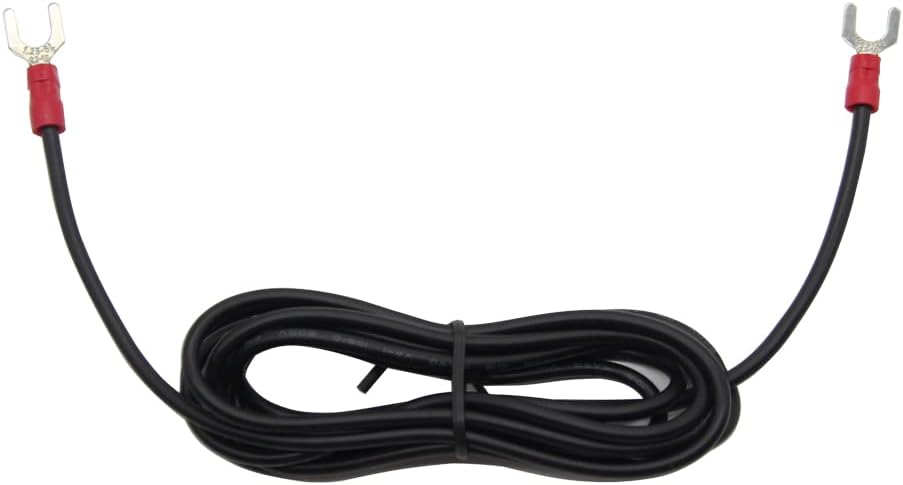
This five-foot phonograph ground wire is a straightforward option for magnetic-cartridge turntables, including decks from Technics and other domestic or professional record players. Its 4.7 rating reflects a favorable customer reception, while the uncomplicated spade-to-spade layout makes it approachable for listeners who want to address hum without navigating a complicated installation.
We may earn a commission when you buy through this link, at no additional cost to you.
The main attraction is its practical versatility. One spade lug connects to the grounding lug on the turntable, and the other fits beneath the grounding lug or chassis screw on a receiver, amplifier, or preamplifier. The five-foot lead provides enough reach for many shelf and component arrangements without presenting the same routing challenge as a much longer cable. The manufacturer also describes the material as durable and quality tested.
Its main limitation is that the listing offers fewer technical details than several more specialized competitors. It does not identify the conductor gauge, plating, or exact resistance, and its spade connectors require a suitable screw terminal on the downstream component. That makes it less convenient for Technics models with a dedicated female ground socket, where a purpose-built plug or tuning-fork connector would be preferable.
This is a sensible budget-oriented choice for a magnetic-cartridge deck with a grounding post and an amplifier or preamp with a chassis screw. It is particularly useful as a basic replacement lead, a compact installation cable, or a way to restore a missing ground connection. Buyers who need a female socket, unusually thin wiring, or a highly specific Technics fit should choose one of the dedicated alternatives in this guide.
Five feet is generally sufficient to connect a turntable and nearby amplifier while leaving enough slack to route the lead behind furniture. It balances reach with a reduced chance of creating a conspicuous loop of excess cable.
Having a spade lug at each end makes the required path easy to understand. Confirm that both the turntable and amplifier provide compatible screw-mounted grounding points before ordering.
We may earn a commission when you buy through this link, at no additional cost to you.
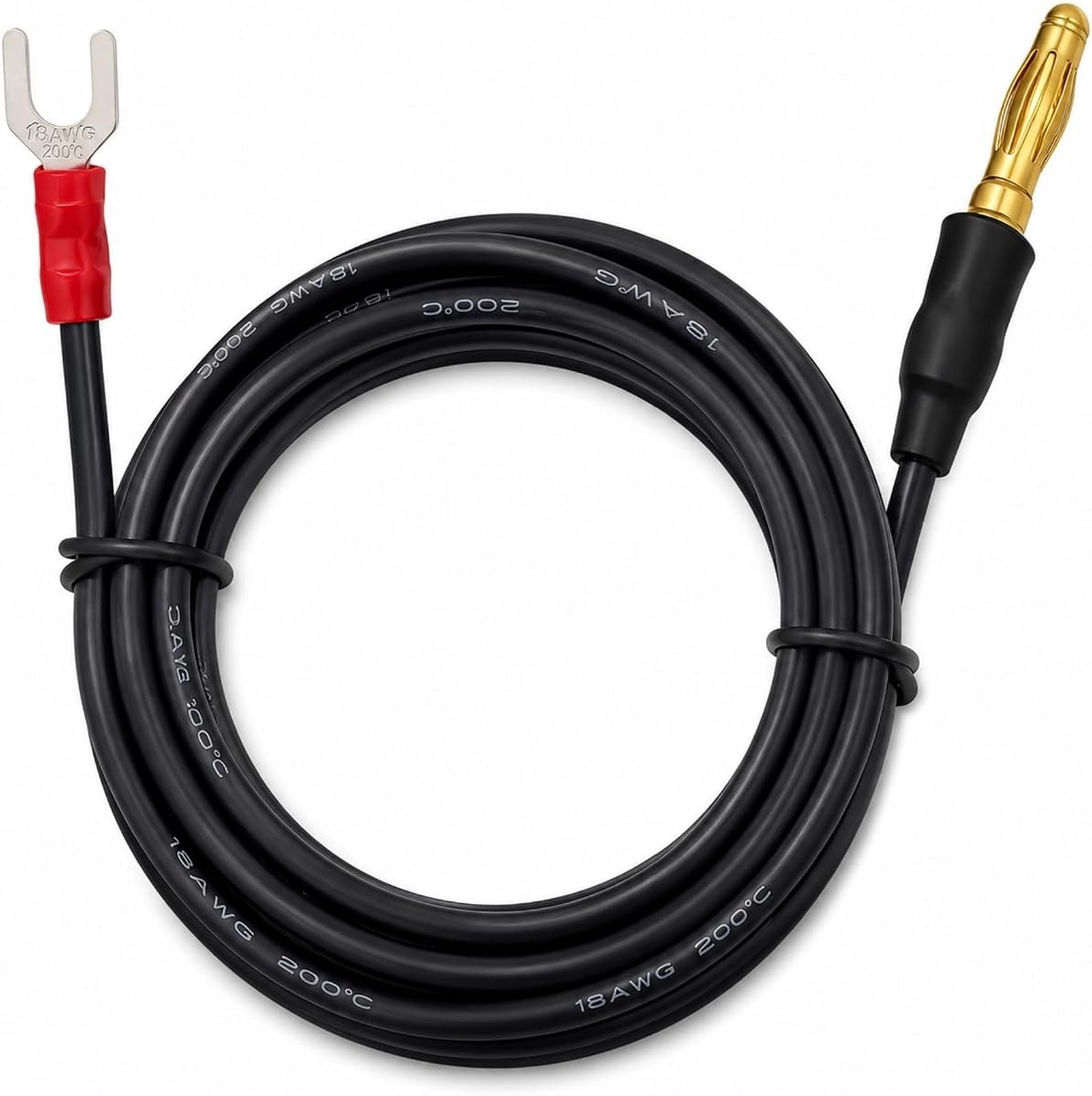
This 18AWG oxygen-free copper grounding cable combines one of the strongest listed ratings with a compact 3.3-foot format. The listing positions it as a general-purpose solution for turntables, phono preamps, amplifiers, and DJ equipment, with compatibility claims covering popular Technics, Audio-Technica, Pro-Ject, and Sony models.
We may earn a commission when you buy through this link, at no additional cost to you.
Its strongest technical feature is the clearly identified conductor and connector specification. High-purity 18AWG oxygen-free copper is intended to maintain low resistance, while pre-attached M5 cold-pressed spades simplify installation. The silicone sheath is listed as flame retardant and rated from minus 35 to 200 degrees Celsius, and the tin-plated terminals are designed to resist corrosion and maintain stable contact.
The short length is the principal trade-off. Three-point-three feet works well when the turntable and amplifier are close together, particularly in compact stereo furniture or DJ workstations. It may offer less slack for larger rooms, elevated components, or unconventional furniture layouts. As with other spade-based leads, the setup needs accessible screw terminals on the turntable and downstream equipment.
This is the most specification-forward choice in the group and a strong recommendation for listeners who want documented conductor construction without an oversized lead. Its narrow profile is useful behind equipment where space is limited, and its stated two-year warranty adds reassurance. It is best suited to compatible screw-ground systems that can be linked with a short, tidy cable.
The 18AWG oxygen-free copper core is a meaningful differentiator for a grounding lead. It is designed to support a stable electrical path while resisting corrosion and mechanical wear at the termination points.
At 3.3 feet, the lead is suited to close amplifier placement. Its 0.11-inch profile is also intended to fit narrow gaps and reduce cable-management clutter.
We may earn a commission when you buy through this link, at no additional cost to you.
This six-foot ground wire is the premium construction option in the group, combining a 99.9% oxygen-free copper conductor with 24K gold-plated female spade connectors. Its 4.4 rating indicates generally positive feedback, and the listing highlights hand-soldered construction protected by heat-shrink tubing for dependable contact and reduced joint exposure.
We may earn a commission when you buy through this link, at no additional cost to you.
The cable is designed to be slim, lightweight, and flexible, which makes routing behind equipment racks, DJ booths, and stereo cabinets more manageable. Its six-foot length offers more placement freedom than the compact 3.3-foot lead, while the silicone jacket is intended to remain pliable. Compatibility claims cover several Technics SL series decks and widely used turntables from Pioneer, Marantz, Sony, JVC, Panasonic, and Kenwood.
Connector fit is the most important consideration. Female spade connectors are intended to attach to a suitable male spade or screw terminal, but they will not directly enter a female turntable socket. Because the product is designed as a female-to-female lead, the downstream amplifier may need a male spade terminal or an appropriate adapter. The premium materials cannot overcome an incompatible connection point.
This cable is best for listeners with matching female spade connections who want a long, flexible, well-documented construction. It is also a logical premium replacement for a missing or worn original wire. Buyers should inspect the back panel of their turntable and amplifier first, because systems using a turntable-mounted banana plug will need a different style of ground lead.
Gold plating helps resist corrosion at the connection points, while the oxygen-free copper core is selected for conductivity and low resistance. The construction focuses attention on the complete electrical path rather than just the cable run.
The six-foot lead offers flexible placement between separate components, and the slim silicone jacket is designed to bend and route without taking up much space. It remains shorter than many general-purpose audio cables.
We may earn a commission when you buy through this link, at no additional cost to you.
This replacement lead is aimed primarily at Technics owners whose original ground cable is missing, damaged, or prone to unwanted noise. It holds a 4.3 rating and distinguishes itself through a mixed-terminal design: a banana plug for the turntable GND jack and a spade lug for the amplifier ground screw.
We may earn a commission when you buy through this link, at no additional cost to you.
The product uses 18AWG oxygen-free copper, and the listing describes the connectors as gold-plated. This combination is intended to provide a stable connection with low resistance. Compatibility is reported across more than 30 Technics SL series models, as well as Panasonic and Matsushita turntables that use a compatible ground arrangement.
The limitation is its narrower scope. It is a better match for a Technics-style female GND receptacle than for a turntable with only a loose grounding post. The amplifier also needs a screw terminal that can accept the supplied spade lug. Buyers should compare the exact terminal shape and model list before purchase rather than relying on the broad Technics association alone.
This is a strong choice for a Technics system with a banana-equipped ground socket and a conventional amplifier screw. The five-foot length provides practical reach, and the installation should be straightforward for anyone familiar with basic audio connections. Its model-specific emphasis makes it less universal, but particularly useful for the intended Technics owner.
The banana plug is designed to enter a compatible female GND receptacle, avoiding the need to adapt a generic spade lead. This makes the cable a natural replacement for many Technics installations.
The amplifier-side spade is intended to fit under a chassis or ground screw. Ensure that the screw is clean and that the terminal can accommodate the lug without interfering with other connections.
We may earn a commission when you buy through this link, at no additional cost to you.
This six-foot phonograph ground wire is a classic spade-to-spade solution for magnetic-cartridge turntables. It carries a 4.4 rating and directly addresses two common sources of setup frustration: a missing ground lead and persistent hum caused by an incomplete connection.
We may earn a commission when you buy through this link, at no additional cost to you.
Installation follows the standard arrangement. One spade lug attaches to the grounding lug on the turntable, and the second connects to the grounding lug or chassis screw on a receiver, amplifier, or preamplifier. The listing says it fits domestic and professional record decks, giving it broader relevance than a lead designed around one proprietary connector.
What the product offers is functional rather than elaborate. The listing does not specify conductor gauge, plating, or resistance, so buyers prioritizing extensive technical documentation may prefer a more fully described alternative. Both ends also need compatible screw terminals, which excludes systems requiring a plug that fits directly into a female socket.
This cable is a good choice for a straightforward analog installation with a screw-mounted turntable ground and a nearby amplifier. Its six-foot length allows comfortable routing between components, while the simple connector arrangement makes it easy to understand and maintain. It is especially appealing as a replacement for a generic or missing ground cable.
The symmetrical connector design removes guesswork from installation. It also makes this cable suitable for components that expose a chassis screw rather than a dedicated female ground jack.
Six feet is long enough for many shelf systems and stereo cabinets while remaining easy to conceal. It gives users more freedom to position the turntable and amplifier than a very short lead.
We may earn a commission when you buy through this link, at no additional cost to you.
This six-foot ground wire is designed around Technics SL-B200, SL-BD21, SL-BD3, and SL-QL5 ownership, with compatibility claims extending to the SL-1200, SL-Q200, SL-D2, and more than 50 other Technics models. It also lists Sony, Kenwood, Marantz, and JVC compatibility, so it is not limited to a single deck family.
We may earn a commission when you buy through this link, at no additional cost to you.
The physical design emphasizes flexibility. The blue Power-Flex cable is described as hand-soldered, highly conductive, and heat resistant to 185 degrees Celsius. Gold-plated U-shaped spade terminals are intended to resist corrosion, and heat-shrink tubing is included for a tidy, protected termination. The lead works with receivers, amplifiers, preamps, and even vacuum tube amplifiers according to the listing.
Users should treat some of the broad electrical ratings cautiously. The stated 15-amp, 120-volt and indoor/outdoor descriptions are unusually specific for a low-level audio grounding lead and do not necessarily predict audible performance. The more relevant practical issues are connector fit, low resistance, a clean ground point, and a cable that can reach without strain.
This product fits buyers who know their Technics model and want a flexible six-foot lead with gold-plated spades. It is most useful when the turntable has a screw terminal and the amplifier offers a suitable ground screw. If the turntable instead has a female GND socket, choose a model with a dedicated plug or tuning-fork connector.
The flexible jacket is designed for routing around racks, cabinets, and DJ furniture. Six feet is also a useful length when the two connected components are not positioned directly beside one another.
Gold-plated spades and heat-shrink coverage are intended to protect the cable's connection points. These features make the lead a sensible replacement when an original wire has darkened, loosened, or become brittle.
We may earn a commission when you buy through this link, at no additional cost to you.
This five-foot Technics-focused cable earns a 4.5 rating through a combination of broad model support and a convenient mixed-terminal installation. Its listed compatibility includes the SL-B200, SL-BD21, SL-BD3, SL-QL5, SL-6, SL-220, SL-220A, SL-5, SL-23K, SL-B35, and numerous other models.
We may earn a commission when you buy through this link, at no additional cost to you.
The lead uses 18AWG multi-strand copper in an ultra-flexible Power-Flex-style jacket. At the amplifier end, a soldered U-lug fits beneath a ground screw; at the turntable end, a round plug enters a compatible female GND socket. This arrangement removes the need to adapt one side of the cable and is especially convenient for Technics owners replacing an original lead.
The five-foot length is the main practical limit. It works well when components are close, but longer placement distances may require a more flexible route or a longer alternative. As with the other round-plug options, the exact socket depth and shape should be checked before installation to avoid forcing the connector.
This is an attractive model-specific replacement with a 36-month manufacturer warranty and a stated satisfaction guarantee. It is best for Technics users with compatible female ground sockets and an amplifier with a screw terminal. The combination of plug-and-play convenience and extensive model coverage makes it a practical middle-ground option.
The round turntable-side plug is intended to enter a compatible female receptacle. That feature reduces installation work compared with a cable that requires a separate adapter.
A 36-month manufacturer warranty backs this model. Buyers should retain their purchase documentation and follow the manufacturer's installation guidance to maintain the product's coverage.
We may earn a commission when you buy through this link, at no additional cost to you.
This silicone-soft five-foot ground cable is a specialized option for Technics users with a female ground socket. It has a 4.6 rating and uses a distinctive tuning-fork-style plug designed to make strong contact inside compatible female receptacles.
We may earn a commission when you buy through this link, at no additional cost to you.
At the other end, a cold-pressed copper spade lug connects to a metal ground or chassis screw on an amplifier, receiver, or computer chassis. The listing emphasizes low resistance, high conductivity, corrosion resistance, and an easy installation process. A 12-month manufacturer warranty and satisfaction guarantee are also stated.
The title and compatibility list cover many Technics families, including SL-BD10, BD20, BD22, BD35, SL-L26, and SL-QD22, along with numerous SL-D, SL-J, SL-L, and SL-QD models. Because the turntable-side connection is a specialized plug rather than a standard spade, buyers should verify the socket design. It should not be assumed to fit every turntable marketed as Technics-compatible.
This is a good choice for someone who values a soft cable that is easy to route and a turntable-side connection designed for strong contact. The five-foot length suits close setups, and the spade-to-screw connection is familiar. It is less suitable for a deck with a traditional loose ground post, where a dual-spade cable would be more appropriate.
The silicone construction is intended to remain flexible behind crowded stereo furniture. A soft lead is easier to position without creating sharp bends or strain at either termination.
The tuning-fork-style plug is designed to fit a female socket and maintain firm contact. Compatible socket geometry is essential, so model verification remains an important part of the purchase.
We may earn a commission when you buy through this link, at no additional cost to you.
This six-foot ground wire offers a minimalist solution for magnetic-cartridge turntables that use a standard grounding post. Its 4.5 rating indicates a positive reception, and the installation method is familiar: attach one spade lug to the turntable and the other to the receiver, amplifier, or preamplifier grounding point.
We may earn a commission when you buy through this link, at no additional cost to you.
The cable's appeal lies in its lack of complexity. There is no proprietary adapter, model-specific control, or unusual fitting to manage. It provides enough length for typical component placement while remaining straightforward to route, and the symmetric spade ends make the grounding path easy to identify.
The listing does not provide a conductor gauge, plating detail, or measured resistance, so it offers less technical information than the 18AWG and oxygen-free copper options. It also cannot connect directly to a female turntable socket without an appropriate adapter. Those limitations matter more if the user wants a model-specific replacement with a precisely documented terminal arrangement.
This wire is best for a conventional magnetic-cartridge system with a loose or screw-mounted grounding post and a downstream component with a chassis screw. It can serve as an inexpensive practical repair, a backup cable, or a simple replacement. Buyers wanting stronger construction details should compare one of the more extensively specified leads.
A ground wire is among the most direct ways to address persistent hum when a deck's original lead has been lost. The symmetrical spades make the replacement process familiar to most audio users.
The lead offers enough reach for common stereo arrangements without being excessively long. It can accommodate modest separation while remaining manageable behind a cabinet or amplifier stand.
We may earn a commission when you buy through this link, at no additional cost to you.
This six-foot phonograph ground wire is a well-rated basic replacement for magnetic-cartridge turntables. Its 4.7 rating places it among the stronger customer-rated products in the guide, while the installation process remains refreshingly uncomplicated.
We may earn a commission when you buy through this link, at no additional cost to you.
The package contains one ground wire with a spade lug at each end. One connector goes beneath the turntable's grounding lug, and the other attaches to the grounding lug or chassis screw on a receiver, amplifier, or preamplifier. The manufacturer describes the material as durable, high quality, and tested, although it does not publish a conductor gauge or plating specification in the supplied information.
Its simplicity is both an advantage and a limitation. It is likely to be among the easiest leads to install for a user who has screw terminals on both components, but it offers no specialized solution for a Technics female GND receptacle. The absence of detailed electrical data also makes it harder to distinguish from other basic leads on technical grounds alone.
This product is a sound choice for a conventional magnetic-cartridge setup and for listeners who prefer a straightforward replacement over model-specific engineering. Its six-foot length provides practical reach, and its favorable rating supports its value as a dependable routine accessory. Verify both terminal types and the current listing details before buying.
Restoring the intended ground path can be a simple system change. This cable provides that path without requiring soldering, stripping, or specialty adapters when compatible screw terminals are available.
The package includes a single six-foot lead with spades at both ends. Its symmetrical construction supports use between a turntable ground lug and the chassis screw of a receiver, amplifier, or preamp.
We may earn a commission when you buy through this link, at no additional cost to you.
The best ground wire is one that matches the physical terminals on both components, provides a low-resistance connection, and can be routed without strain. Connector style matters more than decorative specifications, while cable length should reflect the distance between the turntable and amplifier or preamplifier.
Begin by identifying whether the turntable has a loose threaded grounding post, a female GND socket, or another proprietary connection. A post generally accepts a spade lug, while a female socket needs a matching plug, tuning-fork connector, or a suitable adapter. Technics models are often associated with female sockets, but the supplied product descriptions cover many variants, so the exact model should be checked instead of relying on the brand name alone.
Choose the cable that directly matches the deck whenever possible. Direct compatibility reduces adapters, makes the installation cleaner, and lowers the chance that a loose or poorly seated connection will contribute to noise.
The downstream end is just as important as the turntable end. Most examples in this guide use a spade lug designed to fit beneath an amplifier or preamplifier chassis screw, while some products use female spades intended to receive a male terminal. Check whether the equipment has a dedicated ground post, a chassis screw marked for ground, or no usable grounding point at all.
A clean, tight screw connection is essential. Avoid using a screw that appears to perform an unrelated safety or structural function, and make sure the lug cannot rotate or touch another conductor after the screw is tightened.
A grounding lead should provide a dependable, low-resistance path. Products using 18AWG oxygen-free copper, multi-strand copper, or 99.9% oxygen-free copper provide more specific information than a listing that only states that the wire is durable. Copper is a sensible conductor for this purpose, although the larger practical distinction is whether the termination is secure and the entire path is properly installed.
Prioritize a stated conductor specification when comparing otherwise similar cables. There is no need to assume that a more elaborately described cable will solve hum caused by an unrelated fault, but a well-documented low-resistance design is a useful sign of a considered replacement rather than a basic accessory.
Connector plating is intended primarily to resist corrosion. Gold-plated or tin-plated terminals can maintain cleaner contact over time, particularly in humid environments or when connections are handled frequently. Cold-pressed copper, soldered joints, and heat-shrink insulation add another layer of mechanical protection, but the connector still must fit the intended socket or screw correctly.
Look for clean, well-finished terminals and strain relief near the cable jacket. A connector that feels secure without force is preferable to one that merely appears compatible. These physical details can matter more in daily use than a highly polished product description.
Choose a length that reaches between the turntable and amplifier without pulling tight on either terminal. Three-point-three feet is useful for close placements, while five or six feet provides more routing freedom around furniture, racks, and speakers. Longer is not automatically better because excess cable can create clutter or an unnecessary loop.
A short, flexible lead is generally easy to conceal. Consider where the equipment will stand, whether cabinet doors will close, and whether the turntable might later be repositioned. Leave enough slack to remove the amplifier or deck without pulling on the ground connection.
Flexible silicone or Power-Flex-style jackets are useful behind crowded equipment. They bend around furniture and remain easier to position than a stiff lead. A pre-attached, clearly differentiated terminal at each end further simplifies installation and reduces the chance of confusing the turntable side with the amplifier side.
The best convenience comes from direct fit. A cable that needs an adapter may still work, but every additional junction introduces another possible point of poor contact. Confirm connector shapes, the availability of a ground screw, and the route between components before ordering.
Model-specific products can be more useful than universal leads when their connector arrangement precisely matches the user's deck. Read the compatibility list carefully and compare model numbers, because a brand name alone does not establish that a ground socket, post, or plug is identical across every release. Warranties and satisfaction guarantees add reassurance, but they do not substitute for fit verification.
For a broad installation, choose a clearly described universal spade lead. For a Technics system, select the product whose model list and terminal style match the exact unit. Keep purchase records and retain the original packaging in case the connector needs to be exchanged.
Before installing a new lead, switch off and unplug the turntable, amplifier, and preamplifier. Locate the turntable's designated ground point and the matching ground screw or terminal on the downstream component. If the equipment is already connected, take a photograph of the existing arrangement to document the routing and terminal orientation.
Connect one end to the turntable and the other to the amplifier or preamp. Place the spade lug beneath the correct screw or attach the matching plug to the compatible socket, then tighten the screw securely without over-tightening. Route the cable so it does not pull, interfere with a hinged cabinet, or touch unrelated circuitry. Restore power and play a record at a moderate level while checking for hum.
For care, keep the cable away from moisture, excessive heat, sharp edges, and repeated pinching. Inspect the ends periodically for looseness, discoloration, corrosion, or damaged insulation. Disconnect the equipment before cleaning and never remove a connector while it is energized. Replace the wire if a terminal becomes loose, a jacket cracks, or the connection no longer stays secure.
A connected ground wire does not guarantee a clean connection. Check that the lug is firmly secured, the correct amplifier screw is being used, and the cable has not been pinched. Hum can also originate from a nearby power transformer, fluorescent light, poorly shielded cable, or an ungrounded accessory.
Many magnetic-cartridge turntables include a removable ground lead and require it to be connected to a compatible amplifier or preamplifier. Some modern turntables and integrated systems have different grounding arrangements, so inspect the rear panel and consult the equipment documentation before adding a cable.
No. Use a designated grounding post, ground terminal, or chassis screw identified in the amplifier or preamplifier documentation. A random screw may have another electrical function, and an incorrect connection can leave hum unresolved or create unnecessary risks.
A spade connector has a flat blade that fits under a screw terminal or into a suitable female spade. A banana plug has a cylindrical pin designed for a matching banana socket. Turntables and amplifiers may use either arrangement, so matching the actual terminal is essential.
A properly specified cable can support a stable ground path, but conductor thickness is only one part of the solution. Secure terminations, correct polarity, suitable signal cables, separation from interference sources, and an adequately configured amplifier are equally important. Replacing the wire may not resolve noise caused elsewhere in the system.
Choose enough length to connect the components without tension and route the cable behind furniture. The guide includes 3.3-foot, five-foot, and six-foot options. Short leads suit close placements, while five or six feet provide more freedom when the turntable and amplifier are separated.
Possibly, provided the physical terminals match. Compatibility depends on whether the deck has a female GND receptacle, a threaded post, or another fitting. Never force a plug or spade into an incompatible socket, and use a proper adapter only when it provides a secure electrical connection.
The original cable may not have been the main fault. Check the amplifier ground connection, test another input, move potential interference sources, and inspect the turntable's power and signal wiring. A new ground wire is most effective when the rest of the analog system is correctly configured.
The Turntable Ground Wire 3.3ft 18AWG stands out for its detailed conductor specification, compact routing profile, pre-attached terminals, and strong customer rating. The Turntable Ground Wire 6ft 24K Gold Plated OFC is the premium option for listeners with compatible female spade connections, while the Phonograph Turntable Ground Wire 5-ft offers a simple and economical solution for conventional screw-ground systems.
For most buyers, prioritize the terminal fit before every other feature. A dual-spade lead is the easiest choice when both components provide screw terminals, while Technics users with female sockets should select a matching plug or tuning-fork connector. From there, consider conductor documentation, flexibility, length, and whether a warranty provides useful additional reassurance.
Ratings, product details, and availability can change, and current pricing should always be checked on the linked listing. Before buying, verify the turntable model, inspect both connection points, and compare the cable length with your planned placement. With the right physical fit and a secure installation, a dedicated ground wire can provide a cleaner foundation for enjoying vinyl without unnecessary hum.